








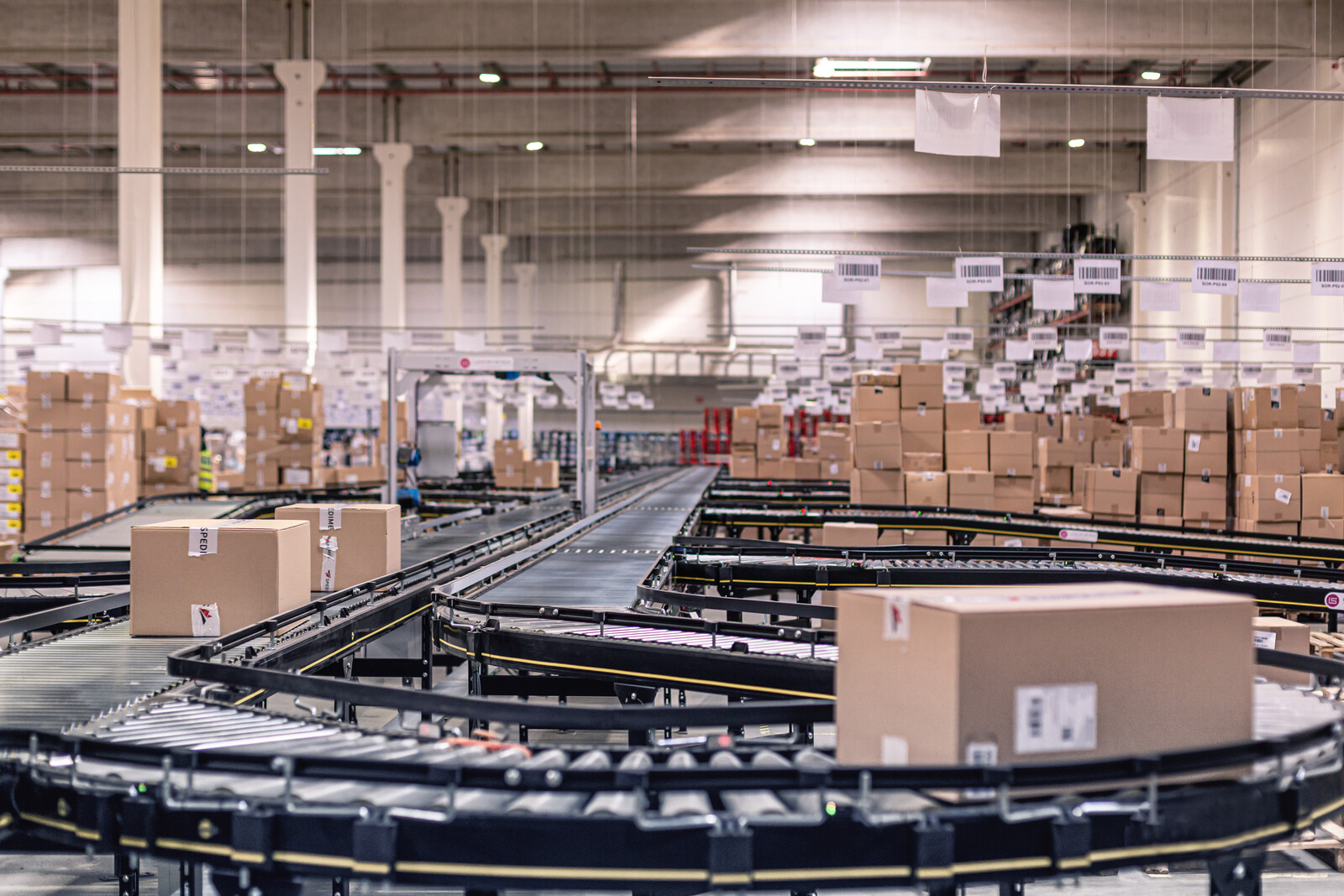
According to estimates by ID Logistics, the number of orders and returns in the domestic e-commerce market during this year’s summer sales may increase by as much as twofold compared to other periods of the year. This poses a major challenge for logistics departments, especially since the Polish e-commerce sector has the potential for further, rapid growth.
Forecasts by Strategy& indicate that by 2027, the e-commerce industry in Poland will be worth as much as PLN 187 billion, with its growth driven most strongly by three segments: fashion, electronics, and health and beauty. This trend is also confirmed by the latest data from the Polish Institute of Road Transport, according to which, between 2023 and 2027, sales revenue in the e-commerce market in Poland will increase by 7 billion dollars. – The e-commerce market, due to its global nature, remains highly competitive, and delivery time has a key impact on customer preferences – notes Marek Kaniera, E-commerce Operations Director at ID Logistics, adding that the summer sales period is a huge challenge for the logistics industry every year, especially in the e-commerce and fashion sectors. – To meet even a twofold increase in the number of shipped orders, proper preparation based on precise demand forecasting is crucial. To this end, in-depth data analysis and close cooperation with the client are essential, which allows for leveraging the experience of the logistics operator – he adds.
Thanks to this knowledge, the operator, in cooperation with the client, can increase vehicle availability in the transport department and staffing levels – both through the development of internal company structures and seasonal support from employment agencies. At the same time, stocks of necessary materials, such as cardboard boxes or warehouse carts, are increased in warehouses to ensure the fluidity and efficiency of operations. – According to the “E-commerce Delivery Compass 2023” report, the delivery time expected by consumers in Europe and the USA is only 3 days. For several years, we have also been observing the q-commerce trend, which means delivery the next day or faster. For a logistics operator, this means the necessity of executing the entire complex process even faster than before. The operator is therefore required to have even greater flexibility and readiness to scale operations almost immediately – explains Marek Kaniera.
Convenient returns in e-commerce are a major logistical challenge
Returns account for 15.8 percent of orders in Polish e-commerce, which corresponds to 532 million dollars (approx. 2.3 billion zlotys). A particular challenge is ensuring efficient returns logistics during the summer sales period. According to data from ID Logistics, one of the leading logistics operators, the number of returns during this time increases almost twofold.
In practice, a simple order return made by a customer means a multi-stage process for the logistics operator that must be carried out in the shortest possible time. Experienced operators know that to maintain high service quality during summer sales, proper preparation is necessary: increasing the number of employees, training, incentive systems, ensuring smooth transport, stocks of consumables, additional storage space, and constant process control.
Maintaining operational efficiency also requires taking care of employee comfort by providing additional drinking water points and renting air conditioners for the summer season.
– A good example showing the scale of the increase in the number of returns during the summer sales period can be the warehouse of one of the leading fashion brands located in Stryków, operated by ID Logistics. This year, the number of returns in June was as much as 90 percent higher than in February. However, the challenge is not only the scale of the processes that need to be handled. At this particular moment of the year, it is also important that the returned product can return to sale as quickly as possible. Moreover, before it appears on shelves or an e-commerce platform again, it must go through at least 3 to even 7 stages of so-called regeneration, including verification of compliance with the order, quality assessment, repairs, ironing, and repacking. Preparing for such a large undertaking requires experience and proper planning – explains Michał Wochna, Operations Director at ID Logistics.
Source: ID Logistics