








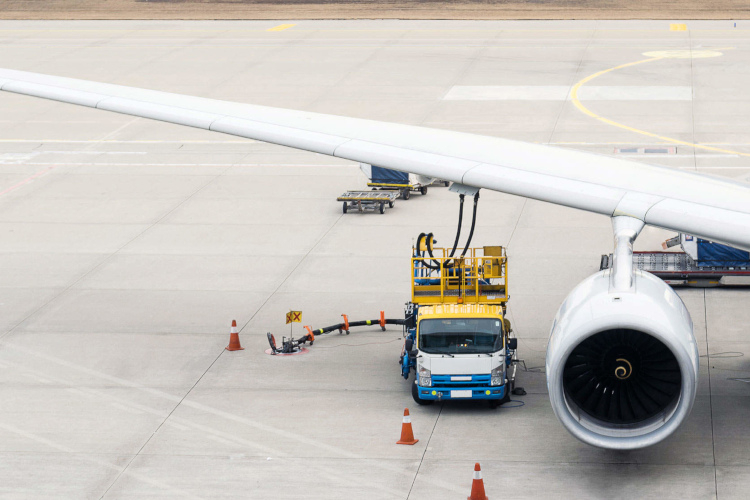
As part of its climate protection strategy, Dachser is initiating further measures for sustainable development in the air freight industry. From March 1, 2023, customers shipping air freight with Dachser will be able to use an additional booking option called Sustainable Fuel. By choosing this solution, cargo will be transported on aircraft fueled with “Sustainable Aviation Fuel” – SAF for short – which is partially derived from biocomponents. As a result, air shipments can emit up to 30% fewer greenhouse gases.
SAF fuel is produced from biological raw materials, such as residues and waste from the food industry, catering, agriculture, and forestry, or from synthetic base materials. Since today’s aircraft engines cannot operate without fossil fuels, SAF is blended with conventional kerosene. Sustainable fuels are an important element of climate and environmental protection in air transport.
– More and more companies using air transport are leaning towards solutions that utilize sustainable aviation fuel – SAF. We are observing this on the domestic market as well. This applies to global or European companies that have their branches in Poland. The growing interest in this solution also influences the operations of Dachser Poland and the decisions we make. Meeting the expectations of our customers, we set ambitious goals and implement new services that support a low-emission economy – says Klaudia Przybylska, Air Freight Department Coordinator at Dachser Poland.
Service on routes worldwide
In connection with the launch of the new booking option, Dachser has secured a large contingent of SAF, making this solution available on all routes worldwide. The “SAF” booking option involves a small additional fee. Currently, the price per liter of SAF is several times higher than the price of conventional aviation fuel, and due to limited supply, this difference is likely to persist for the coming years. SAF consumption depends on various flight-related factors, such as aircraft type, routes, or cargo weight.
As confirmation of the biofuel purchase and the reduction of greenhouse gas emissions, which can be included in the carbon footprint, DACHSER will prepare an emission report upon the customer’s request. In the following year, a certificate will be issued, providing information on the reduced emissions, the number of liters of SAF used, the year of consumption, and the exact raw material base of the SAF.