









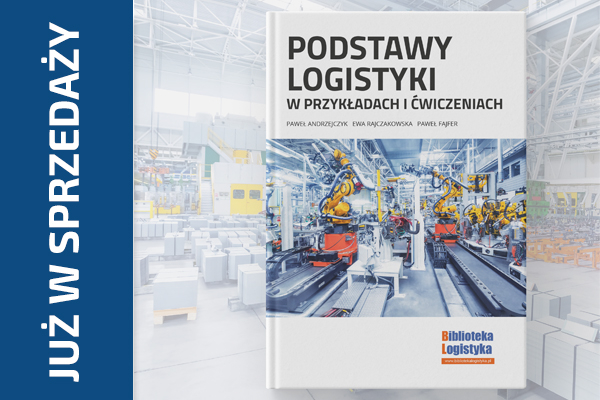
What is the essence of logistics systems and processes? How are the flows of goods organized in supply chains? What are the principles of cargo labeling? What are the IT systems used in logistics for? How to use spreadsheets in production planning? Why does planning play a key role in logistics? What are the identification standards in logistics and the basic statistical tools? These are just some of the questions you will find answers to in the latest book from the Logistics Library series titled “Fundamentals of Logistics in Examples and Exercises”.
The book contains over 80 inspiring exercises and examples that encourage interactive work. An additional supplement to the content is a presentation of the most important specialized terms, including abbreviations, in English.
Students receive:
– Basic knowledge “in a nutshell” and an extensive set of tasks with varying levels of difficulty.
– Solutions to some tasks following a “step-by-step” scheme.
– A special package of exercises requiring mathematical operations in a spreadsheet and filling in interactive fields.
– Useful comments and tips regarding more difficult tasks.
Young logistics adepts:
– Develop skills in independently searching for and verifying information sources on topics related to logistics.
– Learn about the benefits of using popular solutions (e.g., GS1 logistics labels, WMS).
– Improve their teamwork problem-solving competencies – they can, for example, create their own solution scenarios and exchange proposed variants with each other.
– Through numerous examples, they learn about real problems occurring in companies.
More information about the book and how to purchase it is available on the website e-bit.edu.pl