








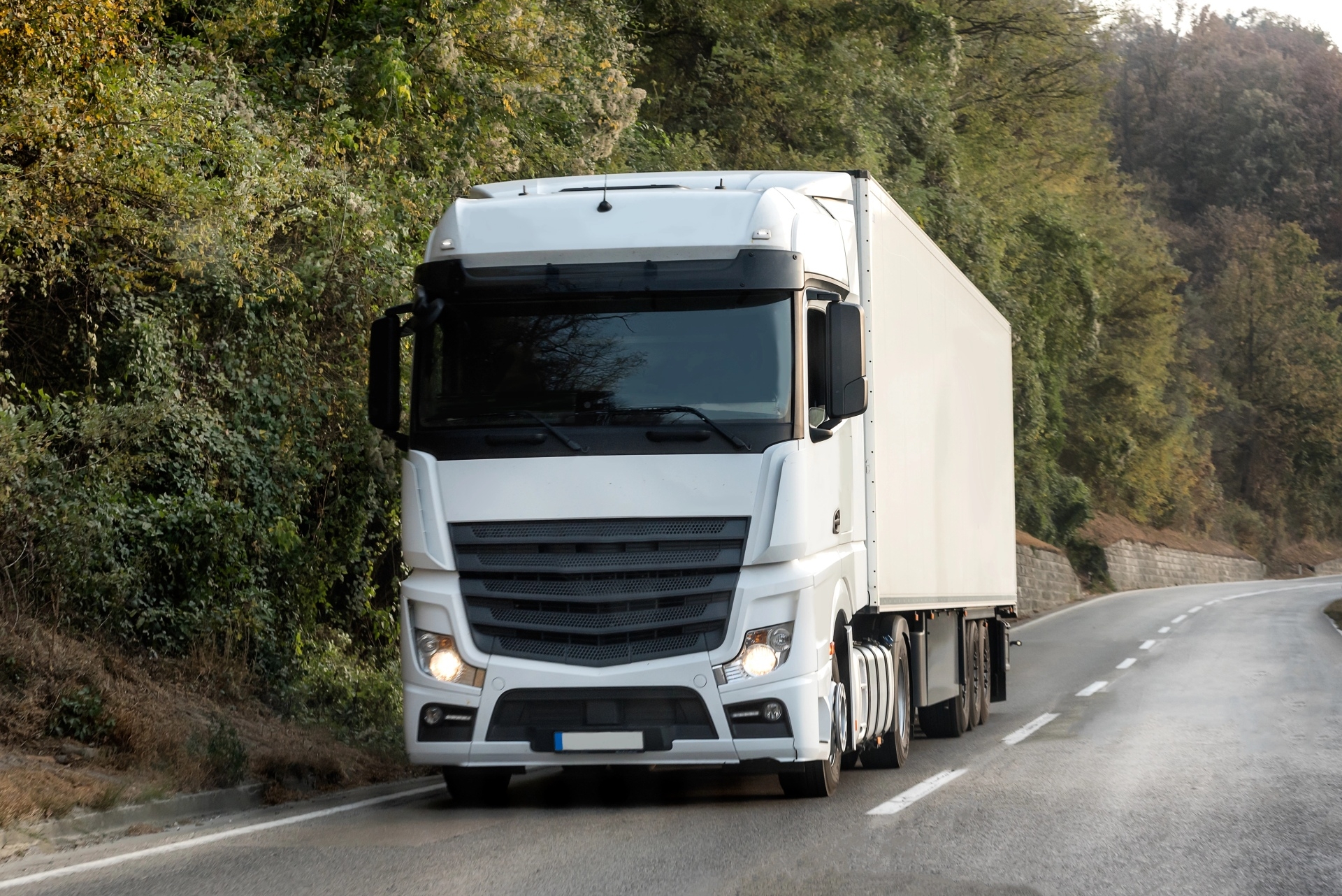
From February 2026, there will be 645 km of new roads. Unfortunately, these are not newly opened roads, but national roads covered by the e-TOLL system. e-TOLL rates are also rising. Government projections assume that the budget will gain an additional PLN 2.7 billion in 2026 this way. Where will this money come from? Among others, from transport companies. High GDP growth could offset the additional TSL costs, but for now, it is not translating into a higher number of orders. In the first half of this year, the volume of transported cargo fell by 13.4% year-on-year.
The e-TOLL toll system is expanding. From February 2026, it will cover 5,869 km of national roads. That is about 645 km more than at present. New sections of motorways and expressways, as well as selected sections of national roads, will be added to the toll system. These are the ones frequently used by transport companies. They include the A2 Kałuszyn–Siedlce, fragments of the S1, S3, S5, S7, S11, S12, S14, S16, S17, S52, S61, as well as fragments of the DK8, DK12, DK50, and DK91.
New e-TOLL rates for vehicles over 3.5 tons and buses are also coming into force. They will be about 40% higher. The government calculates that revenue from e-TOLL will increase from approx. PLN 3.9 billion in 2025 to approx. PLN 6.6 billion in 2026. This is a significant amount – an increase of 70% and about PLN 2.7 billion in higher revenue. The additional amount in the state treasury means additional costs for carriers.
It is worth realizing the situation this industry, which is extremely important for the Polish and European economy, is currently in. Already this year, most transport and forwarding companies have signaled an increase in operating costs related to fleet maintenance and wage costs. This change is noticeable despite relatively stable fuel prices. However, one spark resulting from war or inflation as a result of a trade war is enough, and an increase in diesel costs will lead to higher expenses and lower margins. And all this before the introduction of additional e-TOLL fees, which will drain the pockets of carriers. This is not an industry that has several billion zlotys set aside to spend.
– assesses Wojciech Miklaszewski from Finea, which specializes in TSL financing.
Road tolls are already a very important element of running this business. An example of a truck trip from Bydgoszcz to France in November 2025 involves expenses (for road tolls alone) of 476 euros, or about PLN 2,020.
Costs are rising, and GDP growth (for now) is not translating into more orders
Transport companies must also prepare for the replacement of toll collection devices (OBU) with versions compatible with 4G, due to the phasing out of older networks. This, along with the need to replace tachographs with newer ones, also increases the cost of operations.
At the end of August 2025, the total debt of companies in the TSL industry in the National Debt Register (KRD) amounted to approximately PLN 1.64 billion — an increase of PLN 209 million compared to the previous year.
A chance to earn money for new costs is solid and growing GDP. In the third quarter of 2025, real Polish GDP growth was 3.7% year-on-year. With such estimates, one can count on more orders for carriers. Unfortunately, this is not yet visible. According to data from Statistics Poland (GUS), in the first half of 2025, less than 116 million tons of cargo were transported, which is 13.4% less year-on-year.
There are over 44,000 transport companies with a community license in Poland, which is a very large number. Fierce competition means that the ability to raise service prices in such a way as to cover new costs is rather limited. The greatest risk is borne by micro-carriers, who are the most numerous and actually form the strength of Polish transport. Entrepreneurs who issue invoices with shorter payment terms certainly have more room for maneuver. Faster money circulation gives them greater flexibility in choosing orders. Another scenario is accelerating the payment of invoices with long terms.
– says Wojciech Miklaszewski from Finea.
The expert points out that payment terms in the TSL industry have been the longest in the entire economy for many years. In the third quarter, the average wait for a transfer in transport and warehousing was as long as 21.3 days (data from Faktura.pl). Compared to the third quarter of 2024, this time has lengthened. No one else waits so long.
They wait a long time for a transfer, they delay payments themselves. It is better to avoid this.
The problem with invoices with long payment terms is very serious and causes a snowball effect. A transport company that waits 2 months for payment delays its own obligations because it has no funds to settle its liabilities to suppliers, service centers, or employees.
It is worth noting that a carrier often has shorter payment terms for its own obligations, e.g., leasing, service, or payroll, than those in which it receives payment. ZUS (Social Insurance Institution) or US (Tax Office) are payments that are better not to delay. It is also impossible to do so with employee wages. Low liquidity translates into lower profitability and a greater risk of “falling out of the market.” That is why everything must be done to accelerate the circulation of money.
– summarizes Wojciech Miklaszewski from Finea.
The entry into force of the new e-TOLL rates is inevitable. It is worth preparing for additional costs in advance by accumulating the necessary funds or increasing the liquidity of settlements.
Source: Brandscope