








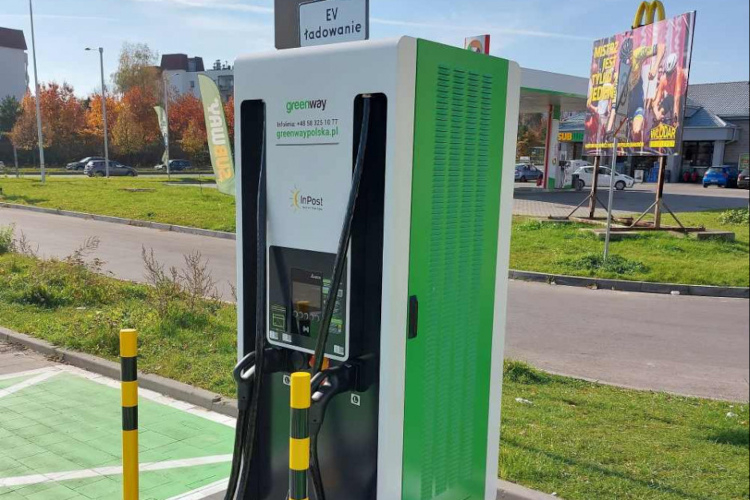
InPost Group, in cooperation with GreenWay, has already installed over 200 electric vehicle charging stations at its logistics centers and publicly accessible DC chargers near Paczkomat® units. By the end of 2023, InPost and GreenWay will build a network of several dozen publicly accessible electric vehicle charging points.
In addition to the sale and installation of charging stations, GreenWay is also responsible for building connections to the power grid, as well as managing and providing technical service for the stations.
– Expanding the network of chargers at our own branches is of particular importance to us due to the InPost Group’s decarbonization strategy. We believe that new technologies and trends should be included in urban development plans. That is why, together with GreenWay, we are working on implementing a publicly accessible network of such devices in Poland, branded with the InPost and GreenWay logos – emphasized Sebastian Anioł, Director of the Logistics Innovation Department at InPost.
– An important element of our commitment to the cooperation with InPost is also consulting on the technical solutions applied regarding charging infrastructure and intelligent management of available power in facilities where chargers are located – says Aleksander Czapczyk, Chief Commercial Officer at GreenWay Polska.
As part of its decarbonization strategy, InPost is also successively expanding its fleet of eco-friendly delivery vehicles, as well as freight trucks. Alongside several hundred electric courier vehicles with the InPost logo that are driving on the streets of Polish cities, 15 new LNG-powered tractor units have joined the company’s portfolio. This is another step towards reducing CO2 emissions in transport. In 2022, nearly 30 million parcels were delivered to recipients via InPost EV vehicles.
According to the latest calculations from the carbon footprint calculator published by InPost for 2022, the carbon footprint of transporting parcels delivered to Paczkomat® units compared to courier delivery to the home is up to 97% lower on the last mile. This reduced emission rate in 2022 compared to the previous study (when the carbon footprint was 75% lower) is the result of optimizing the logistics network and processes, as well as increasing the density of the Paczkomat® unit network. Even taking into account the customer’s trip to pick up the parcel, delivery to a Paczkomat® unit generates up to 93% less carbon footprint than courier delivery.