








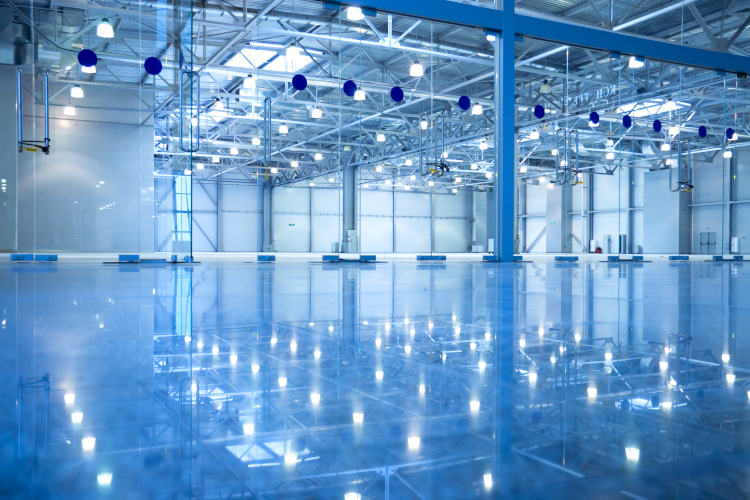
A large number of warehouse facilities saw significant revenue growth during the pandemic, along with the development of the e-commerce channel. Now, some of them are allocating these funds to modernization. A 3-year-old warehouse might have been designed 5 years ago, i.e., in completely different realities, before the pandemic and the war. Modernization measures include hot air destratifiers (which can reduce gas demand by up to 30%), domestic water treatment systems, or push-back racking systems that allow the number of stored pallets to be increased by up to 1/3. Often, e-commerce revenues are invested in warehouse modernizations
The cooling of the economy reduced the demand for warehouses in the first quarter of this year. Declines reached 23 percent year-on-year (CBRE data). In the long term, however, demand will remain high, and Poland is far from the leading countries in Europe in terms of the number of square meters of warehouse space per capita. The economic situation is forcing adjustments to current market needs. There is an increasingly clear trend of modernizing warehouses that have been operating for several years. High financing costs for building new parks, a derivative of high interest rates, are increasing interest in modernizing existing facilities.
- The demand for modern warehouse space means that owners of even 2- or 3-year-old facilities are investing in raising standards and lowering utility costs.
- Improvements currently being ordered include hot air destratifiers, domestic water treatment systems, or push-back racking systems that allow the number of stored pallets to be increased by up to 1/3.
- Warehouse park owners recorded large profits during the pandemic. Now, some of them are investing in strengthening their “green” image, as this is what tenants expect.
– Even relatively young facilities, only 2-3 years old, are ordering a number of measures to raise standards. It is worth noting that a warehouse that is 3 years old might have been designed five years ago, i.e., in completely different realities, before the pandemic and the war. Needs were different then, energy was cheaper, and the reputation of an environmentally friendly park was less important. A factor favoring renovations is the fact that many facilities recorded large revenue growth during the pandemic, along with the development of the e-commerce channel. Now, some of them are allocating these funds to modernization because that is what tenants expect. The motivation is both costs and the need to strengthen a “green” image – says Mateusz Walczak, Project Group Manager at SPIE Building Solutions.
Destratifiers push down hot air, high-class LEDs mean 30-40% energy savings
The demand for modern warehouses is growing, and tenants are primarily looking for savings in utility consumption. The basic action is the installation of meters measuring utility consumption for each area. This allows tenants to be billed for actual, current consumption.
In the case of energy, a number of savings are provided by investments in RES, primarily photovoltaic panels. Warehouse parks with large areas on roofs or green areas next to halls are perfect for this. According to the SPIE expert, in the case of gas, savings can be achieved by installing destratifiers integrated with the heating system, which during the heating season push down warm air from the ceiling zone, which can reduce gas demand by up to 30%. After analyzing water consumption costs, rainwater harvesting projects are increasingly being ordered, which is used for watering greenery or flushing toilets. When installing a tank for several cubic meters, this provides significant savings. Investments are also being made in domestic water treatment – tap water. Installing filters that remove limescale results in cleaner pipes. Such fittings last longer, heating devices are more efficient and require repairs or replacement less often. The installation of aerators, which allow for a significant reduction in water consumption, is also becoming common.
– Significant savings can be obtained by modernizing lighting. Even warehouses that already use an LED system, but one from several years ago, can lower costs. In the case of a facility with an area of 1000 m2, replacing lighting from 10 years ago means energy savings of 30-40%. Especially if we add sensors that disconnect lighting in rooms not currently in use. In the case of lighting that is about 3 years old, the development of LED technology can provide another few percent of savings. Of course, while maintaining work comfort, and even increasing it, because properly selected LEDs can have a light color better suited to the human eye or the nature of the work – says Mateusz Walczak from SPIE Building Solutions.
From 20,000 pallets to 30,000 in the same area
For several years, warehouses have been built modularly. This allows for reorganization and changing the layout of walls, increasing or decreasing the area according to current needs. Such a design allows for rebuilding to meet the needs of specific tenants in just a few days.
– A fresh trend is also a new type of racking, so-called push-back. These are not typical pallet racks built in a block. The new ones are more dense, provide more storage space, and the goods are pulled out using special trucks. Replacing racks allows for increasing inventory, for example, from 20,000 to 30,000 pallets in the same area. This is a large saving, even with the costs of a new sprinkler installation. Every reconstruction involves adapting to building regulations – smoke vents, smoke exhaust gates with certified UPS emergency power supplies, etc., are added. However, such an investment is profitable in the long term – adds Mateusz Walczak from SPIE Building Solutions.
New equipment and increased technological saturation of warehouse space are a challenge for the FM companies serving them. A maintenance technician is no longer enough; an employee with extensive multi-technical knowledge is needed, who is able to verify sensor readings and react quickly enough in any case.
The TSL industry expects that in the second half of the year, interest in warehouse space will increase as the holiday season approaches. In the long term, the phenomenon of nearshoring, i.e., moving production from Asia, which began during the pandemic, may contribute to development. The situation beyond the eastern border may also increase the demand for warehouses in Poland.
Source: Brandscope