








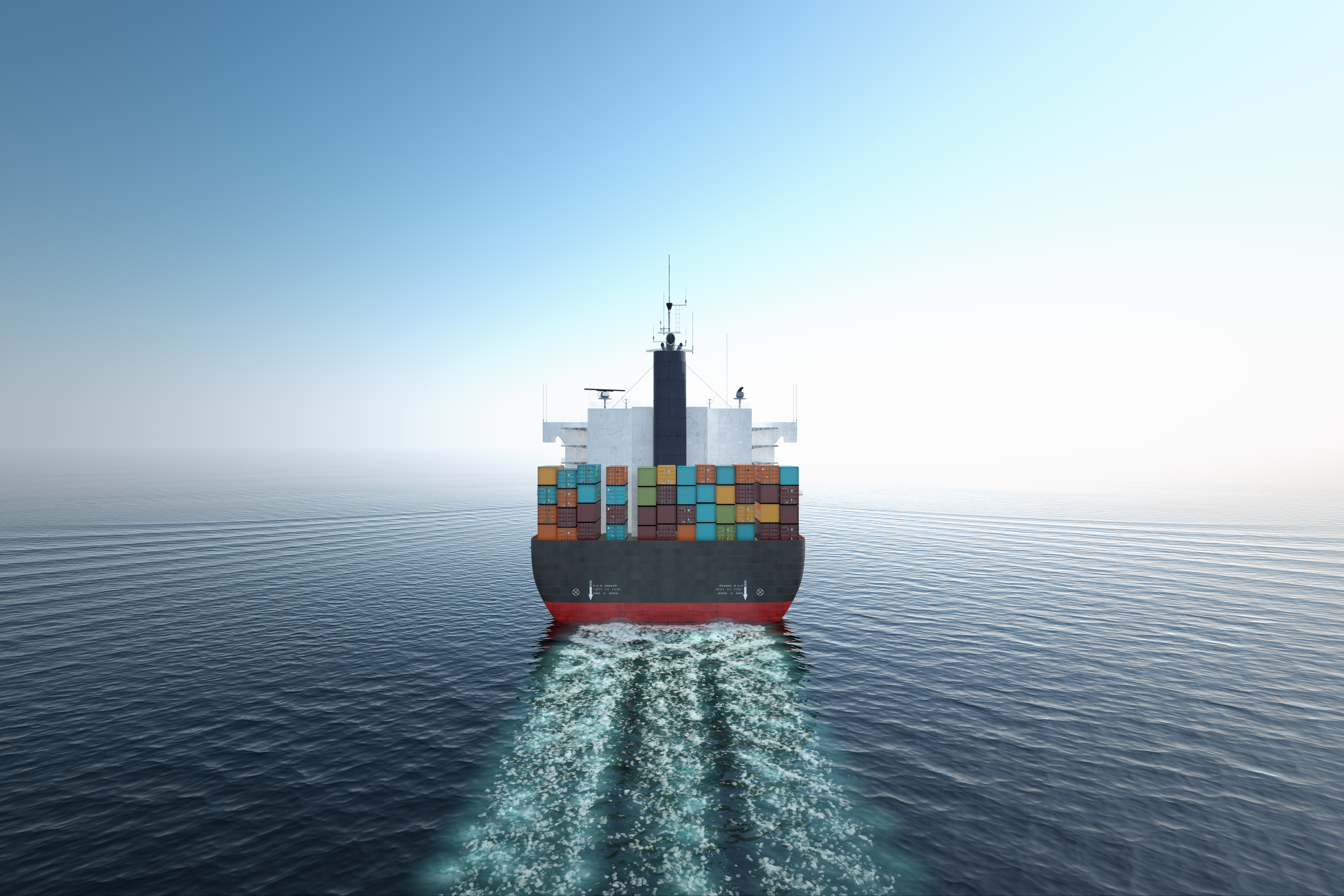
Ships sailing between ports in Europe and Asia are increasingly choosing routes around the African continent, bypassing the Suez Canal. This has a significant impact on the increase in maritime freight rates, including container rates. The Red Sea is the shortest maritime route for transporting goods from Asia to Europe, accounting for 25–30 percent of maritime container transport. Attacks by Yemeni Houthi militants on merchant ships sailing through the Red Sea continue unabated.
Since 1869, the Suez Canal, which cuts through the narrow isthmus between the Asian Sinai Peninsula and the rest of Egypt (and thus Africa), has become one of the most important facilities in global transport infrastructure. The main success of this venture was a significant shortening of the sea route between Europe and India, China, and other Asian ports. Unfortunately, in recent months, shipowners have been choosing to bypass this shortcut and are opting for the drastically longer, old route around Africa. The reason for this is the actions of Houthi militants from Yemen in the Red Sea and Gulf of Aden region.
– Both container ships and tankers, as well as bulk carriers, are now mostly no longer passing through the Suez Canal, which was and remains a key artery in trade between the Persian Gulf countries and Europe, or between China and Europe – says Sandra Baniak, an analyst at the Centre for Eastern Studies (OSW), to the Newseria Biznes news agency.
The lengthening of transport routes translates into the prices of products and energy raw materials imported from the Far East. The choice of the route around the African continent, including the Cape of Good Hope, has influenced the rise in transport costs. The route through the Red Sea allowed oil to be delivered from Iraq to Sicily in 17 days. In the case of having to sail around the Cape of Good Hope, this time extends to 42 days.
– This has had a significant impact on the increase in maritime freight rates, including container rates, as well as on the flows of energy raw materials – notes Sandra Baniak.
In the opinion of experts dealing with Middle Eastern issues, this situation will not change quickly, and the increase in transport costs will translate into the decisions of consumers purchasing products manufactured in Asia. This artery accounts for 12–15 percent of global trade, and approximately 1.2 billion tons of cargo pass through it annually.
– Most shipowners, both of container ships and tankers, expect this situation to last longer. Due to the Houthi attacks and the fact that ships had to be diverted around the Cape of Good Hope, container and maritime freight rates have increased, and this has also, in a way, translated into an increase in the prices of final products. Nevertheless, most entrepreneurs are deciding to order larger quantities of goods as part of a shift to a “just in case” model, which means it is not felt as much by consumers – points out the OSW analyst.
The problems in maritime transport are an opportunity for, for example, air cargo operators. This is shown by data from the beginning of 2024.
– We are observing a very large increase in air cargo; data for the first quarter of this year indicate that this growth was 11 percent year-on-year, which shows that precisely because of the Houthi attacks in the Red Sea, a very large part of the business, including, for example, clothing manufacturers who import goods produced in countries such as China, India, Bangladesh, or Indonesia, are deciding to use air transport – observes Baniak.
The latest announcements from Houthi militants, who claim they are capable of attacking all ships heading to Israeli ports, sound alarming. In this situation, not only vessels in the Red Sea are at risk, but also those in the eastern part of the Mediterranean Sea. Under these circumstances, it can be expected that transport through the Suez Canal will be limited or even blocked for a longer period.
The Houthis are a political-military movement operating in Yemen, mainly in the northwestern part of the country. Its members are recruited primarily from Zaydi tribes, who follow one of the branches of Shiism. Interestingly, they constitute a religious minority in that country, but with enormous influence on local politics.
On the international stage, this movement is increasingly recognized as a terrorist organization. It is worth mentioning that even Muslim countries, such as the United Arab Emirates or Saudi Arabia, use this definition for the Houthis. The movement itself defines itself as an anti-Zionist, anti-Semitic, and anti-American organization.
The Houthis play a major role in the civil war in Yemen that has been ongoing since 2015. It began with a coup d’état carried out by the movement, preceded by the seizure of Sana’a – the country’s capital – in the second half of 2014. The main accusation of the international community against the Houthis is the commission of acts of maritime piracy. These occur mainly in the region of the Red Sea, the Gulf of Aden, and off the coast of the so-called Horn of Africa.
Source: Newseria