








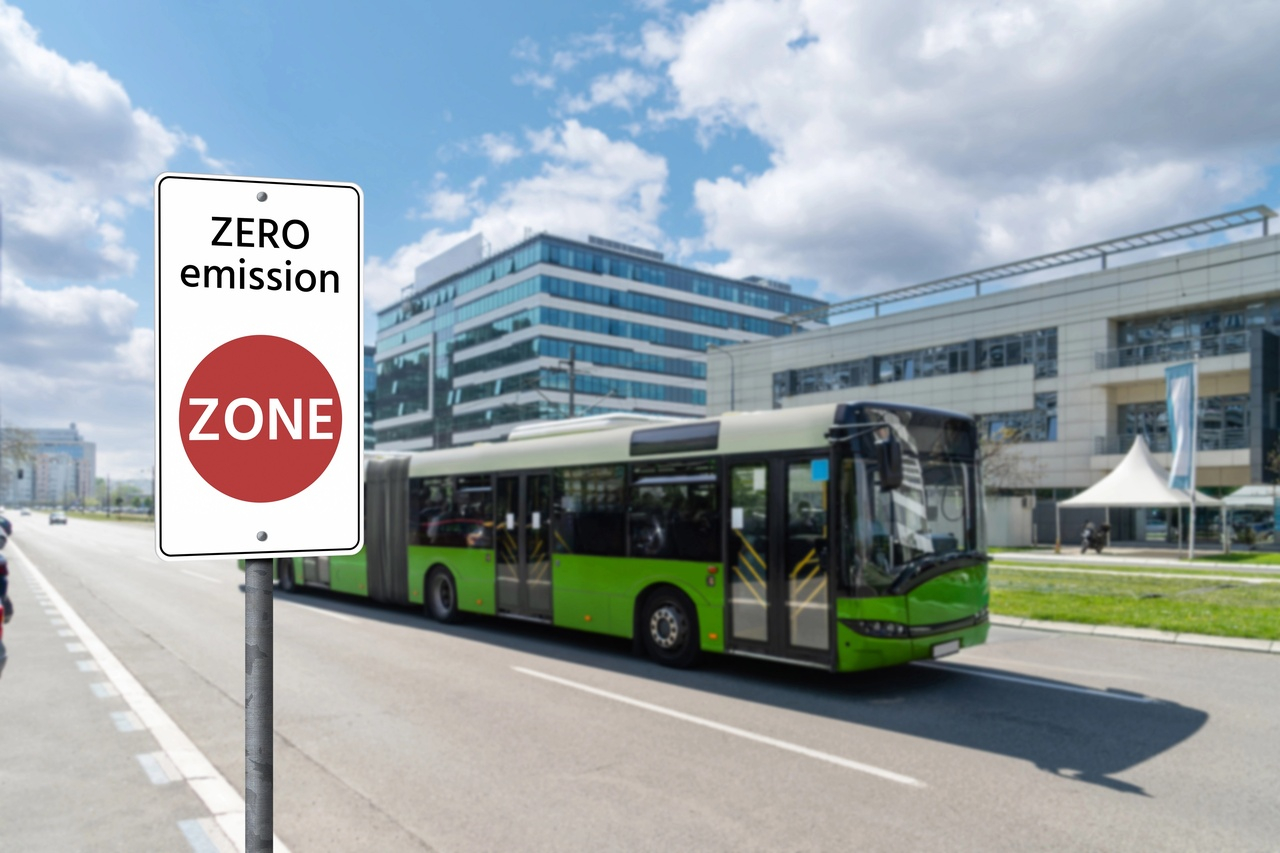
Low emission zones, which regulate access to urban areas based on motor vehicle emissions, are one of the primary air protection measures in European cities. The first of these appeared two decades ago, and by 2025, there will be 507 LEZs operating in Europe, which represents a 58% increase compared to June 2022. In each of the countries where they have been established so far, low emission zones operate based on separate regulations.
Low or zero emission zones not only reduce exhaust emissions and improve air quality. They also contribute to lowering noise levels, improving the health of residents, and promoting sustainable mobility.
– The creation of low emission zones is optional and depends on the decision of local authorities. The detailed rules for their operation are also determined at the municipal level, which is why they may vary depending on the region of the country. If you want to check whether a low or zero emission zone is in effect in a given city, it is worth checking its official website – says Maurycy Kieruj, legal counsel at TC Kancelaria Prawna.
Poland
From the second half of 2024, some cities in Poland may introduce Low Emission Zones, known as “Clean Transport Zones.” Access to these areas is restricted to vehicles that meet specific emission standards, determined based on Euro emission standards according to the vehicle’s production date.
Emission restrictions in force in low or zero emission zones apply to both residents and visitors. Warsaw is the first city in Poland that decided to introduce a Low Emission Zone starting July 1, 2024.
– According to Polish law, the rules for the operation of a low or zero emission zone, including the method of verifying entry rights, are decided by the municipal council by way of a resolution. In addition to statutory exemptions (covering, among others, emergency service vehicles, vehicles for disabled persons, etc.), municipal and occasional exemptions may also apply, allowing, for example, vintage vehicles or roadside assistance vehicles to enter the Low Emission Zone – explains Maurycy Kieruj.
The municipal council resolution must also specify the method that will be used to control cars moving within the Low Emission Zone. A vehicle’s right to move within a Low Emission Zone can be verified based on stickers issued by the commune head, mayor, or city president. The maximum cost of issuing such a sticker is 5 PLN. The sticker is placed in the bottom left corner of the vehicle’s windshield.
France
In 15 cities in France, a Crit’air sticker (air quality certificate) is required. It is mandatory if you want to drive a car during peak pollution hours or in specific areas. You can also order a sticker indicating the pollution level of your car on the official Crit’Air website (certificat-air.gouv.fr).
Germany
37 German cities have established environmental zones, so-called “Umweltzonen,” whose task is to reduce pollutant emissions. Compliance with these restrictions is also expected from drivers from other countries.
In low emission zones, you can only drive with a badge that confirms the car’s pollution class. Cars with the highest pollution class are not entitled to a badge and therefore cannot move within them.
Driving without a badge is punishable by a fine of 80 €. This rule also applies to cars not registered in Germany. The required badge can be obtained at district offices (Landratsamt), as well as at 30,000 car workshops in Germany and various organizations (e.g., DEKRA, TÜV).
Austria
In this country, there are environmental zones covering only heavy goods vehicles. Driving restrictions apply on the A12 motorway, in Burgenland, Graz, Lower Austria, Upper Austria, Styria, and Vienna. To avoid high fines, drivers should order an environmental sticker online.
United Kingdom
The London LEZ is the largest in Europe and covers most of the city’s area, including the strict center, where an additional ULEZ, or Ultra Low Emission Zone, has been designated. Heavy goods vehicles allowed within it must meet the Euro 6 emission standard.
– Entering the zone without authorization is very expensive. Fines start at 500 and go up to 2,000 pounds for a single violation. The only way to avoid fees is to register the vehicle that is to enter the LEZ area, which confirms its compliance with the standard. Registration control is carried out using the city’s monitoring system, and fines for lack thereof are imposed by Euro Parking Collection plc – warns the lawyer from TC Kancelaria Prawna.
Spain
In Spain, since January 2023, new low emission zones (LEZs) have been introduced in 149 cities. This applies not only to metropolises such as Madrid, Barcelona, Cordoba, or Seville, but also to all cities with more than 50,000 inhabitants.
In Barcelona, vehicle registration before entering the city is mandatory. If your vehicle meets the environmental criteria set by the city, you will receive a long-term permit to drive in Barcelona. Otherwise, you will have to apply for occasional access limited to 24 days per year. The LEZ is active from Monday to Friday from 7 a.m. to 8 p.m. You must register online and pay a fee of 7 euros.
Italy
There are no low emission zones in their territory, but some Italian cities have created restricted traffic zones (“Zona Traffico Limitato”), which prevent cars from entering historic city centers.
LEZs in (almost) all of Europe
The countries described above are not the only ones where low emission zones operate – they can be found in almost all of Europe. For this reason, every stay or planned transport of goods should be preceded by checking local regulations in this regard. So far, Estonia, Luxembourg, Croatia, Cyprus, and Slovenia have not decided to introduce environmental zones.
Source: TC Kancelaria Prawna