








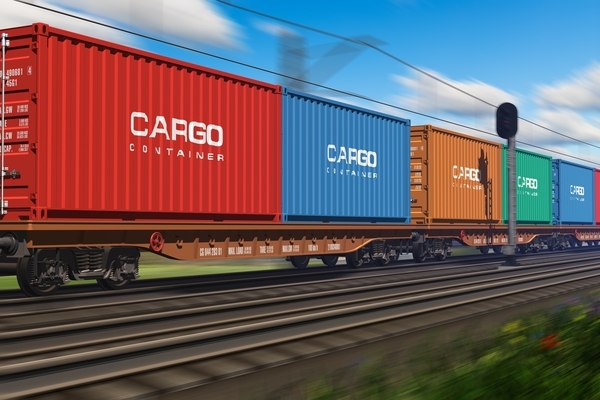
Logistics management can be understood as a certain orientation in management, as logistics is a specific philosophy of conduct or a way of thinking. This orientation, as a result of specific actions and processes ordered in a way that corresponds to the logic of the management process, should guarantee an efficient and effective flow of materials and finished goods in logistics systems. These actions primarily include management activities, known as functions, such as planning, organizing, and controlling.
The logistics orientation in management is expressed by the strategic goals of logistics, such as:
- minimizing the flow time of materials and products,
- ensuring the lowest possible, yet acceptable, level of costs in the logistics channel,
- optimizing inventory levels,
- ensuring a high level of customer service.
In the 1980s, the term “combined transport” was gradually replaced by the term “intermodal transport” or “multimodal transport”. International multimodal transport is the carriage of goods from one country to another by at least two different modes of transport, performed on the basis of a contract concluded with a single multimodal transport operator, who assumes full responsibility for the execution of the contract.
Logistics in combined transport
Logistics is increasingly linked to combined transport as well. However, such an operation requires coordination between individual carriers, which is of particular importance in the current conditions of high market competition. “This is because the symptom of modernity in transport is not a specific technology, but the coherence of the transport chain, which can be applied especially to combined transport”. Therefore, proper organization is a key issue. Activities in combined transport can be divided into three groups:
1. Transport services carried out between points of collection and delivery.
2. Complex transport operations carried out by a transport and forwarding company.
3. Additional activities such as consulting, information, etc.
Proper organization in combined transport can be achieved through the appropriate integration of IT systems, control systems, as well as commercial and legal zones.
The essence of combined transport is the “strong differentiation of processes and links occurring throughout the entire movement chain”. Movement causes various types of problems that must be solved in a way that does not cause any negative effects that could lead to the abandonment of transport or, for example, the loss of goods.
The basic systems that include combined transport are:
1. Container Transport System.
2. Huckepack system for the transport of swap bodies, semi-trailers, and the so-called “rolling road” subsystem.
The article contains 18,610 characters.
Source: Logistyka Magazine