








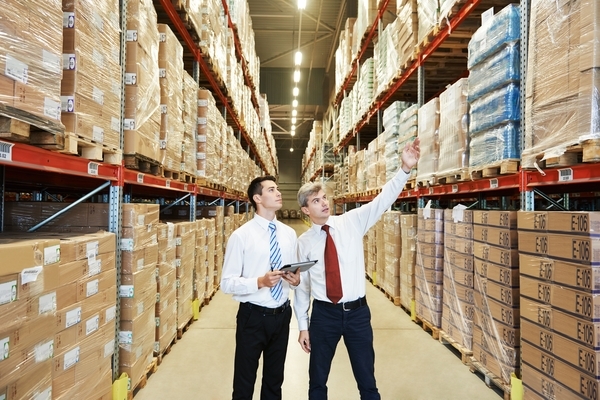
The place where the warehousing process takes place is a warehouse. In the context of logistics, a warehouse is defined as a structure specifically designed for the purposes of receiving, storing, moving, and preparing for shipment materials intended for sale or further processing. It is also an organizational and functional unit with a distinct space, equipped with technical equipment and devices, recording systems, and trained personnel to operate these devices; it is a planned organizational and functional space for the effective storage and movement of materials.
Due to the development of trade and services, the concept of a warehouse has been greatly expanded in recent years. From an organizational unit intended for storing inventory, it has transformed into a place for the distribution of goods – from a trading company to many manufacturers, as well as from manufacturers to retail chains. A warehouse is currently no longer just a room or a building at a company, but increasingly a part of a large logistics firm managing: the planning, implementation, and control of the efficient and effective flow of raw materials, materials, and finished goods from the producer to the consumer. However, regardless of whether it is a warehouse operating within a company’s structure or part of a logistics firm, its operation involves many risks. These arise both in relation to internal transport and result from the method of storing materials, manual handling, working at heights, etc. A lack of knowledge about these risks makes it difficult to predict the consequences of irregularities in warehouse operations.
The purpose of this study is to present the importance of the essence of logistics and safety in the course of warehouse processes, detailing the risks occurring in the warehousing process and technical security systems that support an increase in the level of safety.
Modern warehouse management
Modern warehouse management fulfills a very important function in enterprise management, and the warehouse is becoming an integral part of an organization’s logistics chain. Logistics processes occurring in the warehouse are directly related to materials and inventory. Warehouse processes are all kinds of handling activities causing: movement, storage, receiving, or issuing.
The entirety of warehouse operations consists of a series of activities performed at the moment of cargo flow through the warehouse, starting from unloading external transport, through receiving, storing, and picking, up to issuing and loading external transport. For a warehouse process to be realized, certain organizational and technical conditions must be met. The warehouse space must allow for the execution of all activities, machines and devices through which activities can be performed, personnel with specific tasks, and a system for recording the status of inventory flow through the warehouse. Currently, at every stage of economic activity, we deal with logistics. The effective implementation of processes in logistics – both distribution (supply) and production – is closely related to maintaining and preserving their continuity. Many elements influence the maintenance of the continuity of realized processes. Safety is one of the most important elements.
Furthermore, it should be noted that warehouse management is treated as one of the most important elements of logistics as a whole. It is created in such a way as to streamline overall management. Only efficiently organized warehouse processes can contribute to the rapid flow of raw materials and materials – from suppliers, through the production system, to the recipient. The organizational structure and, of course, broadly understood logistics in warehouse management is the foundation upon which the entire system necessary for managing an enterprise is most often based.
The article contains 25,050 characters.
Source: Logistyka Magazine