








Logistics service provider DHL has published the latest research on augmented reality in logistics, focusing on the possible applications of this new trend at various stages of the supply chain.
The trend report presents opportunities for improving warehouse operations, transport handling, and last-mile delivery, as well as implementing value-added services through computer-generated sensory information such as video or graphics. The trend report was developed by the Trend Research team at DHL Customer Solutions & Innovation as part of an ongoing research project dedicated to the use of augmented reality in logistics. DHL plans to test several of the developed use cases as part of proof-of-concept studies.
– Recent media reports from the automotive industry regarding head-up displays in cars or the use of augmented reality for car repairs indicate the speed of development of this technology and its adoption by industries beyond the IT sector. We believe that this technology also offers great potential for the logistics sector, and we are currently selecting use cases for further research – explained Dr. Markus Kückelhaus, Director of Trend Research, DHL Customer Solutions & Innovation.
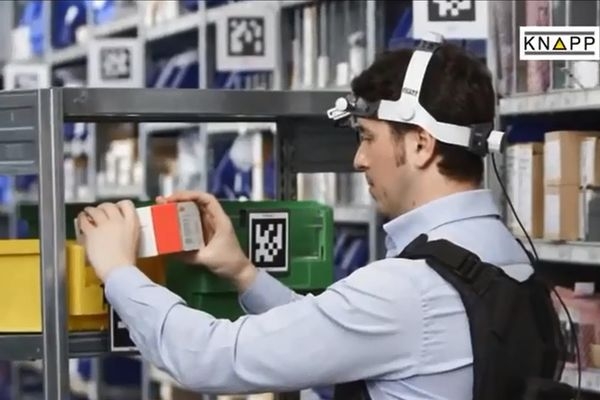
The trend report briefly describes the new trend and innovation related to augmented reality technology and associated devices, and presents opportunities for its application in logistics. The report also includes a discussion of best practices from various industries. “Augmented Reality in Logistics” presents 11 possible applications for the industry, including improved picking in warehouses by equipping employees with head-mounted displays that will allow them to more effectively find the right route and the right item. The overlay of information would also help reduce errors.
The report also outlines opportunities for improving transport, for example, delivery vehicles with windshield displays showing real-time traffic data as well as other valuable information, such as cargo space temperature and warnings, which will help increase driver concentration. Furthermore, drivers and warehouse staff could be equipped with smart accessories that would provide them with important information about each package, such as contents, weight, and destination. This would allow for more efficient loading and reduce transport damage. Finally, augmented reality can improve maintenance and repair services offered by logistics service providers if employees are equipped with smart goggles presenting step-by-step instructions.
DHL is open to collaborating with partners on further research into the applications of augmented reality in daily operations. Moreover, to bring this technology closer to customers, DHL is currently working on creating an interactive exhibition dedicated to augmented reality at the Deutsche Post DHL Innovation Center in Troisdorf, Germany.
The trend report “Augmented Reality in Logistics” was developed based on the overarching “Logistics Trend Radar” report, which is used by DHL to identify and leverage trends and technologies important to the logistics industry. The report is available online at www.dhl.com/augmentedreality.