









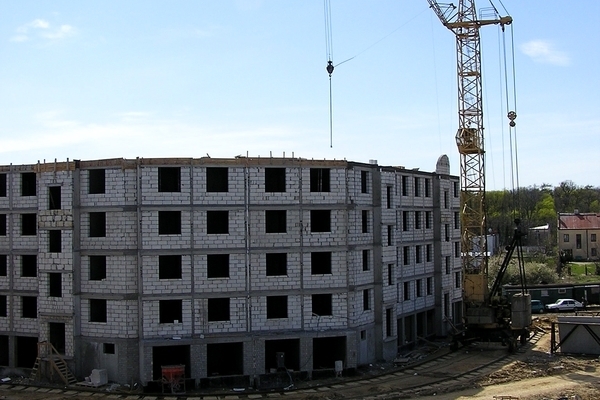
Construction investment projects refer to investments requiring construction and assembly works, with construction objects as their final product. Due to their specific nature, construction investment projects are characterized by high complexity. The specific features of these projects relate both to the products—construction objects as implants in the human natural environment—and to the course of the investment process, particularly its participants.
The specific features of construction activity have a significant impact on shaping the character of construction investment projects. Undertaking them involves deep and long-term interference with the natural environment and is burdensome for the surroundings, both during the construction phase of the objects, their operation, and their decommissioning. It requires the consumption of significant material resources and the involvement of a number of specialists and institutions making decisions at successive stages of the life cycle of the constructed objects. Therefore, these projects have many stakeholders—interested parties with varying degrees of involvement in their individual stages.
The implementation of construction processes requires the successive delivery of production resources, which necessitates the joint consideration of production logistics organization (ongoing logistical support for construction processes) and supply logistics (external deliveries of raw materials, materials, semi-finished products, and prefabricated elements), as well as waste collection.
Logistics can be viewed as the process of managing the entire supply chain, which is understood as activities related to the flow of products and services. Today, it is defined as the planning, implementation, and control of the placement and movement of goods and/or people, as well as activities supporting these functions. The primary goal of logistical processes is to ensure the efficiency of product flow, proper organization of customer service, and minimization of incurred costs.
The efficiency of the flow should be viewed from the perspective of delivering a logistical product to subsequent participants in economic processes according to the “7R” principle:
– right product,
– right quantity,
– right condition,
– right place,
– right time,
– right consumer,
– right price.
Logistics encompasses three planes: knowledge (theory, principles, techniques, tools), management of logistical processes (decision-making in the areas of planning, organizing, motivating, controlling), and processes and activities related to the flows of material and non-material resources in supply chains from suppliers to recipients.
The above definitions result in three tasks assigned to logistics:
– coordination of the flow of supplies (raw materials, production materials, as well as information) and the collection and delivery of finished products to customers (including waste),
– minimization of the costs of resource and product flow,
– subordination of logistical activities to customer service requirements.
The entirety of the material and information-decision processes of logistics should be oriented towards achieving the planned goal.
In a logistical system, three planes can be distinguished:
– spatial,
– organizational,
– informational.
The article contains 30,300 characters.
Source: Logistyka Magazine