









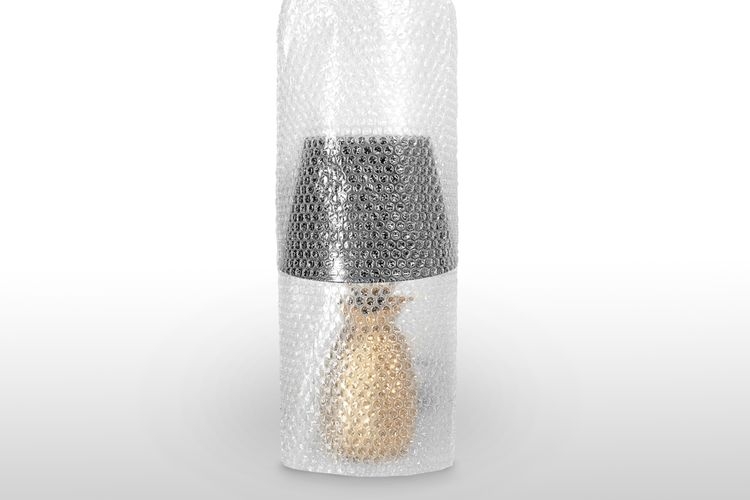
In the lighting industry, packaging is no longer just an “additional cost.” As freight rates rise, pressure to shorten production cycle times increases, and the battle for a zero-complaint rate (especially in the sensitive LED segment) continues, choosing the right product protection becomes a critical operational decision. How can Polish lighting manufacturers optimize this area by using advanced PE foam and bubble wrap conversion?
Air transport is the most expensive logistics service
For an operations director, an invoice from a courier company is often a source of frustration—especially when dimensional weight comes into play. Many lighting fixtures, due to their irregular shapes, are packed in oversized boxes that are often filled with “whatever is at hand.”
A modern approach involves using Fill&Wrap type film products. Instead of standard small-bubble wrap, large-bubble film (with 3 times the diameter) is used. Such material has excellent cushioning properties, but above all—with minimal dead weight—it instantly fills empty spaces, stabilizing the product inside the box. It perfectly protects heavier products and, with fewer details, can successfully serve as wrapping material as well—making the materials used homogeneous in terms of recycling. The result is fewer damages while reducing the total weight of the shipment, which generates measurable freight savings on an annual scale.
Cheaper? Yes, but not at any price
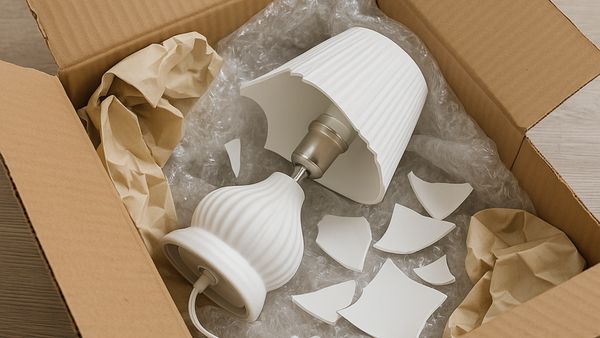
In sectors such as Health & Beauty, both classic and large-bubble wrap are being replaced by so-called air pillows. This is a solution that is often tempting because it is frequently cheaper, but for delicate products prone to breakage or scratching, it is not worth the risk. For example, if the edge of a product punctures a single bubble in bubble wrap, nothing major happens. However, if one air pillow bursts, protection for the entire segment is eliminated, creating slack in the package, which can lead to damage.
Conversion instead of “guerrilla tactics” in the warehouse
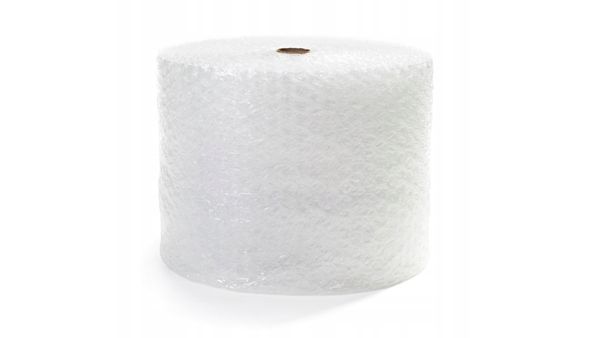
The biggest “margin thief” in the packaging process is not the cost of raw materials, but the employee’s time. In many factories, large rolls of film still dominate, from which warehouse workers manually cut pieces needed to pack the product, wasting seconds on every fixture and generating a huge amount of waste.
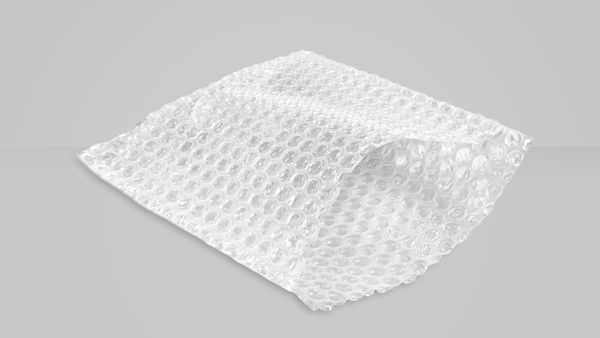
Switching to ready-made packaging conversion—such as PE foam bags or bubble wrap pouches—is the foundation of the Lean Manufacturing philosophy.
- Bags and sheets cut to size eliminate the use of knives and tape at packing stations. The employee simply slides the product into the ready-made form. This is standardization that guarantees that every fixture—regardless of who packs it—will leave the factory protected identically. If you choose those with an adhesive strip, there will be no need to use adhesive tape.
- Tubing and semi-tubing are critical solutions for manufacturers of linear lighting, busbars, or aluminum profiles. They allow for the rapid protection of long elements, minimizing the risk of powder coating scratches, which is crucial in the premium segment. At the same time, they standardize the amount of material used, as they are produced to size by manufacturers such as the domestic Mac-Graf.
PE foam inserts – protection for premium products
In situations where the product is very valuable (e.g., designer lamps), manufacturers opt for packaging in ready-made polyethylene foam inserts. They are prepared to size, and although they will not be as cheap as foam on a roll, they offer a high level of protection by immobilizing the product. The inserts tightly surround the product, protecting it from shocks, breakage, and scratching. It is also a very aesthetic way of packaging from the end customer’s perspective.
Electronics protection is more than just cushioning
An LED fixture is, in fact, a computer integrated with an optical system. The most common reason for complaints is not a broken shade, but damage to micro-solder joints or diodes due to vibrations during transport or electrostatic discharge (ESD).
Here, polyethylene (PE) foam plays an important role in many companies. Its structure not only dampens high-frequency vibrations but also does not absorb moisture and is chemically neutral to paint coatings. In turn, for control modules and delicate LED matrices, the use of bubble wrap with an antistatic additive is becoming the standard.
Optimization through perforation
A solution that is gaining importance in the lighting industry is foam or film in rolls with perforation. It allows for precise dosing of material without the use of tools. From a production manager’s perspective, this means full control over packaging material consumption—we know exactly how many “sheets” of foam or film are needed for a specific lamp model. This is the end of uncontrolled raw material consumption. It is then easier to manage inventory, as excessive stock of materials is a cost of warehouse space.
Summary – build relationships with the manufacturer, not the intermediary
Choosing a partner like Mac-Graf, which is a direct manufacturer and converter, gives Polish lighting companies a flexibility advantage. The ability to order dedicated inserts, bags, or tubing for a specific product series allows you to turn the packaging process from a bottleneck into an efficiently operating mechanism. Repeatability means quality, easier management, and identification of waste.