








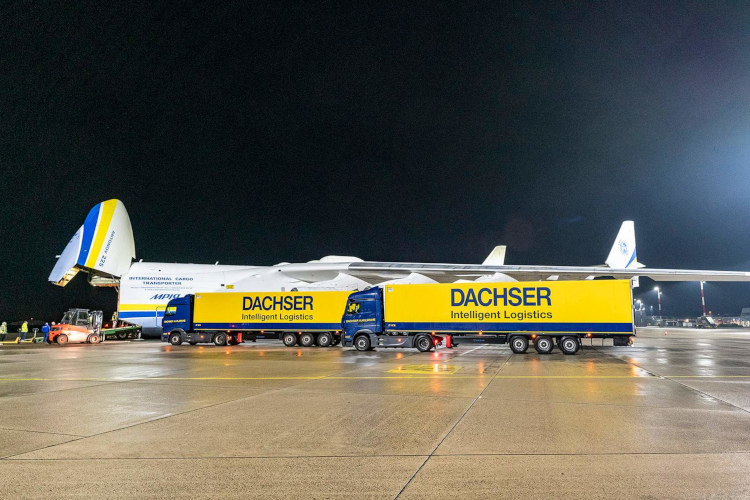
According to data from Statistics Poland (GUS) for 2022, the air transport sector in Poland recorded the highest growth in freight transport compared to other modes of transport. This is a 31 percent increase compared to the previous year. Furthermore, the Civil Aviation Authority (ULC) forecasts further development of air cargo and mail transport. Growing volumes and the opening of Polish exporters to new directions mean that various international regulations must be taken into account, which requires an experienced logistics operator capable of meeting these requirements.
According to the ULC, even in the least optimistic scenario, the weight of shipments carried on board aircraft in 2023 should amount to approx. 230,000 tons (compared to approx. 150,000 tons in 2019). According to long-term forecasts, the amount of cargo and mail transported “on board” in 2040 may reach between 450,000 and even 520,000 tons. In light of these promising prospects, it is worth looking at the main challenges faced by Polish exporters, especially in the context of transporting dangerous goods.
The transport of such products is subject to strict regulations and requirements regarding, among other things, packaging, labeling, and transport documentation. Therefore, exporters must meet higher standards and follow rigorous procedures to ensure safety during both the transport and storage of these goods. Each country has its own regulations regarding the import and use of chemical substances. This can create a number of complications, especially for those entrepreneurs who are taking their first steps in air transport. This requires not only proper preparation from them but also exceptional flexibility.
Air transport is subject to the greatest restrictions in terms of the type and quantity of dangerous materials transported. The most important in this area are the regulations governing the safety of international air navigation issued by ICAO (International Civil Aviation Organization). Furthermore, IATA (International Air Transport Association) sets the rules of conduct related to the transport of dangerous goods, which are adapted to individual national requirements and airlines. Regardless of the destination, the shipment must comply with DGR (Dangerous Goods Regulations).
As part of national regulations, the Act on the transport of dangerous goods by air has been in force since August 2022, which contains detailed guidelines regarding every aspect of this process. It contains information on necessary training, defining responsibility for dangerous goods, rules for classifying these goods (in accordance with UN recommendations), methods and instructions for packaging, labeling, packaging specifications, as well as procedures related to creating documentation for transported dangerous goods.
Personnel training
In accordance with national regulations, the sender of shipments containing dangerous goods is required to complete training in the safe transport of these goods by air. The training is valid for 24 months and provides knowledge regarding the risks posed by dangerous goods, their safe handling, and procedures for emergency situations.
– At DACHSER, we take care of the level of knowledge of our employees regarding the handling of this type of goods. First and foremost, they must know what to do when a chemical substance is released, how to handle a shipment with dangerous material, and what the duties and responsibilities of the operator are. – Ewelina Staszewska-Kobiela, Business Development Manager, DACHSER Chem Logistics in Poland.
– At DACHSER, we take care of the level of knowledge of our employees regarding the handling of this type of goods. First and foremost, they must know what to do when a chemical substance is released, how to handle a shipment with dangerous material, and what the duties and responsibilities of the operator are. Importantly, in every DACHSER branch, the quality of service in this area is at the same level, regardless of the country or continent – says Ewelina Staszewska-Kobiela, Business Development Manager, DACHSER Chem Logistics in Poland.
Documentation
For every shipment containing dangerous goods, the sender is required to complete a “Shipper’s Declaration for Dangerous Goods,” unless DGR regulations provide an exception in this regard. This document must be prepared in English and provided in two identical copies. Furthermore, it is necessary to obtain an entry on the Master Air Way Bill (MAWB).
Classification and packaging
Packaging used for the transport of dangerous goods must meet high quality standards and be designed in such a way as to ensure secure closure and protection against leaks. All shipments containing dangerous goods must be marked with labels in accordance with the regulations contained in the relevant instructions. Furthermore, they must contain the proper shipping name and the UN identification number (established by the United Nations).
Cooperation with an operator
Demanding national and international regulations in the area of transporting dangerous goods by air mean that not every logistics service provider is prepared for this. However, the consequences resulting from the failure to adapt shipments to regulations can be so severe that relying on a random operator seems risky. It is therefore worth approaching this choice with due caution.
– Choosing an experienced partner, such as DACHSER, can be crucial for companies that strive to ensure the safe and compliant transport of dangerous materials by air. DACHSER not only has specialized knowledge on this subject but also the resources to handle even large volumes, and according to forecasts, we can expect this very soon – concludes Ewelina Staszewska-Kobiela.
In 2022, as part of its operations, DACHSER ASL (Air & Sea Logistics) transported 10,012 tons of chemical goods by air. This is an excellent example of advanced logistics services that include the transport of dangerous materials as part of international air transport. It is worth noting that the DACHSER Chem Logistics solution is offered for air transport, but also for sea and international groupage transport.
Source: Dachser