









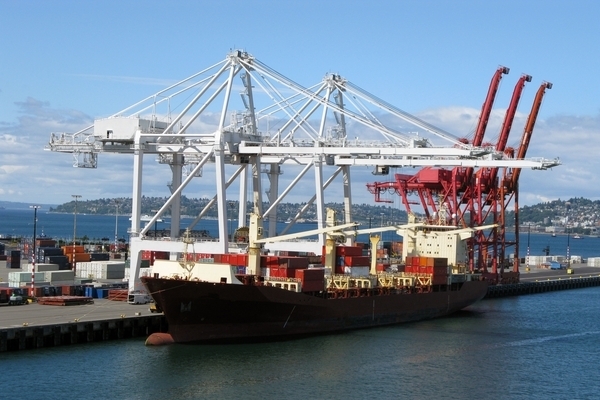
Inland water transport involves the carriage of goods using inland waterway vessels. Such shipping has found application in the transport of oversized cargo, especially where road or rail transport is difficult or even impossible.
Defining oversized cargo for inland transport is quite difficult. It can be assumed that loads which, due to their dimensions or, most commonly, their weight, cannot be transported by land transport means are called oversized shipments, although it would be more appropriate to define such cargo units exclusively for the needs of river transport, but this would be impractical. Limitations in this type of shipping include the presence of various obstacles – shoals, bridges, locks. The most important factors determining the choice of inland transport are the high load capacity, massiveness, and spaciousness of the fleet. The load capacity of modern inland waterway vessels reaches up to 1,500 tons, the cargo space is 75m x 10m, and in Polish conditions 35/45m x 6.9m. Inland shipping uses natural and artificial waterways – canals, artificial reservoirs – which constitute its linear infrastructure. Point infrastructure is defined by inland ports. Transport services are performed by inland carriers and inland shipowners. Transport of cargo by inland waterway from a Polish point of view is very important because the transit of cargo passes through the territory of our country, which is located on the route of Pan-European Transport Corridors. (…)
The article contains 18,213 characters.
Source: Logistyka Magazine 6/2011