









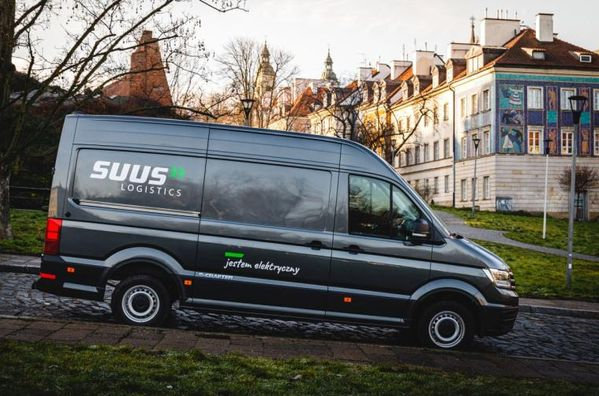
In the face of climate change, a widespread transition to electric vehicles seems to be only a matter of time. This process will not bypass logistics, which cannot function without vehicles. One of the largest Polish logistics operators, Rohlig Suus Logistics, has checked whether replacing the current fleet with electric vehicles is profitable today.
Rohlig Suus Logistics tested one of the most popular electric vehicle models currently used in freight transport, the Volkswagen e-Crafter. Based on available data, as well as their own comparative analysis, the company evaluated the profitability of using the vehicle in the logistics industry. The study took into account vehicle operating costs excluding sales revenue. Among other things, average fuel and energy consumption, insurance costs, inspections, and repairs were compared.
Payload and range
Data from Rohlig Suus Logistics shows that the biggest barrier to the development of the electric vehicle market is vehicle range. According to the manufacturer’s information, the e-Crafter is capable of traveling 174 km on a full charge. In the logistics company’s test, however, the car averaged 130 km. For comparison, a distribution vehicle with a diesel engine covers up to 230 km in a single day. It is also worth mentioning the difference in vehicle payload – an electric car can hold just under 1,000 kg of cargo, while in a combustion-engine Crafter, this value is 1,300 kg. The difference is not insignificant, especially for logistics companies that often handle pallet transport.
Energy consumption costs
A strong point of electric cars is the cost of energy consumed. For the e-Crafter, the cost of driving 100 km is only 15 PLN, while for a diesel it is 34 PLN. Thanks to this, the company can save almost 10,000 PLN annually on “fuel,” assuming an average mileage of 45,000 km. However, considering the purchase price of an electric car, the return on the surplus only occurs after 9 years. It should be emphasized, however, that the relatively simple construction of the e-Crafter may significantly limit the risk of major damage after the warranty period. Such repairs are most often required by a combustion engine.
– Analyzing the pricing of electric delivery vehicles and their maximum mileage, I would not expect a mass replacement of combustion engine fleets with electric ones among logistics operators in Poland in the coming years. The share of electric vehicles in logistics company fleets may grow, however, especially due to potential subsidies and the development of battery production technology, which may directly translate into lower purchase costs – said Ilya Klyha, Junior Project Manager at Rohlig Suus Logistics.
E-Crafter good for the environment
A frequently raised argument in the context of electric cars is the benefits for the environment. According to the “Transport and Environment Reporting Mechanism (TERM)” report from 2018, electric cars pollute the environment less than those with combustion engines, especially when considering the entire life cycle. However, this is conditional on how the energy powering the electric vehicles is obtained. And in the case of Poland, this does not work in favor of vehicles with this drive.
– In Poland, the economic model based on coal still dominates, which is used to generate nearly 80 percent of electricity. This means that the energy powering electric cars still causes the average emission of large amounts of carbon dioxide into the atmosphere. Therefore, if our goal is to reduce the carbon footprint generated by the TSL sector, we should first and foremost change the way we extract the energy that will power potentially more ecological electric cars – said Ilya Klyha, Junior Project Manager at Rohlig Suus Logistics.
The future of cars under the sign of electricity
Legislative changes, as well as increasing consumer awareness and the requirements they set, may make the use of “electric vehicles” by logistics companies increasingly popular. The development of technology and – consequently – the reduction in car prices will also contribute significantly to this. The current maintenance costs of the e-Crafter force logistics companies to offer a different price list.
– The current price of transport services is a resultant not only of operating costs but also of purchase and maintenance costs. In the case of the e-Crafter, these components are significantly higher, so as a result, the prices for this type of service must also be higher. Therefore, new legal regulations favoring the replacement of combustion transport with electric transport will be key to popularizing electric transport. An example of such action could be the lack of road tax in Germany for cars that are environmentally friendly. Such a relief, also introduced in our country, would increase the profitability of purchasing an electric car, thereby influencing the reduction of the price of the service for the end recipient – states Dariusz Gołębiowski, Fleet Director at Rohlig Suus Logistics.
Source: BrandLab