








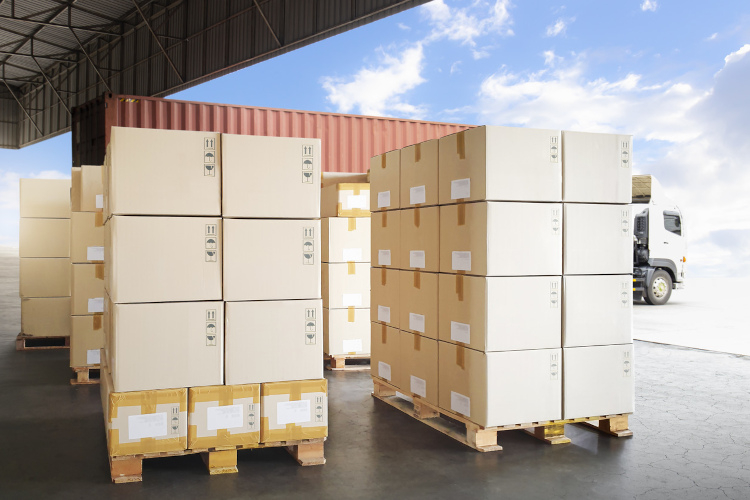
Damage to goods or their loss is one of the most difficult situations that a carrier sometimes has to face. The circumstances of the incident are not always easy to determine, and the perpetrator of the damage often denies responsibility. Beata Gądek, a lawyer at TC Kancelaria Prawna, discusses the carrier’s liability for damage to or loss of transported goods.
Scope of the carrier’s liability for goods
In the case of international transport, the issue of liability is governed by the CMR Convention, i.e., the Convention on the Contract for the International Carriage of Goods by Road. This document clearly specifies who is responsible for damage to or loss of a shipment and in what situations. The carrier is liable for the transported goods from the moment they are accepted from the sender until they are handed over to the recipient. According to Article 17, “the carrier shall be liable for the total or partial loss of the goods or for damage thereto occurring between the time when he takes over the goods and the time of delivery, as well as for delay in delivery.”
This is precisely why the place and time of taking over the goods and handing them over to the recipient should be precisely specified in the consignment note. This is in accordance with Article 6 of the CMR Convention:
– Supplementing it additionally with the time of delivery can resolve many a dispute, for example in a situation where the damage to the goods occurred in the evening, and unloading took place in the morning hours – says the expert from TC Kancelaria Prawna, Beata Gądek.
When is the carrier not liable for the condition of goods in transport?
The carrier will not be liable for damage to the shipment if it was caused by an inherent defect of the goods, the fault of the authorized person and their instructions, or circumstances that the carrier could not avoid and the consequences of which they could not prevent. Such a circumstance in international transport may be the loss of goods as a result of robbery. However, this does not apply to situations where the damage or loss of the shipment is caused by a vehicle breakdown.
Additionally, in accordance with Article 17(4) of the CMR Convention, the carrier will not be obliged to compensate for the damage if the damage to the goods arises, among other things, from the use of an open vehicle, if this was expressly agreed upon and indicated in the consignment note, lack of or defective packaging – if the goods are exposed to damage or loss for such a reason, loading, stowage, or unloading of the goods by the sender, recipient, or persons acting on their behalf, or the natural properties of certain goods.
How to avoid penalties for damage or loss of a shipment?
The CMR Convention in Article 4 indicates that “The contract of carriage shall be confirmed by the making out of a consignment note. The absence, irregularity or loss of the consignment note shall not affect the existence or the validity of the contract of carriage which shall remain subject to the provisions of this Convention.”
Therefore, first and foremost, one should ensure appropriate entries in this document – explains Beata Gądek from TC Kancelaria Prawna. According to Article 6, it must contain, among other things, data such as the date of loading and unloading, the place and time of taking over the goods, and handing them over to the recipient.
No less important information is data regarding the description of the goods, persons authorized for loading and unloading, or requirements regarding the securing of the shipment. Omitting some of them may, in disputed situations, result in a penalty for the carrier. During loading, one should also pay special attention to the condition of the packaging or the goods themselves. If, as a carrier, we believe that the shipment is not in perfect condition or we have any reservations about it, we must note this fact in the consignment note. It is the sender’s duty to properly secure the shipped goods, and it is the recipient’s duty to carefully check the goods upon receipt.
For their own safety, the carrier should pay attention to any visible damage and demand that it be entered in the consignment note. This is in accordance with the provisions of Article 30(1) of the CMR Convention: “If the consignee takes delivery of the goods without checking their condition together with the carrier or without sending reservations to the carrier indicating the general nature of the loss or damage, at the latest at the time of delivery in the case of apparent loss or damage, or within seven days of delivery, excluding Sundays and public holidays, in the case of non-apparent loss or damage, it shall be presumed, unless the contrary is proved, that he has received the goods in the condition described in the consignment note.”
If the damage to the goods is not visible and the recipient notices it with a delay, they can file a complaint within 7 days from the moment of receiving the shipment.
Case study – damage to a pallet of ceramics in transport
One of the cases handled by TC Kancelaria Prawna concerned damage to a cargo of ceramics. During transport, the pallets of ceramics shifted, and they were damaged. The goods were placed on pallets secured with plastic straps and additionally wrapped in stretch film. A court expert appointed to the case stated unequivocally that the tilting and overturning of the pallets with the cargo occurred because they were not properly secured before the start of transport.
So who will be responsible for this? The expert stated that the driver of the vehicle, having 16 straps and edge protectors, had the possibility of dividing the cargo into sections and securing them against tilting. The carrier, pursuant to Art. 8(1)(b) of the CMR Convention, checked the visible condition of the goods and their packaging without raising reservations about the loaded pallets of chimney ceramics. Article 9(2) of the CMR Convention states: “In the absence of reasoned reservations by the carrier, entered in the consignment note, it shall be presumed that the goods and their packaging were in apparent good condition at the time of taking over by the carrier and that the number of packages, as well as their marks and numbers, were in accordance with the statements in the consignment note.” On this basis, the carrier did not raise any reservations that could have been entered into the CMR consignment note. Consequently, there is a presumption that the goods and their packaging were in apparent good condition at the time they were taken over by the carrier. According to Article 10 of the CMR Convention, the sender may be liable to the carrier for costs caused by defective packaging of the goods, unless the defect was visible or known to the carrier at the time of taking them over, and the carrier did not raise reservations in this regard. The expert also stated that the actual stowage and securing of the cargo on the pallets was correct. At the time of loading, the carrier pointed out to the loader that there were too large gaps between the individual pallets on the semi-trailer, and yet they did not secure the goods on the semi-trailer properly nor did they refuse transport. In summary, the expert stated the carrier’s liability due to the lack of securing the goods with straps; alternatively, the carrier could have withdrawn from performing the order.
Documents necessary to prove damage
The basic document allowing to prove damage in transport is the consignment note.
– The information contained therein will be the basis for determining liability for the carrier’s damage, but also the sender’s, because it is they who are responsible for inaccuracies regarding the sender’s data, the place and date of taking over the goods for transport and their delivery, the recipient’s data, the type of goods, their packaging, the number of pieces, features or numbers, weight, as well as instructions necessary for handling formalities, for example, customs – suggests the expert from TC Kancelaria Prawna.
In addition to the consignment note, potential damage can also be proven by photos of the damaged goods, a non-conformity report of the goods, and a filed complaint.
How is compensation for goods damaged during transport calculated?
The consequence of damage to goods during transport may be a claim for compensation. Most often, the principal turns to the carrier with a complaint and then sends a VAT invoice, bill, or accounting note indicating the amount to be paid. The amount demanded by the claimant should be calculated appropriately. According to Article 23 of the CMR Convention, when the carrier is obliged to pay compensation for total or partial loss of goods, this compensation is calculated according to the value of the goods at the place and time of taking them over for transport.
– Therefore, a document confirming the value of the goods before the start of transport will be very important for determining the amount of compensation: a bill or a VAT invoice – says Beata Gądek and adds – If such a document has not been presented, the stock exchange price of the goods is assumed or, in its absence, the current market price, and in the absence of both, the basis for calculation becomes the average value of goods of the same type and quality.
In court proceedings, it is very important not to rely on the unverified value of the goods indicated on the VAT invoice or in the debit note.
The occurrence of damage in transport is often associated with resolving a dispute in court. In such cases, one should first of all ensure appropriate documentation of the incident. It is also worth considering whether to use the help of a specialized law firm that has experience in these types of cases.
Source: TC Kancelaria Prawna