








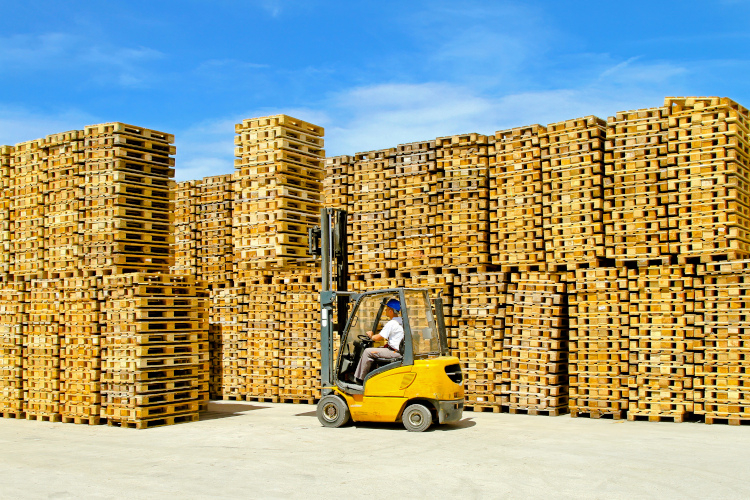
The IPP campaign aims to increase pallet recovery, which positively impacts the efficiency of supply chains served by IPP, as well as the realization of its own sustainability ambitions to reduce the company’s carbon footprint.
IPP has launched a campaign to raise awareness among its customers and retail chains that pooling pallets should not be allowed to leave the network or go missing. A lost pallet has a negative impact on the availability of pallets needed to deliver products to store shelves. A pooling pallet is an asset with a specific value, and IPP Pooling is its owner – failing to return pallets, which may consequently leave the network or go missing, violates the principles of the closed-loop pooling system. This also has a negative impact on sustainability, as every pallet that must be replaced with a new one requires the consumption of fresh wood.
– The success of sustainable and efficient pooling depends on ensuring that pallets remain in our network and are used in an optimal way. When pallets become unavailable — for example, they remain unused as excess stock in a warehouse or, worse, their location is unknown due to poor data management: the efficiency and sustainability of the pooling system are at risk. Pallets are an important part of supply chains, and their absence is harmful to all stakeholders in the supply chain, from the manufacturer through the retail chain, to the final consumer when their favorite product does not reach the store shelf. Therefore, IPP kindly requests all customers, retail chains, and other stakeholders involved in our pooling system to ensure the fastest possible return of pallets after their use. In this way, we are able to ensure a maximally efficient and sustainable pooling system that will impact all supply chain participants – says Mark Hulland, IPP Pooling Director.
The long-term IPP Pooling campaign is being implemented through various channels, including social media, banner advertising, direct mailing, and posters, and the entire IPP team is actively involved in the process of reporting pallets located outside the network – a dedicated application has been developed for this purpose.