










Janusz Mincewicz talks to Czesław Warsewicz, CEO of PKP Cargo.
Janusz Mincewicz: In 2020, the PKP CARGO Group generated over PLN 4 billion in revenue from contracts with customers, EBITDA amounted to PLN 580 million, and the operating loss remained at the level of PLN 186 million. How do you assess last year?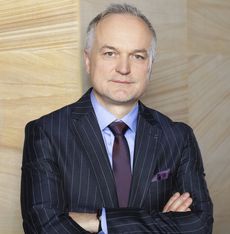 Czesław Warsewicz: The most significant impact on the situation of the rail freight market last year was the COVID-19 epidemic. In 2020, the market in Poland decreased by nearly 7% year-on-year – from 55.8 billion tkm in 2019 to 52.2 billion tkm in 2020, with the worst period occurring in the second quarter. The situation in the most important commodity groups was determined last year by a difficult market environment, mainly due to the weakening of international trade due to the coronavirus pandemic and a decline in electricity consumption in Poland associated with the lockdown. We must also remember that the lockdown coincided with the process of changes in the national energy mix, which consists of a decrease in the share of hard coal in total energy production. Due to the suspension of new infrastructure construction projects planned for 2020, there was also a decline in aggregate transport, which is our second-largest bulk cargo segment. Last year, the crisis in the European and Polish steel industry also deepened, which negatively affected the transport of metal ores and finished metal products.
J. M.: The PKP Cargo Group transported a total of 93.6 million tons of goods in 2020, i.e., 13.8% less than a year earlier. How do you assess this result?
Cz. W.: This must, of course, be viewed against the backdrop of the COVID-19 pandemic. It hit bulk cargo carriers like PKP Cargo the hardest. In the general downward trend in transport, however, it is worth noting a 2% increase in a key segment for the PKP CARGO Group with future potential – the intermodal transport category (9.7 million tons in 2020 compared to 9.5 million tons in 2019). An even higher increase, of 6%, occurred in terms of transport performance (an increase from 4.1 billion tkm in 2019 to 4.3 billion tkm in 2020). In total, across all categories in 2020, the PKP Cargo Group’s transport performance amounted to 23.6 billion tkm (-12.0% y/y). However, it is worth noting that despite the difficult economic situation, the PKP Cargo Group intensified its commercial activities – it signed agreements with, among others, Krajowa Spółka Cukrowa for sugar transport to the terminal in Gdańsk, contracts with ArcelorMittal companies, as well as for coal supplies for PGNiG and ENEA. The Group also concluded an agreement to establish an intermodal company with LTG Cargo Polska. We are improving the quality of our services, taking care of existing customers, but we are also trying to acquire new ones. By adapting our offer to the needs of contractors, we win tenders despite strong competition in the rail freight market.
J. M.: And are the financial results satisfactory?
Cz. W.: Of course not, because we incurred a net loss of PLN 224 million, with profitability determined mainly by the economic recession caused by the COVID-19 pandemic and the associated announcement of numerous restrictions. Let me just remind you that during the previous global crisis in 2008-2009, which Poland avoided, PKP Cargo generated a loss of almost PLN 700 million. With the current crisis, which is disproportionately deeper than that one, PKP Cargo is coping much better. It is also worth adding that despite the recession in European economies, the PKP Cargo Group generated an EBITDA profit of PLN 580 million, but this was 32.5% less than a year earlier. The difficult situation in the rail freight market, caused by the coronavirus pandemic that has been ongoing for over a year, has even more clearly confirmed the validity of the PKP Cargo Group’s development direction in the coming years, i.e., transforming from a carrier for heavy industry into a European logistics operator. The prospects for this direction are also evidenced by the main factors that will influence the development of the rail sector in the coming years. These include the implementation of the economy decarbonization program and noise reduction in freight transport, as well as the development of seaports and the New Silk Road. The further growth of international trade and the containerization of the economy, as well as the modernization and expansion of the rail network and investments in intermodal terminals, will also have a significant impact on the rail sector.
J. M.: Intermodal transport has been growing systematically for several years. Will this process be maintained?
Cz. W.: Last year, intermodal cargo transport provided the PKP Cargo Group with over 18% of its transport performance. I have no doubt that in order to continue to develop, we must constantly increase this indicator to fill the gap, especially after hard coal transport, which will simply decrease because the energy sector will consume less and less of this fuel. The process of transitioning from a carrier for heavy industry to a logistics operator is being systematically implemented by the Group, among other things, thanks to the expansion of the container terminal in Małaszewicze and the expansion of the intermodal connection offer. Last year, under the Connect Operator brand, our subsidiary PKP Cargo Connect launched operator trains, including on the Warsaw – Gdynia – Warsaw route and from Małaszewicze to terminals in various regions of Poland and abroad. This is also clearly visible in the change in the structure of PKP Cargo International’s transport, in which intermodal transport is successively gaining an increasing share.