








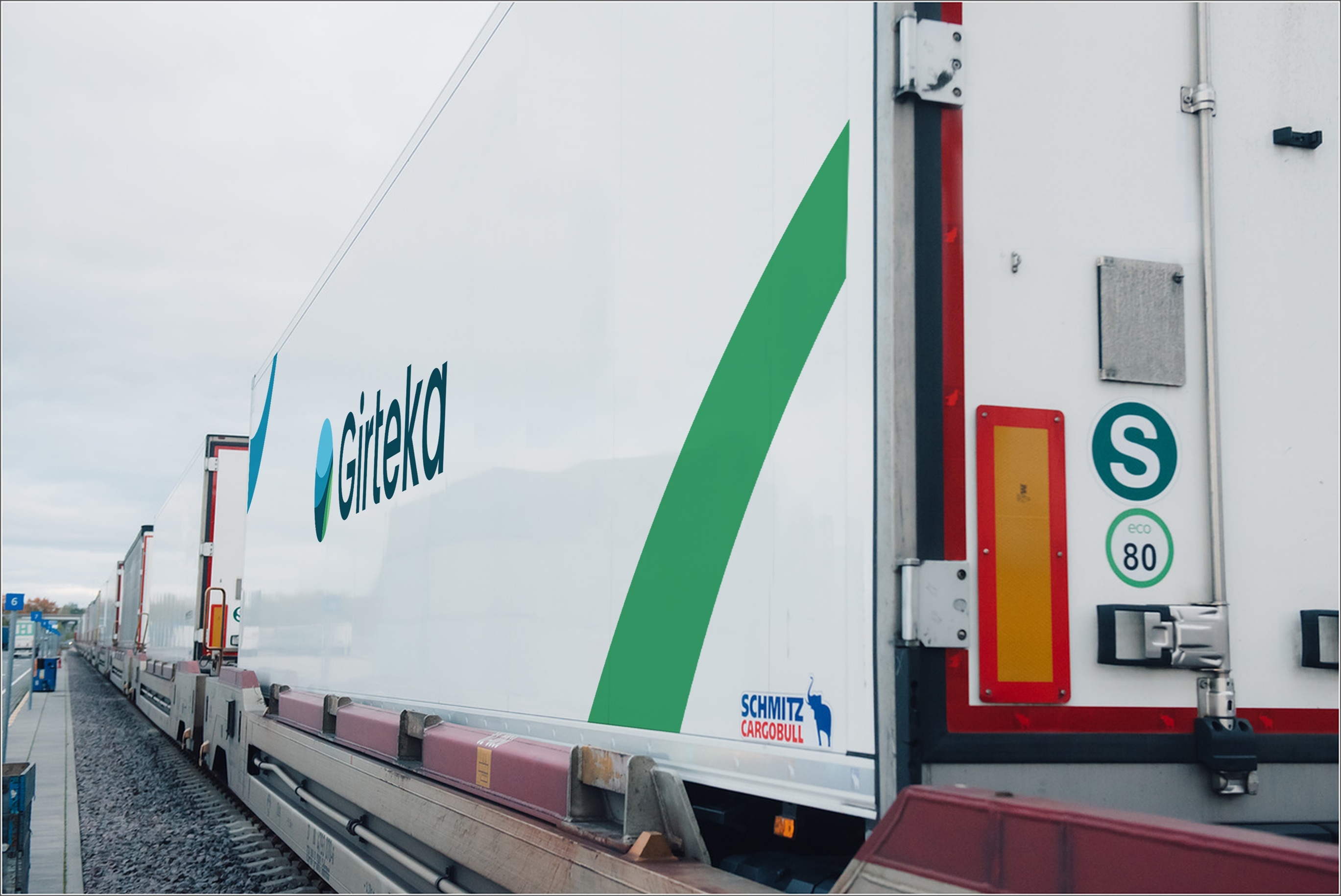
Girteka, Europe’s largest road freight carrier, is strengthening its commitment to sustainable transport based on road-rail intermodal connections and the optimization of long-haul deliveries in Europe. In 2024 alone, the company increased the use of these solutions by 35% compared to 2023, thereby completing over 24,000 full truckload deliveries. Now, it announces their further development to provide new opportunities for clients seeking sustainable transport options, including for temperature-controlled cargo.
The growing importance of intermodal solutions
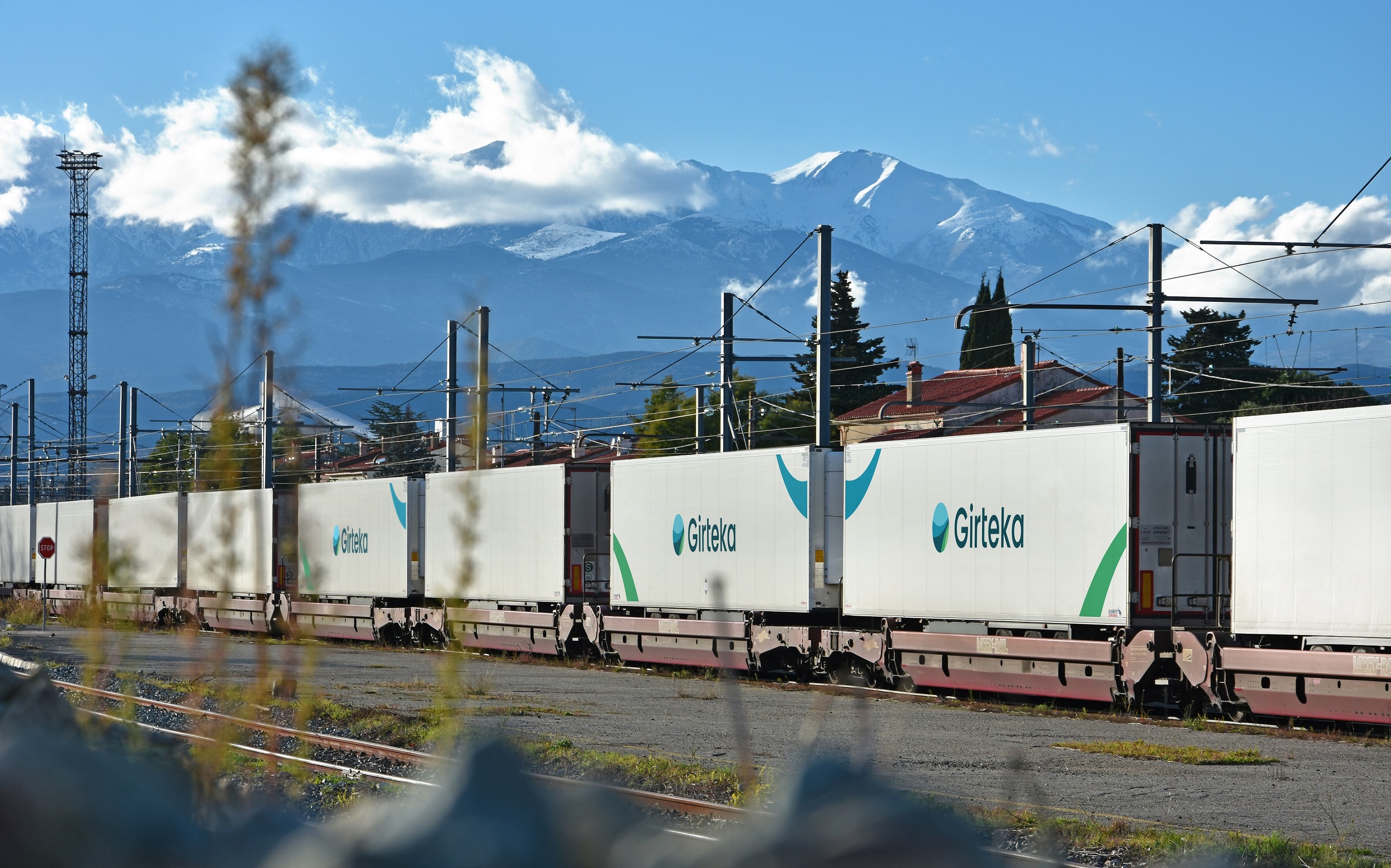
The year 2024 saw an increase in demand for intermodal services using rail. Their importance has grown as one of the most environmentally friendly and operationally efficient ways to move cargo over long distances (a train can carry up to 50 trailers at once).
Girteka, which began its first intermodal deliveries in 2017, is now developing them within an extensive network of rail connections. Its reach covers key European markets, including Spain, Italy, France, and Germany.
Intermodal transport, used for carrying various goods, is increasingly considered a viable way to reduce emissions by companies in the food and beverage and cosmetics industries, which Girteka specializes in serving. This also applies to high-value and temperature-sensitive cargo. This is supported by the use of advanced digital tools that ensure real-time visibility and remote temperature control in refrigerated trailers. This guarantees timely deliveries and the maintenance of high product quality.
The development of road-rail connections has also opened up new opportunities for logistics companies to implement solutions that reduce CO2 emissions based on alternative fuels. Girteka has begun carrying out transports to/from rail terminals using trucks powered by HVO, which allows for a reduction in CO2 emissions by up to 90%.
Reporting on emission reductions
In 2024, thanks to intermodal solutions, Girteka reduced CO2 emissions by over 23.6 million kg, which confirms their effectiveness in achieving sustainability goals.
In this regard, it also supports its clients. It is the ability to reduce and manage emissions while maintaining operational efficiency that is crucial for companies choosing this method of transport. Thanks to the use of state-of-the-art digital tools, Girteka analyzes every transport operation in terms of measuring the carbon footprint, and reports prepared based on specific data enable companies to manage Scope 3 emissions, also in the context of ESG requirements.
Co-creation is important for Girteka
Decarbonizing supply chains based on efficient and sustainable solutions requires close cooperation between clients, intermodal operators, and transport companies. As Girteka emphasizes, only a co-creation approach, utilizing the knowledge and experience of carriers, allows for in-depth analysis and optimization of supply chains. It also facilitates the preparation of various scenarios and the selection of an intermodal solution in accordance with the goals set by each participant.
– Today, we see the real benefits of cooperation in logistics – says Larisa Senkevičienė, Intermodal Business Development Manager at Girteka. – By co-creating sustainable solutions, we can significantly reduce emissions while ensuring high quality and timely deliveries.
The set direction – 2025 and beyond
In 2025, Girteka will continue to invest in the development of digital tools and the expansion of intermodal services. Strengthening cooperation with rail operators will be key to scaling operations and fully decarbonizing supply chains. The company will also focus on preparing and implementing further alternative solutions, including those based on the use of HVO100 fuel or electric vehicles.
Girteka’s achievements to date confirm that implementing sustainability principles in logistics is not only possible but also effective. By combining innovation, cooperation, and a responsible approach, it is possible to reduce emissions while maintaining the highest standards of service quality.
– Sustainable logistics is not just a possibility, it is a reality that brings benefits to business, the planet, and future generations – concludes Larisa Senkevičienė. – Intermodal solutions show that by joining forces, the logistics industry can meet environmental challenges, shaping a greener and more efficient future.
Source: Girteka Group