









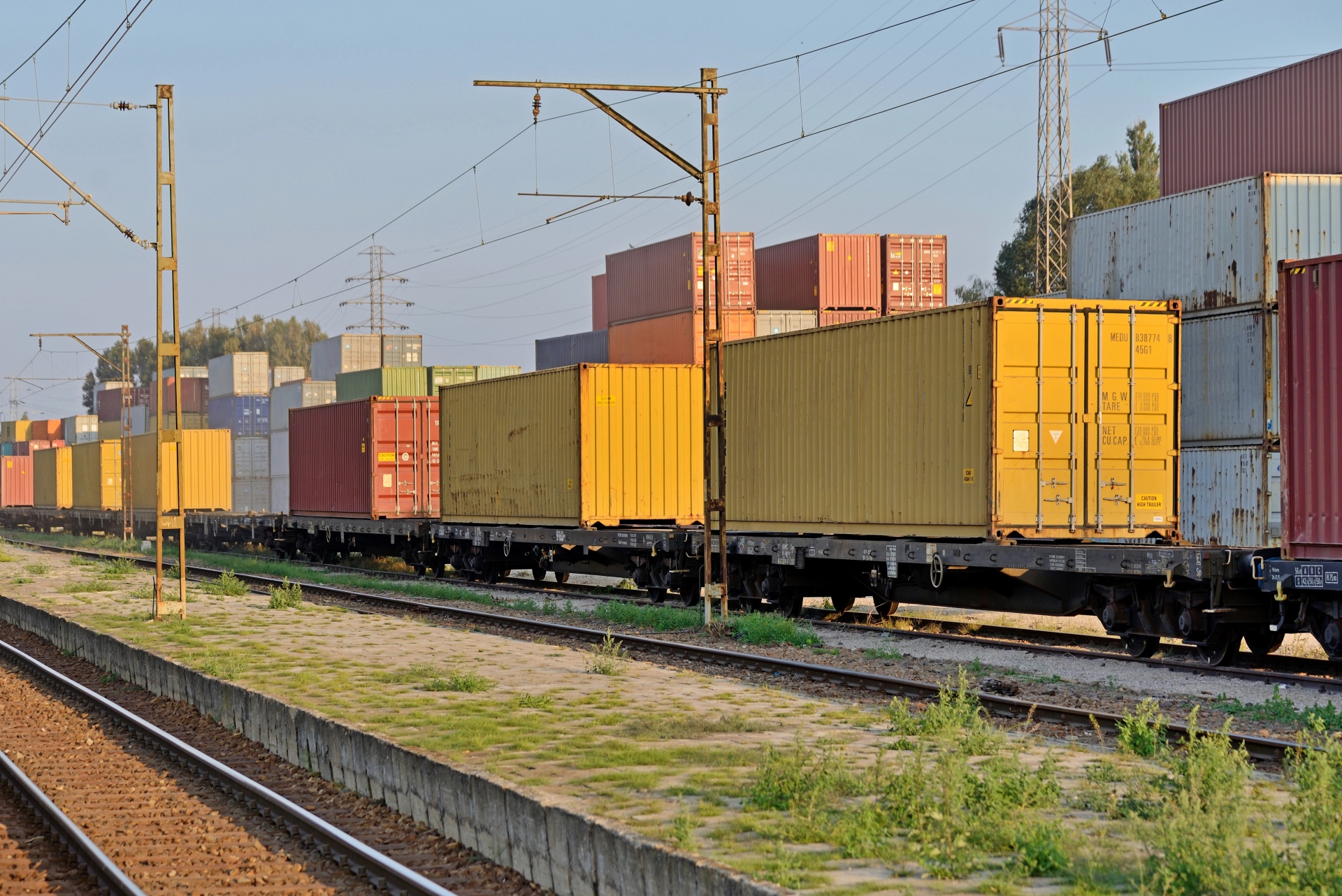
Intermodal rail transport saw a clear increase in the first quarter of 2026 compared to the beginning of 2025. Both the mass of transported goods and the transport performance were more than 16% higher year-on-year. The growing importance of this segment is also confirmed by its market shares – during the first three months of 2026, intermodal transport already accounted for 15% of the mass transported by rail and 19.2% of transport performance. These values are record highs for the intermodal market’s share of total transport.
In the first quarter of this year, railways in Poland transported over 484.7 thousand intermodal units, which is 12% more than a year earlier (432.8 thousand). The number of containers calculated in TEU also increased – to nearly 789.8 thousand compared to 680.8 thousand in the first quarter of 2025 (+16%).
The mass of goods transported in this segment reached nearly 7.73 million tonnes, which is 16.4% more compared to 6.63 million tonnes a year earlier. The same growth was recorded in transport performance, which amounted to almost 2.58 billion tonne-kilometres, compared to 2.22 billion tonne-kilometres a year earlier.
In the first quarter of 2026, the intermodal sector achieved the highest values of basic indicators for the first quarter since at least 2012.
On an annual basis, intermodal transport remains one of the fastest-growing segments of the rail market.
Compared to the fourth quarter of 2025, however, slight declines were recorded:
- number of units – by 4%,
- number of TEU – by 2.1%,
- mass – by 1.7%,
- transport performance – by 4.3%.
The results of intermodal transport confirm that this branch of transport can be one of the engines of growth for rail freight in Poland. Despite a demanding market environment, this segment is performing well. It is recording double-digit year-on-year growth and strengthening its position in the transport system.
– comments on the results Dr. Ignacy Góra, President of the Office of Rail Transport.
The first quarter of 2026 brought a further increase in the share of intermodal transport in the entire rail sector. In terms of mass, it accounted for 15% of transport (compared to 12.7% a year earlier), and in transport performance, as much as 19.2% (compared to 16.6% a year earlier). These are also record values in the history of UTK statistics.
Largest intermodal operators
In the first quarter of this year, 32 companies reported intermodal transport (34 companies carried out transport in the first quarter of 2025). Nearly half of the market in terms of mass was accounted for by the 3 largest operators.
The largest share was achieved by PCC Intermodal (19.7%), slightly ahead of PKP Cargo (19.3%). Both companies slightly increased their shares year-on-year (from 19.5% and 19.2% respectively). In third place was DB Cargo with a share of 10.4% (a decrease from 11.5% in the first quarter of 2025).
Clear increases in mass shares – compared to the first quarter of 2025 – were recorded by:
- Service and Logistics Group – to 3% (from 1.1%),
- Orlen Kolej – to 1.7% (from 0.5%),
- Eurotrans – to 2.1% (from 1.1%).
In terms of transport performance, the leader remains PCC Intermodal (21.9%), ahead of PKP Cargo (20.2%) and DB Cargo (12.1%). In the case of PKP Cargo, this means a clear increase in share (from 18.8% a year earlier), while DB Cargo recorded a decrease (from 13.5%).
Summary of the intermodal market
Intermodal is the fastest-growing segment of the railway and is increasing its importance – despite seasonal fluctuations. At the same time, the market remains relatively concentrated. However, the activity of smaller operators is growing, for whom intermodal transport represents a direction for diversification in the face of a shrinking segment of traditional bulk cargo, such as coal.
The future of intermodal transport is strongly influenced by external factors, including the general geopolitical situation and possible disruptions in global supply chains. Conflicts in regions of the world strategic for maritime transport lead to capacity constraints, longer transport times, and increased sea freight costs. In such conditions, rail transport becomes relatively competitive, and its role as an element increasing the resilience and diversification of the supply chain is clearly growing. On the other hand, with a stable situation on maritime routes, the railway should play the largest possible role in exporting cargo from ports – currently, it is definitely too small.
Detailed data on intermodal transport can be found on the Office of Rail Transport website at dane.utk.gov.pl. In the Intermodal transport tab, there are current statistics on the intermodal transport market as well as archival data.
Source: Office of Rail Transport