








Expanding intermodal connections between Poland and Germany is the goal of the cooperation between PKP CARGO S.A. and Duisburger Hafen AG (Duisport), the operator of the river port in Duisburg.
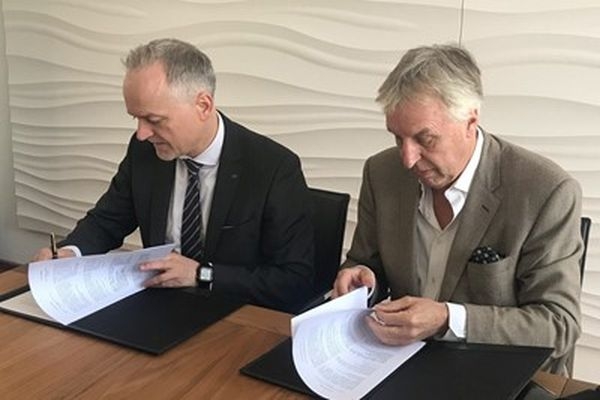
A letter of intent regarding this matter was signed on April 10, 2019, in Duisburg by the President of PKP CARGO S.A., Czesław Warsewicz, and the CEO of Duisburger Hafen AG, Erich Staake. Both parties are committed to expanding intermodal connections from Poland to Germany, particularly in the following corridors: Małaszewicze – Duisburg, Poznań – Duisburg, Geniusze – Duisburg, and Gliwice/Wrocław – Riesa/Duisburg.
The signatories of the letter will establish a working group tasked with preparing joint intermodal products and improving customer service quality. The focus is specifically on reducing the time and costs of cargo transport and transshipment. Streamlining logistics processes is intended to make rail terminal transport rates competitive with the prices offered to customers by road haulers.
– It is important for us that we are opening up broader opportunities for transporting intermodal cargo to Duisburg, where the world’s largest inland river port operates on the Rhine. Our trains have, of course, been running there for many years, and we maintain regular connections with Duisburg, but there is an opportunity to significantly increase the volume of transported goods – says Czesław Warsewicz, President of PKP CARGO S.A. – Poland is a place where the transport of containerized cargo from seaports is growing dynamically, and we are also a land gateway to the European Union for China on the New Silk Road route. This makes Duisport interested in cooperating with Poland to handle as large a portion of containers as possible that are addressed to recipients in Western Europe.
The President also pointed out that the interest in Poland stems from the fact that the flow of intermodal cargo passing through our country will grow significantly in the coming years. We are increasingly making better use of Poland’s location at the intersection of the largest trade routes in Europe.
In 2018, the port in Duisburg recorded transshipments at the level of 127.5 million tons of goods. This is more than the combined result of the Polish ports in Gdańsk, Gdynia, and Szczecin/Świnoujście. Container transshipments in 2018 exceeded 4 million TEU. For comparison, one of Europe’s largest seaports in Hamburg handled 8.7 million TEU.