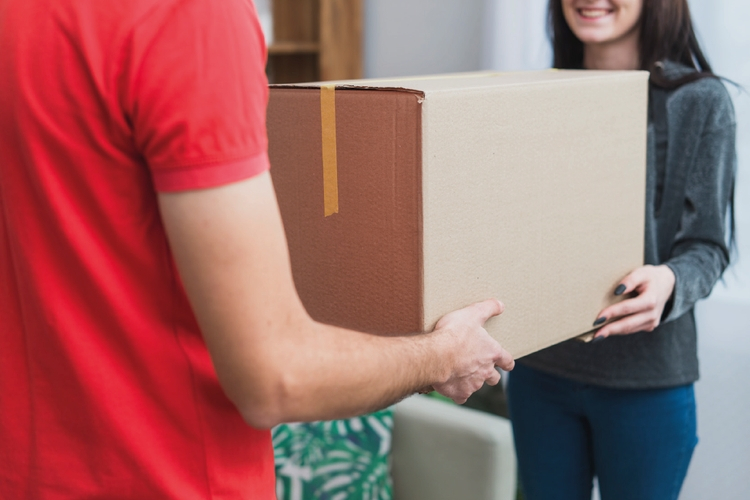
There is a boom in online shopping. Residents of Poland, confined to their homes due to the coronavirus pandemic, quickly adapted to a maximally contactless lifestyle, one of the telling results of which is the enormous growth in online sales. Virtually every segment of products available online has recorded growth, even grocery shopping, which until now had been a niche category. The CEP (Courier, Express, and Parcel) shipment segment is growing rapidly. Of course, this “carnival” would be poorer if not for the – virtually unlimited – purchasing opportunities and rich delivery options offered to consumers. The distance between the consumer and the seller is being shortened, and the delivery process is being simplified. In conversations with representatives of the logistics industry handling the CEP segment, they were asked, among other things, about actions taken on the CEP last mile in the wake of pandemic experiences, which primarily took the form of innovative adaptations to changed consumer behaviors.
DHL Express Poland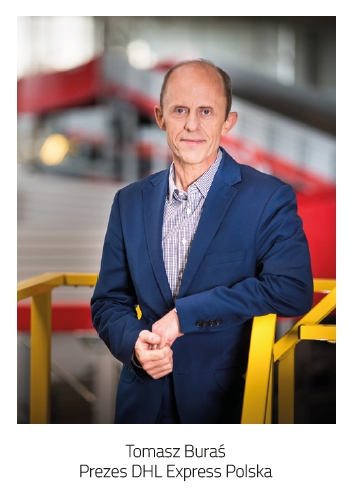 Tomasz Buraś, CEO of DHL Express Poland, points out that over half of the volume handled by DHL Express Poland relates to e-commerce. As a global logistics company, DHL Express recognizes the critical role of technology in improving the entire logistics process. Increasingly, these technologies enable companies to cope with challenges at both local and global levels.
– For recipients, one of the key solutions used on the last mile is the organization of flexible and efficient shipment delivery. On Demand Delivery is a solution that allows the recipient to, among other things, change the place, time, and date of delivery, transfer the receipt to another person, choose the delivery method, and – still important for safety reasons – decide on delivery without a signature. Combined with the network of Service Points and DHL parcel lockers, recipients have the freedom to choose their delivery preferences – says Tomasz Buraś. – Recipients can also benefit from easy and efficient payment of customs duties and taxes through the ADC online application. It is also possible to pay by card to the courier thanks to SumUp – mobile payment terminals, the implementation of which at DHL Express Poland is a novelty in the industry – adds the CEO.
DPD Poland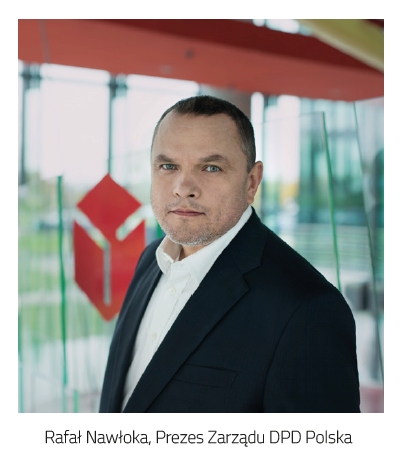 One of the leaders in CEP shipments in Poland – DPD – in addition to supporting technologies, focuses on flexibility, convenience, and comfort in receiving shipments. Rafał Nawłoka, CEO of DPD Poland, notes: – DPD Poland offers recipients solutions that allow them to manage their shipments, such as interactive Predict notifications and the www.mojapaczka.dpd.com.pl application. Thanks to them, recipients can easily contact the courier and arrange the time and method of safe delivery. Consumers can also take advantage of several payment options, e.g., by card to the courier or via an e-shop form during purchase.
DPD publishes the “E-shopper Barometer” report every year, presenting recipient preferences. The report indicates a growing interest in deliveries outside of home or office addresses. In response to their expectations, DPD Poland is developing its DPD Pickup network and DPD Pickup City Branches, which are more than just a regular service point. “Pick up, try on, and have a coffee” – this is how DPD encourages the use of DPD Pickup City Branch services. These points, located in districts of larger cities, are equipped with fitting rooms where you can check on the spot if the purchased clothes meet your expectations and, if necessary, immediately send a return. In the branches, you can also use professional packaging materials, prepare a waybill, and have a coffee. For example, the DPD Pickup City Branch on Wołoska Street in Warsaw has already become a permanent part of the landscape of the business part of the capital.
– Besides the fact that city branches under the DPD Poland banner are invaluable during times of increased interest in CEP services, couriers also carry out deliveries by bicycle (including cargo bikes), on scooters, and on foot – comments Rafał Nawłoka. DPD can therefore state that its last-mile service is becoming increasingly “green,” which, contrary to appearances, is becoming more and more important for the modern consumer.
GLS Poland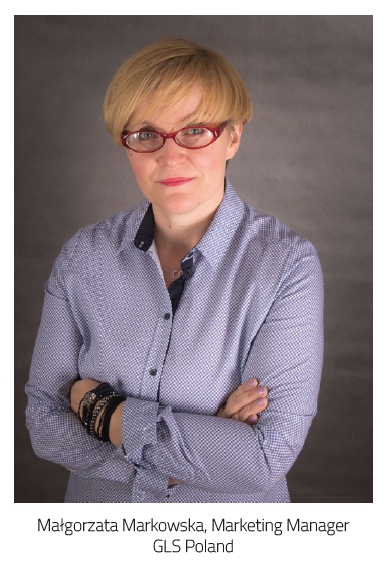 Modern marketing is based today on creating a set of actions, including logistics, that generate positive emotions in the consumer. These are what increasingly decide today whether a customer will decide to use our service again, which in turn will bring us closer to building more lasting relationships with them. That is why marketing is also a field for innovative actions. Małgorzata Markowska, Marketing Manager at GLS Poland, notes: – Everything indicates that the structure of retail trade will be increasingly saturated with e-commerce. That is why we prioritize the constant improvement of services in the area of B2C deliveries. The operational handling of this stream has a different character and requires different solutions than in the case of B2B. The role of courier companies here is very important and is not limited “only” to ensuring an efficient and reliable supply chain. It is equally important that the quality of delivery in online trade is an integral part of the so-called customer experience, which means that the courier company directly influences the position and image of the seller operating in an increasingly competitive market. From the point of view of individual recipients, what counts most is: speed of delivery, the ability to choose the form of delivery, and, if necessary, the possibility of an easy return. Therefore, flexibility and a wide range of delivery options provide an advantage. For GLS, innovation consists of providing functionalities that enable the successive personalization of services, which of course requires the implementation of appropriate, advanced digital technologies – continues Małgorzata Markowska. – The FlexDeliveryService gives recipients the ability to choose, among other things, the option of leaving the shipment in a safe place of their choice, arranging with the courier at a place and time convenient for them, or redirecting the package to a drop-off and pick-up point – adds the representative of GLS Poland.
No Limit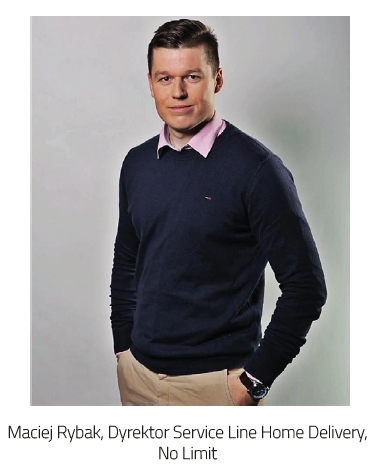 The company No Limit has specialized in B2B and B2C deliveries carried out for demanding leaders in their industries: sports, fashion, furniture, FMCG, and consumer electronics/appliances, for whom it provides, among other things, contract logistics and distribution services. In the case of this company, we are dealing with a specific type of last mile, where the subject of delivery can be shipments standardly delivered “to the door,” or even across the threshold of a house or apartment. It must be remembered that consumer products are also the subject of online orders.
Maciej Rybak, Director of Service Line Home Delivery at No Limit, emphasizes: – The e-commerce channel plays a definitely important and key role in our company’s strategy. Today we can admit that handling the B2C channel in several parts of our organization turned out to be the best anti-crisis shield when we were operating in conditions of an economic freeze. It was, among other things, the revenue from handling increased B2C volumes that was key to maintaining operational and revenue balance during the sharp declines in volumes that occurred in the B2B channel in some of the industries we serve.
Regarding the last mile for B2C shipments, Maciej Rybak notes that: – No Limit has specialized for years in deliveries by two-person teams, which is not a market standard. We focus on the distribution of orders with more non-standard shapes and larger dimensions, while offering a package of additional services. The Home Delivery service is dedicated primarily to the e-commerce channel.
Summary
The COVID-19 pandemic has strengthened the conviction that the B2C customer – and they are the ones who excel in e-shopping – changes their behavior under the influence of restrictions, which in the current crisis are related to health safety. But if the choice is not limited by something, then the convenience of shopping becomes the need that determines the final choice of how the last mile is executed, including delivery options. However, the convenience of purchasing a service itself should be understood in several ways – depending on the customer’s preferences. – For one recipient, the speed of delivery and the ability to narrow down the time window is key. For another customer, convenience means bringing a large shipment into the house along with unpacking it. Yet another group of recipients values the possibility of the widest possible choice of the degree of complexity of the transport service after purchasing a given product – adds Maciej Rybak from No Limit. In the case of many a CEP service provider, acting as an intermediary between the buyer and the seller, the crisis has accelerated inevitable changes. Using the motto of the French Foreign Legion “Marcher ou mourir” (March or die), the adaptation of the CEP last mile determines survival in turbulent, uncertain, crisis times. The last mile, being the segment of the logistics process “closest” to the end customer, has therefore become even more clearly the main theater of innovation-based actions. It is not imitation, but pioneering in introducing new (implicitly better) solutions that currently achieves the greatest triumphs.
The article comes from the magazine Logistyka 5/2020.
The e-edition of the magazine is available in our offer!