








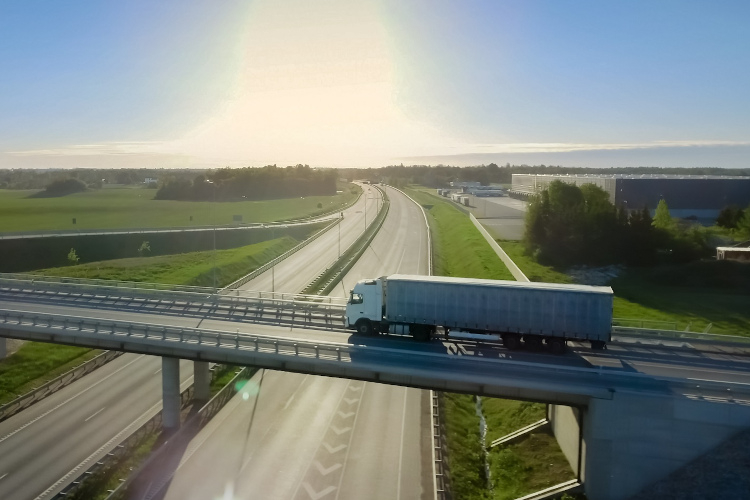
The TSL industry plays a vital role in global trade and the economy. One of the key factors influencing its development is the quality of transport infrastructure, which includes roads, railways, ports, and airports. In recent years, significant growth in the industry can be observed, which is closely linked to investments in these areas.
Developing transport infrastructure is the foundation for the functioning of the transport, forwarding, and logistics industry. How do investments affect the TSL industry? What barriers hinder the development of each of these transport sectors?
Development of road infrastructure
Road infrastructure is considered the best-developed branch of the Polish transport network. According to a report by the Supreme Audit Office (NIK) on the development of intermodal transport in Poland, by 2030, road transport will carry seven times more goods than rail. This improvement in flow efficiency is linked to the emphasis on investments in motorways, expressways, and national roads. Moreover, their development also influences an increase in warehouse investments, which impacts the TSL industry.
– Modern road infrastructure not only streamlines the flow of goods but also determines the locations and strategies of logistics companies and developers. Over the last few years, we have observed a significant change on the map of warehouse facility locations. Currently, investments are appearing all over Poland – and not just, as before, around the largest urban agglomerations. Examples include the expansion of expressways. New logistics investments are appearing along their routes, which translates into growing demand for warehouse space – says Maciej Maroszyk, Chief Operating Officer at TC Kancelaria Prawna.
However, despite visible investments in the road network, in a 2022 infrastructure quality study conducted by the International Institute for Management Development (IMD), Poland ranked only 26th out of 30 European countries and 43rd globally. This is particularly concerning given that we rank lowest among developed countries on the Old Continent.
– Let us remember that the ranking itself also concerns the condition of, among other things, railways and airports. More detailed data on road infrastructure was revealed in a 2020 report by the General Directorate for National Roads and Motorways. At that time, about 37% of the network was characterized by low quality or was in poor technical condition. Nevertheless, the level of Polish road infrastructure is still being raised, and this trend is visible in the example of data from 2001, where as much as 71.5% of roads did not meet the appropriate standards. This progress is partly the result of EU subsidies totaling approximately 199.7 billion PLN, which Poland has received over the last dozen or so years – explains the Chief Operating Officer of TC Kancelaria Prawna.
Not just here
It is worth emphasizing that problems with road infrastructure are a challenge not only in our country. However, it largely concerns the lack of adequate parking spaces or conditions for drivers to rest. Therefore, developing and improving the quality of these elements is a priority on the Old Continent:
– The development of road transport is also linked to technological progress. Investing in traffic management systems, including advanced software for monitoring and controlling road traffic, will help optimize vehicle flow on roads, which will lead to shorter transport times. The introduction of electric vehicles is also significant, which is a step towards more sustainable and ecological transport. This development can be stimulated by investments in charging infrastructure – adds the expert from TC Kancelaria Prawna.
Development of aviation infrastructure
In the context of global freight transport, the second fastest-growing sector is air transport. It is an essential element, especially in the case of extremely distant markets, enabling fast and efficient delivery.
As Maciej Maroszyk explains, a key factor accelerating the development of air transport is investment in the expansion of airport terminals. An increase in their number increases airport capacity, which favors the handling of more cargo flights. In turn, further development of technology in aviation, including advanced air traffic management systems, enables more precise flight path planning and minimization of delays.
However, the development of air transport in Poland also faces challenges. One of them is the need to limit the impact of aviation on the natural environment. The introduction of regulations and standards in this area may affect the operating costs of air carriers, which in turn acts as a factor hindering the development of the sector.
– Another significant limitation is the ground infrastructure around airports, especially road access and parking. The need to modernize access roads and airport infrastructure is essential to enable efficient handling of passengers and goods – adds the expert from TC Kancelaria Prawna.
Development of port infrastructure
Port infrastructure acts as strategic “gateways” to global trade, enabling the import and export of goods on a large scale. Poland, due to its strategic location on the Baltic Sea, has great potential for the expansion of seaports. An example of this is the Port of Gdańsk, which over the last 10 years has ranked among the fastest-growing ports in Europe.
– Investing in the expansion of container terminals – such as the Baltic Hub – superstructure, and increasing port capacity enables efficient forwarding of an increasing amount of goods. Thanks to the modernization of port infrastructure, carriers and logistics companies gain the ability to provide fast and efficient service, which positively affects operations and the delivery of goods to the market – explains Maciej Maroszyk from TC Kancelaria Prawna.
In the case of maritime transport in Poland, one of the main hindering factors is competition and price pressure. The expert explains that other Baltic countries, such as Sweden or Germany, are also expanding their ports, often offering more competitive services. Additionally, investments in maritime infrastructure involve significant costs – especially in the case of small ports. The introduction of regulatory restrictions and the need to meet environmental requirements may also affect the costs and availability of maritime transport.
– It is worth remembering that apart from maritime infrastructure, which – despite some barriers – is still developing dynamically, a problem arises in the case of Poland’s poorly developed inland waterway transport. As it turns out, it has a negligible share in cargo transport – and the main reason is the limited inland waterway infrastructure. Although there are about 3,800 kilometers of navigable rivers in Poland, and river routes connected to the West flow through our territories, their regulation and utilization leave much to be desired – adds the Chief Operating Officer of TC Kancelaria Prawna.
Development of railway infrastructure
The development of railway infrastructure plays a key role in long-distance transport and the carriage of goods over long distances, and in international trade, rail transport is an integral part of the global supply chain.
– Investments in new tracks and the modernization of existing railway lines, including the introduction of high-speed trains, are key elements of railway infrastructure development. Modern tracks enable the transport of larger quantities of goods in a shorter time, which translates into transport efficiency – says the Chief Operating Officer at TC Kancelaria Prawna.
Unfortunately, despite the potential that railway development brings, it is the most “neglected,” which is related to the uneven distribution of funding for individual transport sectors.
– Despite EU subsidies related to the maintenance and modernization of railways, the state of track infrastructure is still not satisfactory. Over the last few years, many routes have been closed and rail traffic restricted, and – compared to other European countries – Poland still has exceptionally high fees for access to track infrastructure. The quality of rolling stock is also not very high. These are the consequences of earlier problems related to the activities of institutions managing railway infrastructure, which caused the railway sector to cease being a competitor to road transport – states Maciej Maroszyk.
The impact of investments on the TSL industry
The optimization of transport infrastructure in Poland, recognized as the “carrier of Europe,” has an invaluable impact on the TSL industry – especially from the perspective of introducing and developing the TEN-T network. The goals set by the European Union reflect the need for greater territorial cohesion, transport efficiency, and the integration of different types of transport.
– Implementing innovative technological solutions, such as traffic management or cargo tracking systems, not only increases the efficiency of carriers but is also consistent with the pursuit of creating a coherent, interoperable, and environmentally sustainable transport network. This will ensure that Polish transport companies not only deliver goods faster and more punctually but will also enable them to serve global clients even more effectively – explains Maciej Maroszyk from TC Kancelaria Prawna.
The development priorities of the TEN-T network, such as removing bottlenecks or promoting alternative energy sources, place a clear emphasis on improving the quality of transport infrastructure. This is not only about ensuring the safety of road users but also a response to contemporary challenges related to transport.
The development of transport infrastructure, including roads, tracks, ports, and airports, plays a key role in the development of the TSL industry not only in Poland but also on the international stage. Investments in these areas affect the efficiency and competitiveness of transport sectors, enabling faster, more punctual delivery of goods and global customer service. However, despite visible progress in the expansion of transport infrastructure in Poland, as well as in other countries, there are still challenges to overcome. The poor state of roads, rolling stock, and infrastructure limitations around ports and airports are barriers to further development. Supporting investments in the expansion, modernization, and maintenance of the high quality of these elements is extremely important for further progress in the TSL industry, especially in the context of global trade and contemporary challenges related to transport.
Source: TC Kancelaria Prawna