








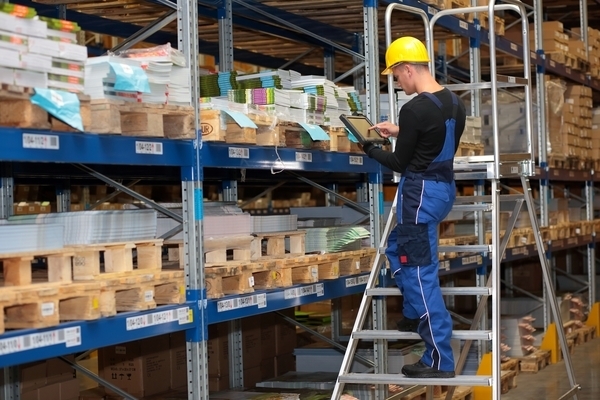
Is it possible for an organization monitoring warehouse processes to function correctly without a properly selected IT system that would allow for the efficient execution of goods flows in supply chains from the manufacturer to the final recipients? The answer to this question seems obvious… no. However, what software should one choose? Which of the IT solutions available on the market will yield satisfactory results in relation to the incurred costs, and what should be paid attention to when preparing for the informatization of warehouse processes? The author of this article will attempt to answer this and other questions related to investment in warehouse information systems (WIS) in the following sections.
Looking at a warehouse as a functional-organizational unit, it is intended, firstly, for the effective storage of goods – that is, ensuring the required microclimatic conditions (such as temperature, humidity, air purity) for a specified time. Secondly, for inventory manipulation – that is, activities related to receiving and issuing goods, changing the form of load units, and their movement, e.g., in storage zones or designated picking zones.
In general, it can be said that in the scope of inventory manipulation, the execution of tasks is closely related to the flow of information in the warehouse, which initiates a given process or precedes it. Parallel to the flow of goods, information directly related to it flows, which serves both identification (e.g., all markings and product labels) as well as monitoring processes and events taking place in the warehouse (e.g., by registering information about a logistics unit passing through a gate with a barcode reader). The consequence of the flow of goods is the creation of information confirming the completion of activities or parts of a process (e.g., issuing a warehouse receipt document, confirmation of placing a pallet load unit in a specific location). The creation of each piece of information is closely related to the place of its generation, which should always be identified in the warehouse. Additionally, for those responsible for warehouse operations, obtaining data for reporting purposes is extremely important. The way information is organized, the establishment of its hierarchy of importance, and the ability to filter it according to various criteria also play an extremely important role in all of this.
IT systems in logistics
Looking at this vast amount of information, it can be said that optimizing selected business processes occurring in logistics, controlling supply chains, and automating work in warehouses should constitute key directions for improvements in the area of logistics for management staff. Realizing that the flow of information is usually faster than the physical flow of goods, it can be accelerated through improvements in the places where it is generated and received. How can this be done?
The article contains 27,440 characters.
Source: Logistyka Magazine
Informatyzacja_procesyw_magazynowych_kluczem_do_rozwoju_firmy.pdf