








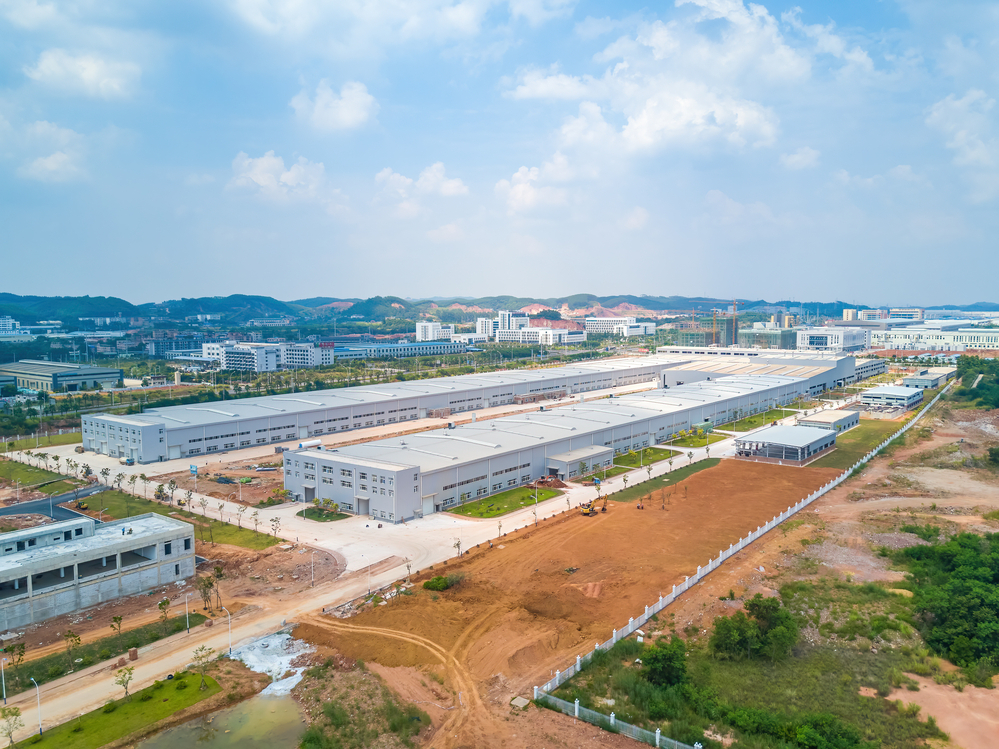
The total supply of modern industrial and logistics space in the region of 13 Central and Eastern European countries (CEE-131) amounts to over 67 million sqm. According to the latest Colliers report titled “ExCEEding Borders: Navigating the Industrial Landscape and Workforce in CEE-13”, Poland remains the largest industrial and logistics market in the entire CEE-13 region with a total supply of over 31 million sqm, which accounts for 45% of the region’s total stock.
The total supply of modern industrial and logistics space in capital city markets in the CEE-13 region is nearly 25 million sqm and over 67 million sqm at the national level. Despite differences in vacancy rates between CEE-13 countries (the lowest vacancy rates were recorded in Albania (0%) and the Czech Republic (1.8%), and the highest in Montenegro – 9%), the demand for industrial and logistics space has been high in recent years. Poland boasts the highest gross demand – in 2023, it amounted to 5.7 million sqm. It was driven mainly by sectors such as shipping, retail, and distribution. However, in 2023, most countries recorded a decline in demand, attributed partly to economic and geopolitical factors.
– Despite the decline in demand and space under construction in 2023, the industrial and logistics space market in Poland is still in very good condition. The advantages proving Poland’s competitiveness on the European stage are a qualified workforce, which is cheaper than in Western Europe, and some of the lowest rental rates for industrial and logistics space in the Central and Eastern European region. In Poland, base rental rates range from 3.4 to 7 EUR per sqm per month, while for comparison, in the Czech Republic, these amounts are in the range of 7.5-7.7 EUR per sqm. – explains Maciej Chmielewski, Senior Partner, Logistics and Industrial Department at Colliers.
Warehouses at the top of investment purchases
The industrial and logistics sector remains a key investment target in the Central and Eastern European region – at the end of 2023, the share of warehouses in the investment volume in Poland was approx. 50%, while in the Czech Republic and Slovakia, for example, it was below 20%.
– We are observing significant interest in industrial and logistics assets. Investors are looking for various opportunities, such as land acquisition, single assets, large portfolios, or sale-and-leaseback agreements that generate long-term income. However, this sector is not immune to economic and geopolitical factors, including higher financing costs, a discrepancy in price expectations between buyers and sellers, and limited product availability – points out Dominika Jędrak, Director of Research and Consultancy Services in Poland and CEE, Colliers.
Warehouses in CEE-6 are the greenest
CEE-6 countries have long been implementing green solutions in buildings, which results in a growing number of facilities with BREEAM or LEED certificates, also at the highest levels (an example can be the industrial and logistics project by Panattoni in Poland, which in 2023 was the first to receive the highest level of BREEAM certification – Outstanding).
– Sustainability initiatives in the CEE-6 region cover a significant portion of the total stock of modern industrial and logistics space. Progress in meeting ESG requirements varies across CEE-6 countries, but in this respect, it is the most developed group of countries among the entire CEE-13 group – explains Silviu Pop, Director of Research for CEE and Romania.
Labor market dynamics in the CEE-13 region
In the labor market in the CEE-13 region, especially in the manufacturing and logistics sectors, despite significant differences in wage levels between countries, a significant increase in wages was observed in the CEE-6 group. This was contributed to by the nearshoring trend (moving production to neighboring countries) in logistics and the automation of production processes. While the manufacturing sector is recording significant year-on-year growth, the logistics sector is growing at a more modest pace. The increasing demand for qualified personnel in the areas of logistics and manufacturing is prompting companies to expand and develop in the Central European region.
1 The “ExCEEding Borders” report analyzed the markets of 13 Central and Eastern European countries, dividing them into groups: CEE-6, which includes: Bulgaria, the Czech Republic, Hungary, Poland, Romania, and Slovakia; the Baltic states, i.e., Estonia, Lithuania, and Latvia, as well as SEE-4, which includes: Albania, Croatia, Montenegro, and Slovenia.
Source: Colliers