








In a dynamically changing market reality, where time and reliability play a major role, managers responsible for transport and logistics in the chemical industry face an important challenge: is outsourcing all transport to a single logistics company a strategy that can improve supply chain efficiency? Or does it involve risks that should be minimized? Although transport centralization offers many benefits, it also carries potential threats that can affect operational stability. How, then, to make a good decision?
From the perspective of chemical companies, choosing a single logistics operator can significantly simplify process management by eliminating the need to coordinate multiple suppliers. However, every decision requires careful consideration of all pros and cons. It is worth paying attention to several important aspects:
- Risk of delays: In the chemical sector, where timely delivery is a priority for production and regulatory compliance, delays resulting from fleet failures, lack of line capacity, border issues, or other obstacles can affect the entire supply chain. Such disruptions lower on-time performance indicators, which negatively impacts customer service quality and can lead to a loss of trust from business partners. At the same time, operational costs increase due to the need for transport reorganization, additional storage fees, production downtime, and potential late penalties.
- Dependence on a single supplier: Although working with one operator simplifies processes, it risks a lack of alternatives in crisis situations, such as strikes, the operator’s financial problems, system failures, or a shortage of drivers with appropriate qualifications (e.g., ADR). In the case of transporting hazardous materials, such as chemical products, the consequences of this can be particularly severe.
- Limited flexibility: In the face of sudden market changes, such as increased demand, the operator may not have sufficient resources to quickly meet new requirements. This significantly hinders an efficient response to increased transport demand.
- Possibility of losing control: Working with a single operator can lead to a loss of bargaining power. Companies may feel that over time they lose influence over setting prices and terms of cooperation, which limits their role to accepting conditions instead of actively shaping the relationship.
- Lack of diversification: Problems such as backlogs, delays, or failures of a single operator can paralyze the entire transport process. Using several logistics companies increases operational stability, enabling quick switching to other routes or operators in case of unexpected difficulties, which increases operational safety and resilience to disruptions.
5 principles of successful cooperation
For decision-makers responsible for transport management in chemical companies, the key to success is effective risk management, not avoiding it. Here are some strategies that can help increase operational safety and achieve high efficiency:
The key to success is effective risk management, not avoiding it.
- KPIs and SOP document: Defining Key Performance Indicators (KPIs), such as delivery timeliness, response time to problems, and service quality, allows for ongoing monitoring of the operator’s service quality. These can be part of a document describing the Standard Operating Procedure (SOP). This is a document containing detailed instructions that describe step-by-step how to perform specific processes or tasks in accordance with accepted standards. The SOP aims to ensure consistency, quality, and efficiency of operations, regardless of who performs them.
- Contingency plans: An operator with well-prepared scenarios for failures or lack of line capacity can quickly switch to alternative solutions, e.g., change shipment routing.
- Regular audits and monitoring: Systematic audits and monitoring of transport processes enable quick responses to emerging problems and the maintenance of high-quality services.
- Diversification: An alternative may be to divide transport between at least two operators according to the directions served – e.g., one supplier handles domestic transport, and another handles international transport.
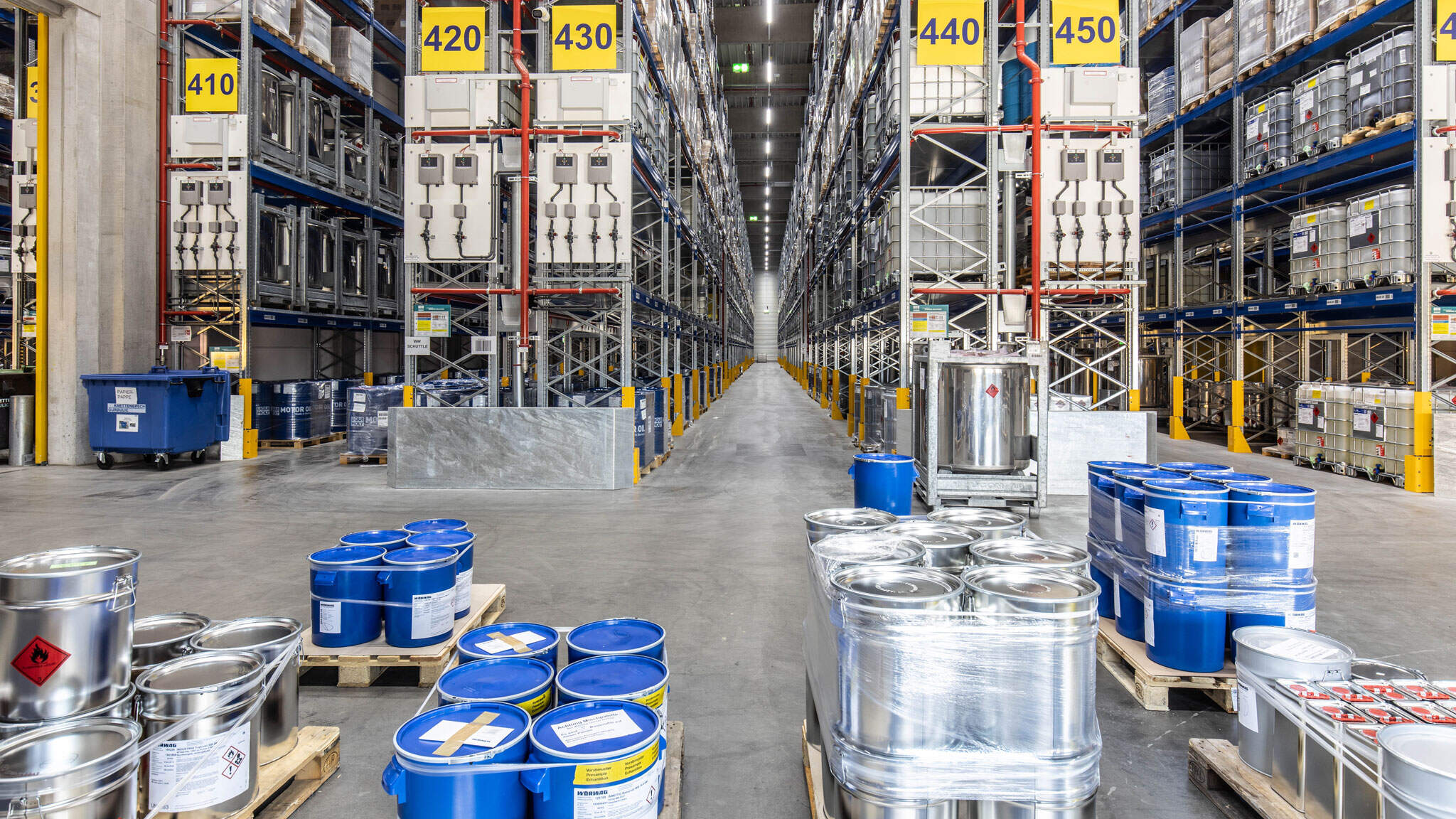
- Specialization: Outsourcing routes to a company that specializes in a given type of operation, e.g., international less-than-truckload (LTL) transport, minimizes the probability of errors. An operator with the appropriate infrastructure and experience in managing, for example, hazardous goods, such as DACHSER with its DACHSER Chem Logistics solution, ensures greater predictability and operational efficiency.
Strategic decision: is one operator enough?
Each of these strategies has its advantages. Dividing between several operators increases diversification but simultaneously makes logistics management more difficult. Choosing two operators based on specialization is a compromise between efficiency and flexibility, providing some independence but involving the challenge resulting from diverse service standards. The third option is to trust one operator and entrust them with full responsibility for transport. Such a solution has several significant advantages. First of all, thanks to single responsibility, the process becomes more transparent, and communication and settlements are simpler. Another benefit is operational consistency, ensured by a uniform quality standard, integrated IT systems, and unified processes at every stage. Additionally, managing cooperation with a single supplier saves time and resources, as it requires less human involvement. It is also worth noting the advantage in price negotiations – a larger scale of cooperation with one operator makes it easier to obtain more attractive rates and contract terms.
– A partnership based on trust, transparency, and clearly defined performance indicators is the foundation for minimizing threats and increasing efficiency. The decision on choosing a cooperation model should stem from business priorities and the readiness to manage the complexity of logistics processes. It is important to consider all arguments “for” and “against” in order to make a strategic decision. Changes always carry risk, but the key is not to avoid it, but to manage it effectively. Thanks to clearly defined KPIs, process transparency, and trusted cooperation, both efficiency and flexibility can be achieved – says Ewelina Staszewska-Kobiela, Business Development Manager at DACHSER Chem Logistics in Poland.
Cooperation with a single logistics operator can bring significant benefits if it is properly managed and based on clear principles. Thanks to well-developed procedures and performance indicators, companies can effectively leverage the potential of this model, gaining a competitive advantage in a demanding market.
Source: Dachser