








Germany continues to tighten its migration policy, which involves the return of border controls. In mid-September, the federal government decided to extend them to all state borders and prolong the restrictions at crossings with Poland until December 15. According to the Germans, the controls are a necessary step to curb illegal immigration, but the TSL industry fears complications in supply chains and costly delays – are they right?
Border controls in Germany, located in the heart of the continent, are a potential problem for the vast majority of transport companies operating in Europe. So far, those crossing German borders with Poland, Switzerland, the Czech Republic, and Austria have had to reckon with restrictions, and from September 16, 2024, controls will also be conducted on the remaining borders with Belgium, Denmark, France, Luxembourg, and the Netherlands. There, the controls are expected to last for the next six months, while in Poland, the Czech Republic, and Switzerland, they have been initially extended until December 15, 2024.
The decision announced by the German Ministry of the Interior is another step intended to limit the scale of illegal immigration that the country is struggling with. The liberal policy toward refugees, which distinguished Germany for years, has proven to have serious consequences. A rapid influx of refugees combined with fears about the associated rise of Islamic extremism has mobilized the government to tighten border controls. Anti-immigrant sentiment is fueled by growing support for the far-right Alternative for Germany (AfD), which achieved success in the September state elections. Although the border controls were initially described as temporary, German Chancellor Olaf Scholz declared in a recent interview with RTL television that they would be maintained “as long as possible,” despite the trouble they cause.
Complications at the border
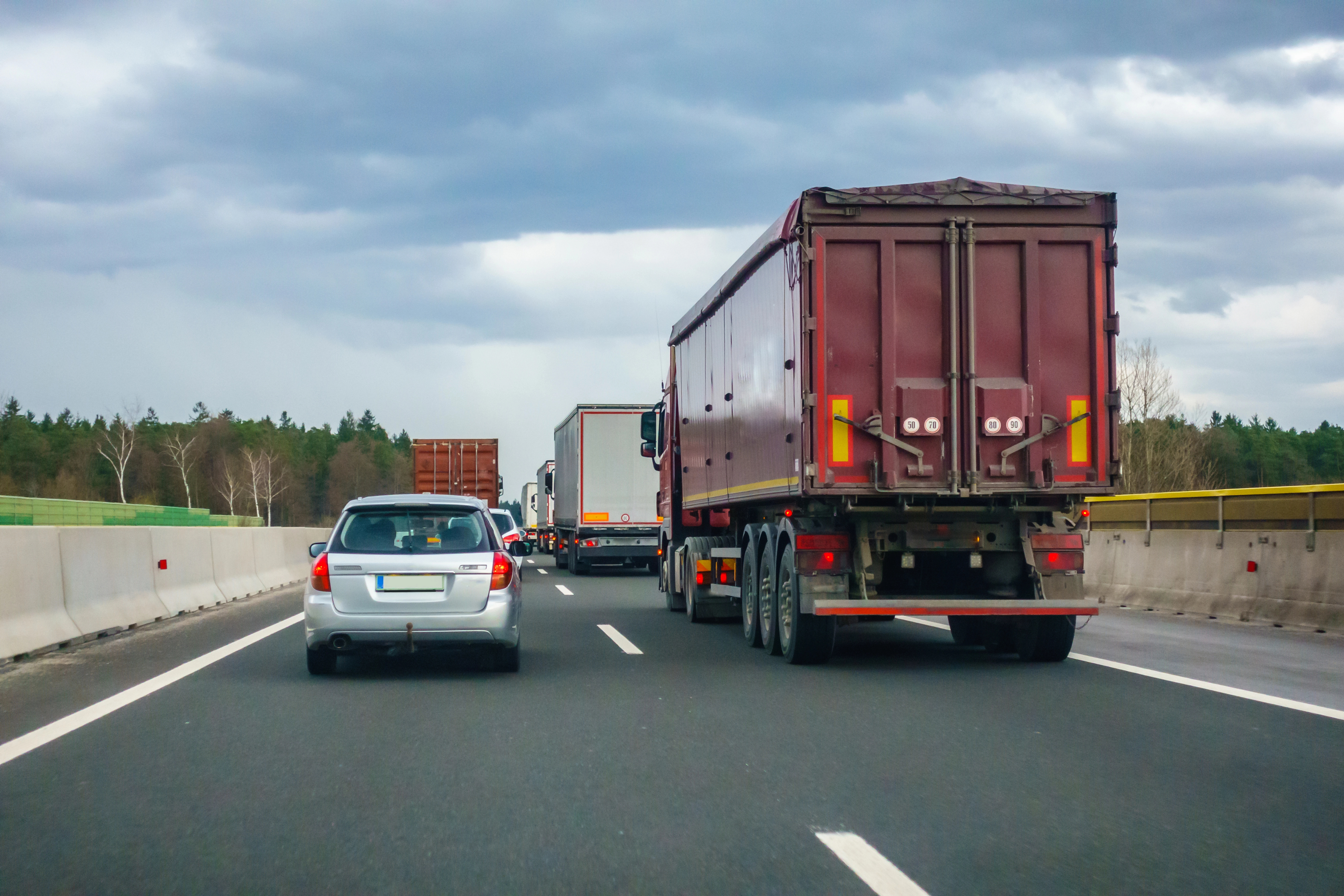
Since mid-September, the controls have applied to all German borders with a total length of 3,800 km, and their nature is random. Therefore, there is no question of stopping every car at any time of day or night, although the frequency of checks is higher for large vehicles crossing the border as part of transport operations.
– This possibility must be taken into account especially by vans, delivery vehicles, vehicles with trailers or tarpaulins, as well as passenger cars with tinted windows. The appearance of travelers, which seems suspicious to officers, can also become a reason for a check. The type of control is decided by the federal police, so its course and frequency are also related to the availability of police patrols in a given area – explains Jakub Gwiazdowski, Head of Partnership & Relations at Transcash.eu.
The Polish-Dutch problem
Although border controls affect all of Germany’s neighbors, their direct consequences will be felt most by countries dominating the road transport sector in the country. The leader in this field is the Netherlands – according to Eurostat data, over 83 million tons of goods were transported on routes connecting the Netherlands and Germany in 2023. Poland takes second place with a result of nearly 70 million tons, with as much as 95% of transport operations on the Poland-Germany line handled by our vehicles. However, the problem of controls indirectly affects almost all of Europe, because nearly a quarter of all intra-EU road transport passes through Germany.
The TSL industry protests
The announcement of the expansion of border controls sparked immediate opposition among representatives of the Dutch TSL industry. The local association of shippers and forwarders, Evofendex, issued a statement expressing concerns about traffic disruptions and the interruption of supply chains in connection with the controls, which could expose the industry to huge losses, counted in millions. The federal government’s decision is also criticized by German entrepreneurs. Concerns were expressed, among others, by the president of the German Wholesale and Foreign Trade Association (BGA), Dirk Jandura, in an interview with the “Handelsblatt” newspaper. He pointed out that the pace of the decision to expand controls did not give companies dependent on cross-border traffic a chance to adapt to the new reality.
Opposition to the decision was also expressed by the Polish Transport and Logistics Poland Employers’ Union. In a statement published just after the announcement of the decision to extend the controls, we read that “today the effects of controls on the Polish-German border are not as noticeable, because here the intensity of border traffic is incomparably smaller than on the western and southern borders of Germany. Unfortunately, in the event of extending these controls to the entire German border, Polish transport companies, which perform the largest transport work in Europe, will be among the victims. Our bilateral transport to and from Germany and to and from other countries with transit through Germany are at risk. Cross-trade transport to and from Germany performed by Polish carriers is also at risk“.
The statement is accompanied by a letter addressed to the European Commission with a request to take action to protect the single market and the freedom of movement of people and goods.
The decision to expand controls is also widely criticized by Polish politicians, led by Prime Minister Donald Tusk. Exceptionally unanimous opposition to the German decision is also expressed by MEPs of all factions. Regions on the Polish-German border are suffering in particular. Hanna Mojsiuk, president of the Northern Chamber of Commerce in Szczecin, draws attention to the problem, arguing that the controls are a problem not only for cross-border workers but also expose the entire local business to losses.
Controls not only in Germany
Border controls also raise objections due to their contradiction with the assumptions of the Schengen Area. It was introduced precisely to ensure the smooth and delay-free flow of people and goods within the EU. However, as Jakub Gwiazdowski from Transcash.eu notes, in practice, controls are becoming more frequent, and their implementation results not only from the desire to better protect borders against illegal immigration.
– They are just as often decided by random reasons, the best example of which was the coronavirus pandemic, where there was a complete closure of borders. At the moment, border controls are in force in several Schengen countries, including France, where land borders have been under constant control since the Islamic terrorist attacks in 2015 and 2016. In the same year, Germany implemented controls on the border with Austria, while the Austrians maintain constant controls on the borders with Hungary, Slovakia, the Czech Republic, and Slovenia. In all cases, the main argument for maintaining border controls is the fear of terrorism – explains Jakub Gwiazdowski, Head of Partnership & Relations at Transcash.eu.
A storm in a teacup?
Although increased border controls in Germany have met with a wave of opposition, practice shows that they do not have to threaten the functioning of the TSL industry. This is evidenced not only by the situation in France or Austria but also by the impact of Brexit on the domestic transport sector, which was smaller than feared. Great Britain remains a key economic partner for Poland, which is also confirmed by information coming from the British government. A report published in February 2024 shows that the value of total trade on the Poland-Great Britain line by the end of Q3 2023 amounted to 30.6 billion pounds, which is almost 20% more than in the same period of 2022. As much as two-thirds of this amount is accounted for by the import of goods from Poland to Great Britain.
– It is indisputable that Brexit has hindered trade relations with the rest of the Union, but the transport market is gradually adapting to the new reality. Given that the scale of German controls is significantly less severe than those in force on the border with Great Britain, fueling fears at this stage has no rational justification – says Jakub Gwiazdowski.
Source: GutPR Hanna Gehrke – Gut