








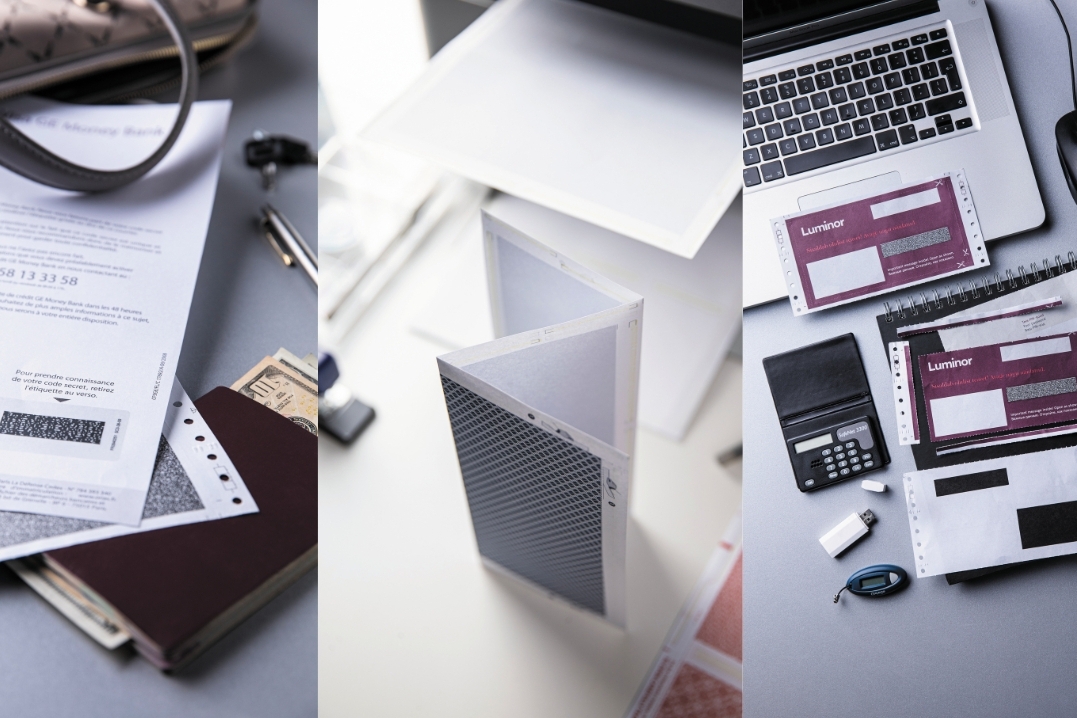
In times of increasingly frequent data breaches and tightening regulations regarding their protection, companies can no longer afford oversights – including in the sphere of physical correspondence. Specialized technologies for securing data in paper shipments, such as confidential forms, pressure sealers, or scratch codes, are becoming an indispensable element of professional customer service. At the same time, this is a necessary condition for letters containing sensitive information to comply with regulations such as GDPR. The postal operator is the data controller to the extent necessary for the delivery of the shipment, but security procedures cover more than just shipping. They also include the printing and packaging of correspondence, which is why close cooperation between the party delivering the shipments and the party producing them is so important. How is confidential data in traditional paper correspondence protected today? Experts from the postal market explain.
Most companies in Poland focus on securing data in IT systems, which is not surprising, as according to the Personal Data Protection Office, administrators reported 7,000 breaches in 2023.[1] Although this scale is smaller in the case of physical correspondence, there are cases of lost shipments or letters delivered to the wrong recipient. Meanwhile, registered letters containing personal data – statements, access passwords, PINs, test results, or confidential client data – are subject to the same regulations as digitally processed data. This is regulated by several legal acts, the main one being the GDPR (EU Regulation), but also national acts and specific regulations (Code of Civil Procedure, Code of Administrative Procedure, Postal Law, or the Act of May 10, 2018, on the protection of personal data).
Companies are increasingly realizing that data security is necessary at every stage of shipment delivery, starting from the production of specialized confidential documents and packaging, to the proper securing of confidential data, preparation for shipment, and delivery to the addressee’s own hands. Every paper document containing personal data should be treated with full security protocols. That is why it is so important to use solutions that require a high degree of confidentiality to protect sensitive data from the potential risk of disclosure.
– emphasizes Janusz Konopka, President of the Management Board of Speedmail, the largest private postal operator in Poland.
Modern technologies that protect physical data
It should be remembered that paper correspondence can also violate the GDPR. In response to these and many other needs, advanced printing and shipment security techniques are available on the market, which significantly increase the level of information protection. Examples of such security measures are products with scratch code and code 09 labels used for transmitting restricted codes. Confidential data, such as a PIN code, is applied to a special label and secured with a protective layer. The information can only be read after scratching (scratch code) or stretching (code 09) the label. Another effective solution is the popular PIN and payroll envelopes – confidential forms from computer continuous stationery, securing the content against reading without tampering with the document. An alternative is pressure sealer forms – single A4 sheets or perforated continuous stationery covered with a special pressure-activated adhesive. After printing and folding on a machine, they form a sealed “envelope” with hidden content.
We commonly use such technological solutions in correspondence produced for some of our clients – including banks or insurers – and therefore in shipments that most often contain confidential data. The use of confidential techniques in correspondence brings measurable benefits to companies. It limits the risk of breaches and administrative fines in full compliance with personal data protection regulations. Taking care of customer trust and a comprehensive approach to protecting their confidential data is a priority for us in our daily work.
– adds Maciej Frukacz, President of the Management Board of EDC Expert Direct Communication, part of the Emerson Group – a leader in innovative services and products for business.
The combination of technological solutions and advanced secure printing systems with experience in logistics, personalization, and mass distribution of shipments makes the services comprehensive. This allows for the creation of “end-to-end” solutions covering every stage of the paper communication process – from the digital order, through printing, proper enveloping, and information security, to the physical distribution of documents by the postal operator to the end recipients.
[1] https://uodo.gov.pl/pl/138/3457?utm
Source: Speedmail