
An interview with Marek Lechowski, an interim manager specializing in supporting supply chain areas, in particular: procurement, operational and production planning, warehousing, internal transport, and customer service.
Urszula Dziewit-Gontowska: What specific logistics problems are most often the reason for hiring an interim manager?
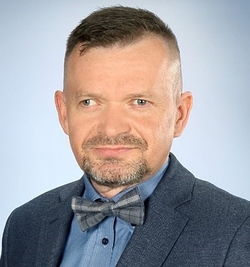 Marek Lechowski: Defining problems is a problem in itself for companies, which is why conducting an audit and verifying the client’s diagnosis is so important in the IM methodology. When it comes to logistics in a broad sense, I will start with the procurement process, the optimization of which in most cases can provide the company with significant savings in a relatively short time and—as such—is an ideal task or project for an interim manager. In this area, the basic problem reported by the client boils down to the statement “we are buying too expensively.”
In practice, this can mean a whole host of things: too narrow a supplier base, lack of negotiation skills, a focus on buying rather than saving, improperly allocated human resources, lack of clearly defined and measurable goals, etc. These are not particularly complex problems, and that is why it is easy to show clients very tangible savings, counted in hundreds of thousands or millions of zlotys. The second area that is often perceived by clients as a problem is planning as the company’s information hub for operations.
U. D.-G.: What does that mean specifically?
M.L.: It is the “heart” of the company. In this area, the client’s diagnosis is the general statement “planning doesn’t work” or “we have poor plan execution indicators,” which means that the plan is being executed at 60-80%. It is enough to talk for a moment with the people involved in this process to find out that production is extending production batches to improve its efficiency indicators, while planners are planning shorter batches to handle more orders and reduce inventory. Depending on the power dynamics in the organization, sometimes production is stronger in its siloed thinking, and sometimes planning manages to convince others of its arguments. Other possible problem areas are warehouses and inventory. Warehouses that sometimes turn out to be too small, and the inventory inside is unnecessary, or inventory that turns out to be too large and no one knows how it happened that there is so much of it. At the very end, there are teams of people, usually full of goodwill and willingness, but not entirely competent, with imperfect tools to measure their effectiveness.
U. D.-G.: How much awareness is there in companies that some problems can be solved by an external manager?
M.L.: I was lucky enough to always enter companies that already knew this solution. In all projects, another interim manager or a service provider with whom I cooperate was already involved in some way. In one of them, a complex project was being implemented in which several interim managers participated. In another company, there was a former interim manager on the board who knew that interim management is a fast and effective tool for change management. But in general, interim management is not a widely known solution in Poland. It is struggling to break into the consciousness of employers. Projects are primarily decided upon by companies that know this solution from other Western European countries. In my case, these are medium and large international companies.
U. D.-G.: What is important in the work of an interim manager?
M.L.: Interim management is a job for people who have a dozen or more years of experience behind them, are experts in their industry, and are happy to share their knowledge. What should be emphasized is the fact that one of the most desirable traits of an interim manager is independence, because only this guarantees that they will not just agree with the client, but support them with an opinion that is sometimes critical and divergent from their views. This is very important for the execution of the task and the success of the project. An IM should be a person with above-average communication skills. A person who knows how to communicate with other people and understands the complex mechanisms that govern communication. And finally, they must be a mobile person. Someone who likes to travel and change their place of residence. More of a globetrotter.
More opinions on the work of an interim manager can be read in the article:
– Business fire brigade (comment of the week)
We wrote more about interim managers in the magazine Logistyka 2/2020.
The e-edition of the magazine is available in our offer!