








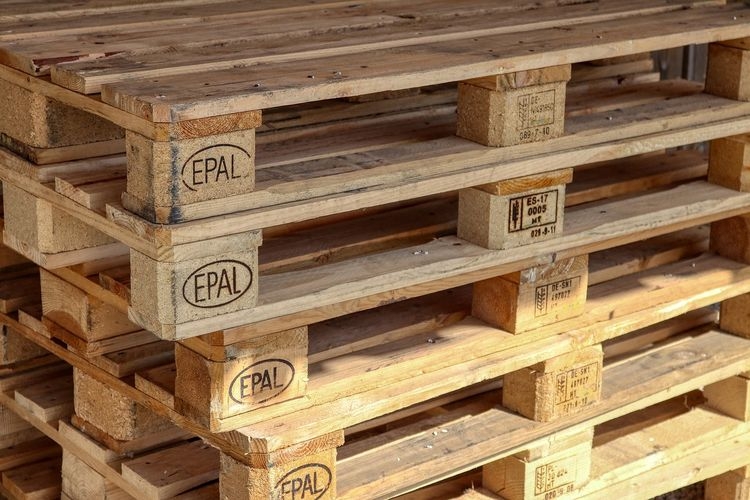
Using wooden pallets is often a significant cost for logistics, manufacturing, retail, or warehouse companies. However, thanks to well-thought-out practices, you can significantly extend their lifespan and reduce expenses.
Understand what determines the lifespan of pallets
Before we begin, it is worth knowing what determines how long a pallet will last:
- material and wood species (or other material) – pallets made of harder wood species withstand moisture, pressure, and wear better. Lighter wood gets damaged faster.
- quality of workmanship – solid joints, appropriate thickness of boards and blocks, and precision of assembly. Imperfections appearing at the production stage can lead to faster damage under load or during transport.
- operating conditions: it matters how pallets are used (weight, frequency of turnover), how they are stored (whether they are protected from moisture, direct contact with the ground, under a roof), and whether they are regularly inspected and maintained.
Choose consciously – new vs. used pallets
Used pallets, if they come from a legal source and have been sorted and classified according to their technical condition, can be a very cost-effective solution. They are cheaper and available faster than new ones: https://sklep.kampol-logistyka.pl/. It is worth knowing that there is a classification for the condition of used pallets – Class I, II, and III. Class I are almost new pallets without damage; Class II – technically sound with visible signs of use; Class III – more worn, often used where appearance is less important. The choice depends on the application, specific needs, and the specifics of transport.
Warehousing and storage
Proper storage is a key factor that can significantly extend the lifespan of pallets and reduce costs:
- avoid storing pallets directly on the ground: damp ground results in faster wood degradation. Use underlays, sleepers, platforms, or other supports that isolate the pallet from the ground.
- protect from weather: rain, snow, moisture, and extreme temperatures are factors that greatly accelerate the wood destruction process, as well as the growth of mold and fungi. During the autumn and winter period, it is especially important to secure warehouses and pallet storage areas against leaks and excessive moisture.
- ensure proper ventilation: pallets should have airflow so that moisture evaporates and the wood can dry out. Closed, poorly ventilated warehouses promote dampness.
- protection against fungi, mold, and insects: regular inspections of the wood condition, use of protective agents, impregnation, or painting, if possible.
Maintenance and repair
To ensure pallets last as long as possible, it is worth implementing a regular maintenance policy. The more importance you attach to this, the greater the chance that the pallets will serve you for a very long time.
- Inspection of pallet condition at least at every rotation, especially transport-related; look for cracks, loose nails, damaged boards, or blocks.
- Repair of minor damage, i.e., replacing cracked boards, replenishing blocks, and ensuring that connecting elements are stable and strong. This is much cheaper than replacing the entire pallet.
- Drying pallets if they have become damp. Wet wood is heavier and more susceptible to mold and fungi.
- Impregnation/surface protection, which involves protective agents against moisture, fungi, and insects. Necessary especially if pallets will be used in more demanding conditions.
Optimization of use
Choosing the right type of pallet for your needs is very important. Not every operation requires EPAL class or high-load-bearing pallets; sometimes lighter or used ones are sufficient. Choosing items below maximum requirements allows them to be “unburdened.” Excessive pallet loading is one of the main causes of damage. Stay within the declared load capacity. It is also worth ensuring even loading and unloading. Uneven distribution of goods causes point overloads, which leads to cracks. Naturally, handling pallets gently (avoiding hitting them with forklift forks, careful stacking, avoiding throwing pallets in the warehouse) also matters.
Recycling and second life
Instead of throwing away pallets with damaged elements or old ones, consider recycling. Dismantling elements, reusing boards, blocks, etc. Worn elements can be converted into smaller structures, sold, or donated. This provides savings and environmental benefits. Companies like Kampol Logistyka use recycling and pallet sorting; they try to make the best use of every wooden element. Used pallets can be adapted for use outside of transport and turned into garden furniture, decorative elements, displays, etc. This gives the material a second life and can bring additional image and marketing benefits.
Cost strategy – how to make it pay off?
Savings related to pallet usage can come from several areas. Already at the purchasing stage, it is worth considering used pallets, especially in Class II or III. They are cheaper than new ones, and with larger volumes, they allow for significantly lower expenses. Another possibility is repair: replacing individual boards, blocks, or nails is a cost much lower than purchasing an entire new pallet. The method of storage is equally important: pallets stored in proper conditions are damaged less frequently, which reduces the number of losses and the need for frequent replenishment of shortages. Recycling is also an important element – recovering material not only allows for waste reduction but also brings savings in waste management. Moreover, reusing wood or selling recovered elements can generate additional revenue. All this together means that the right approach to pallets allows you to noticeably reduce their usage costs while simultaneously acting in the spirit of sustainable development.