








PSNM has published the latest, updated edition of the “AFIR Counter”! The report shows the status of Poland’s compliance with the requirements of Regulation (EU) 2023/1804 of the European Parliament and of the Council on the deployment of alternative fuels infrastructure (AFIR).
According to AFIR, the provisions of which began to apply in all EU Member States in April this year, the total power of charging infrastructure in Poland should be adjusted to the number of registered electric vehicles. Furthermore, charging pools must be regularly deployed along the TEN-T network, for zero-emission passenger cars and vans, as well as for trucks. What is the level of implementation of these obligations in Poland? The “AFIR Counter” shows that despite the systematic expansion of infrastructure for electric vehicles, at the end of the first half of 2024, our country was still very far from meeting the regulation’s targets. The obligation set for 2025 to install charging pools for electric passenger cars and vans along the TEN-T core network has so far been met by less than 9%.
AFIR is potentially the most important regulatory factor stimulating the expansion of charging infrastructure in the European Union. Achieving the regulation’s very ambitious goals in Poland requires the active involvement of all key stakeholders, including the central administration, a whole range of offices and institutions (including the NFOŚiGW, GDDKiA, or UDT), the power sector, and the new mobility industry. To illustrate the scale of the challenge facing Poland, PSNM has launched the “AFIR Counter”. It is a periodically updated tool that provides information on the current degree of fulfillment of the goals resulting from the new regulation.
Charging infrastructure power
AFIR sets several main categories of obligations. The first is the need to adjust the total power of charging stations per registered electric vehicle (1.3 kW for BEVs and 0.8 kW for PHEVs).
– The AFIR requirements regarding the minimum total power of charging stations are being met by Poland to a satisfactory degree, but only if we are talking about the short-term perspective. This is primarily due to the proportionally small fleet of electric vehicles relative to the scale of infrastructure investments carried out by the industry. Taking into account PSNM’s forecasts regarding the development of the EV fleet and the current total power of charging stations operating in our country (i.e., approx. 293 MW), we have already met 86% of the obligations set for 2025 in this regard. However, considering the expected, very dynamic development of the BEV fleet in the coming years, the expansion of infrastructure should definitely accelerate. For example, in 2030, the total power of stations should increase more than 5-fold, and by 2035 – i.e., in less than 12 years – more than 12-fold. The current level of fulfillment of obligations in the context of 2030 and 2035 is 19% and only 8%, respectively – says Jan Wiśniewski, Director of the PSNM Research and Analysis Center.
Charging infrastructure along the TEN-T network
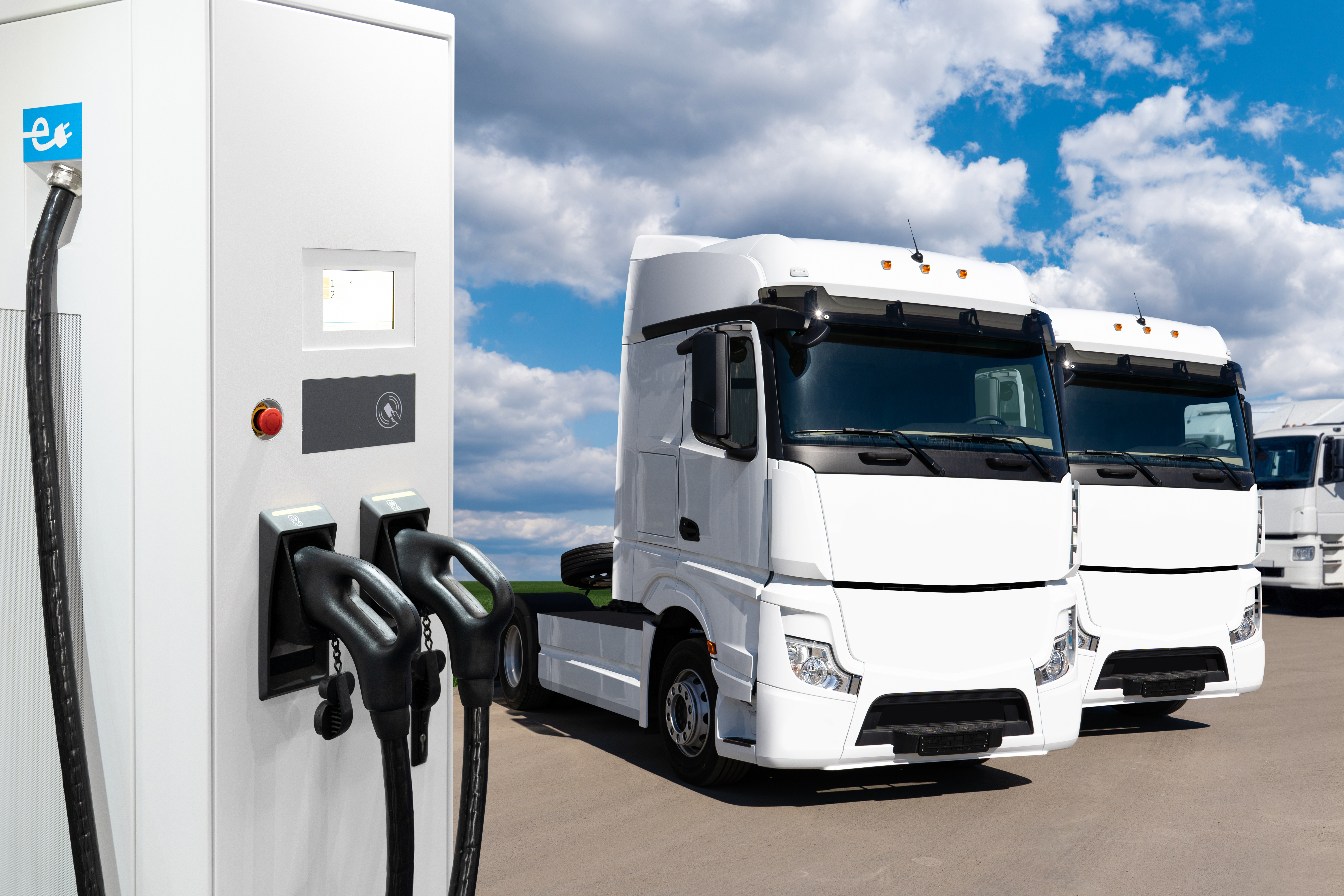
AFIR also provides, among other things, for the need to deploy charging pools at least every 60 km along the TEN-T core network (each with a total power of at least 400 kW, and by 2027 at least 600 kW) for electric passenger cars and vans in each direction of travel. Analogous goals apply to the comprehensive TEN-T network. The “AFIR Counter” shows that in this case, too, Poland is significantly further from meeting the regulation’s goals than in the area of obligations related to infrastructure power. Taking into account the core network, the obligations resulting from AFIR (for 2025 and 2027) are currently met by approx. 9% and 3%, respectively. In the case of the comprehensive network, the level of goal fulfillment is even lower – in practice, it is close to 0%. Furthermore, AFIR sets goals in the area of infrastructure for electric heavy-duty vehicles. For example, by the end of 2027 – i.e., in less than four years – charging pools for eHDVs with a power of at least 2800 kW each will have to operate along half of the TEN-T core network. By 2030, the power of each such station should increase to as much as 3600 kW. Currently, Poland has not in practice started fulfilling the obligations regarding the expansion of infrastructure for zero-emission heavy-duty vehicles; the level of goal fulfillment is 0%. Although publicly accessible chargers for eHDVs operate in two locations in our country (within the Ekoen and Polenergia hubs), no section of the TEN-T network of the minimum length required by EU regulations has yet been covered by charging pools for electric trucks.
– Comparing the data from the latest edition of the “AFIR Counter” with the data published in the previous quarter, it is impossible not to notice the effects of subsequent investments carried out by the infrastructure industry in Poland. In particular, over a period of 3 months, the total power of charging stations in Poland increased by more than 1/4, i.e., by almost 60 MW. This is certainly pleasing. However, charging stations along the TEN-T network are still being expanded at a much too slow pace. And – which must be emphasized very clearly – this is not due to low activity of investors, but to a very unfavorable regulatory environment. If Poland is to have a chance to meet EU obligations, at the current stage it is crucial not only to introduce legal changes and launch the necessary support instruments (including a program covering connections for high-power stations), but also to ensure appropriate coordination of actions by decision-makers with the most important stakeholders, in particular operators of publicly accessible charging stations, DSOs, as well as the General Directorate for National Roads and Motorways – says Aleksander Rajch, Member of the PSNM Management Board.
Source: PSNM