








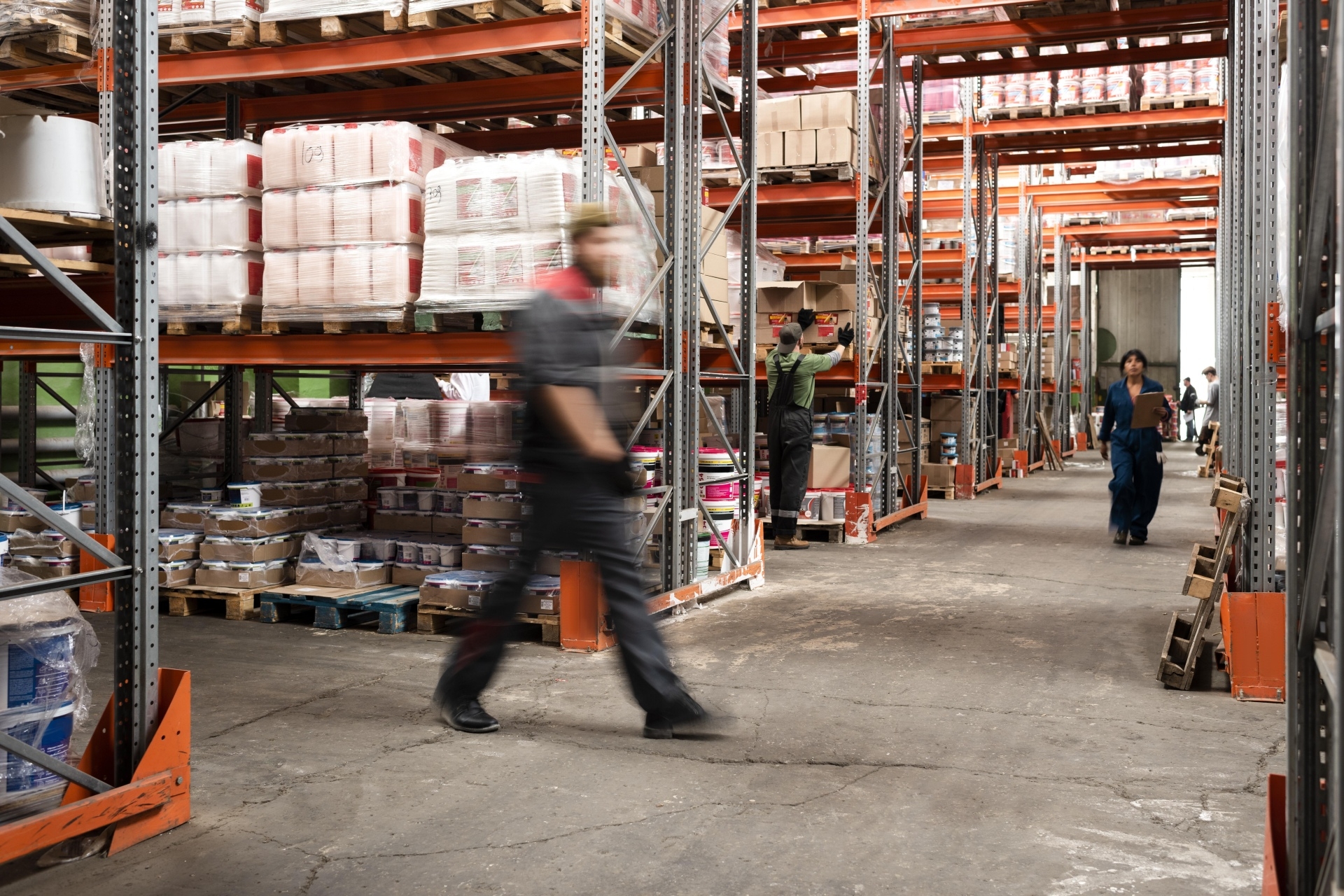
Currently, in Poland and around the world, sales are entering the most intense period of the year, and the warehousing and logistics sector, which has been preparing for this peak for months, is exerting its efforts to meet the huge number of orders. E-commerce is undoubtedly the engine, but no longer just during the autumn-winter period. Changing consumer purchasing preferences affect the economy and the labor market throughout the year, placing various industries before new challenges and the necessity to adapt to changing conditions.
Logistics at its peak, automotive unstable
According to forecasts, logistics operators serving e-commerce are expected to fulfill orders worth nearly 500 billion euros this year, a significant portion of which will be fulfillment. This situation translates into the labor market in the form of a huge demand for low- and medium-skilled workers who carry out warehouse and logistics operations.
– Although, according to the latest reports, the e-commerce market in Poland is entering a maturity phase and its growth is beginning to slow down, the autumn-winter sales peak still requires appropriate human resources. In 2024, the period of intense demand began much earlier than in previous years – this trend is likely to continue. The current course of the season resembles the years before the pandemic: a calm start to the year turns into a clear increase in activity in the middle of the year, reaching a climax in September, October, and November. The greatest demand for workers is recorded by the warehouse sector, although stable growth is also present in industries such as household appliances or food. However, the automotive sector remains the most unstable, where cases of order cancellations or postponements are frequent – says Łukasz Koszczoł, President of Job Impulse, a member of the Polish HR Forum.
The 2025 challenge: another minimum wage increase and a labor shortage
Growing wage pressure requires employers to offer salaries that are competitive with the rising minimum wage, which will reach 4666 PLN gross from January 2025, raising the cost of employment to over 5600 PLN gross per employee. With rising labor costs, many companies face a dilemma – how to maintain financial liquidity while meeting employee expectations, which are becoming increasingly demanding in the face of inflation and the rising cost of living.
Furthermore, the labor market in Poland faces many other challenges. First and foremost, there is a shortage of workers for simple tasks, and the turnover rate remains a significant problem for many enterprises trying to maintain the continuity of operational processes.
– Companies are increasingly turning to hiring foreigners, especially when preparing for seasonal “peaks,” but this approach raises certain challenges. Employers in Poland are more open to hiring Russian-speaking people from Ukraine, Georgia, or Moldova. While the number of workers from the Philippines, Nepal, or Colombia is increasing, there is a reservation about recruiting English- and Spanish-speaking people. Although companies strive to optimize costs by looking for solutions, including hiring foreigners, it is worth emphasizing that this is a “dead end” – these workers, like everyone else, are looking for stable employment conditions that allow them to secure the needs of their families, which translates into financial expectations – adds Łukasz Koszczoł.

Innovation and flexibility are the key to survival
The prospects for the labor market in Poland are full of challenges. Analysts predict that despite the stabilization of employment, the emphasis on increasing productivity and competitiveness will remain crucial. Enterprises will be forced to further automate processes to reduce dependence on rising labor costs and volatility in the labor market. Job Impulse experts emphasize that in the long term, this may contribute to the growth of innovation in industrial sectors, including the use of artificial intelligence and automation, which will help reduce the burden associated with seasonality.
– It is worth looking at our neighbors – the automation of processes in the warehouse, production, and logistics sector in the Czech Republic significantly affects the operational efficiency of enterprises. An example is the modern DB Schenker warehouse in Rudna, where over 100 robots support 650 employees in carrying out logistics tasks. The introduction of advanced technologies, such as vertical order picking systems or automatic sorters, allows for the delivery of up to 59 million products annually – notes Łukasz Koszczoł.
Summary
In the context of, among other things, the further development of e-commerce and changes in wages, entrepreneurs will have to adopt a flexible approach not only to human resource management but also to the optimization of operational processes and organizational management models. The coming years will certainly bring new challenges that will force companies to change their operational structures and workflows, allowing for greater flexibility, technology integration, and effective adaptation to the dynamically changing expectations of employees and customers, which will be crucial for maintaining operational efficiency and competitiveness in the market.
Source: Job Impulse