








In June 2024, GXO published its 2023 ESG Impact Report. When I look at the scale of our global efforts, I am both impressed by how complex and difficult the challenges facing our planet and people can seem, and at the same time encouraged by how much companies like GXO are doing to address them. Shared challenges require shared solutions. As a global leader in the most modern logistics and warehousing solutions, GXO is uniquely positioned to partner with our customers across industries and geographies in the transition to a circular economy. Over the past year, we have had the opportunity to work with many leading brands on repairing and repurposing existing products, as well as recycling and reusing materials, from footwear and apparel to consumer electronics and home appliances. More information can be found in the report.
Applying circular practices in the consumer goods industry is a topic gaining increasing attention. In July, a new EU Ecodesign for Sustainable Products Regulation entered into force. This regulation sets requirements for environmentally sustainable products and mandates that products be designed with durability, reusability, and circularity in mind. It also includes a ban on the destruction of unsold textiles and footwear. Similar legislation has also been proposed in California. GXO can help customers increase circularity through reverse logistics, where we help repair and refresh items that might otherwise be sent to a landfill, and we ensure effective management of returns for quick resale to subsequent consumers.
The future of fashion in the spotlight
Fashion production has always involved significant consumption of natural resources. The new EU regulation will require companies to adopt a comprehensive approach to improving their sustainability and implementing various solutions, including the use of alternative materials and increasing repair and recycling rates. Ultimately, the regulation aims to extend the lifespan of textiles, reducing the environmental impact of materials throughout their lifecycle.
Many companies have been working for some time to make their clothing more sustainable, and the new regulation will further accelerate this transformation. Ultimately, collaboration across all directions of the supply chain will be essential to create new business models that effectively support the circular economy and comply with new regulations, while minimizing waste and overproduction.
Even as brands and designers seek more sustainable materials to use, their scalable production will take a long time. A faster solution toward developing a circular economy in fashion is longer product usage and taking steps to avoid discarding items unless absolutely necessary. For example, many consumers buy clothing in multiple sizes online, try it on at home, and then return the items they do not want. These products are usually in excellent condition but must be inspected and prepared for resale. Unfortunately, in the past, many companies did not prioritize the reprocessing of returns or did not have the capability to do so in a timely and cost-effective manner, leading to large quantities of still-usable items ending up in landfills.
GXO offers reverse logistics management for fashion brands, making it more efficient and economically viable for companies, inviting them on a journey to a circular economy. We have developed processes and trained employees to ensure the ability to efficiently repackage and, if necessary, refresh products so they can be quickly resold at full price. Simple actions such as ozonation, steam stain removal, and minor cleaning, or even more significant repairs and refurbishments, can ensure that a product destined for charity or a landfill can quickly return to inventory. This not only reduces waste and the need to manufacture another product but also maximizes revenue through higher full-price sales. The speed of inventory return is particularly important in the fashion industry, where seasons dictate seasonality, i.e., likely markdowns, which will affect brand margins.
Maximizing the value of clothing returns
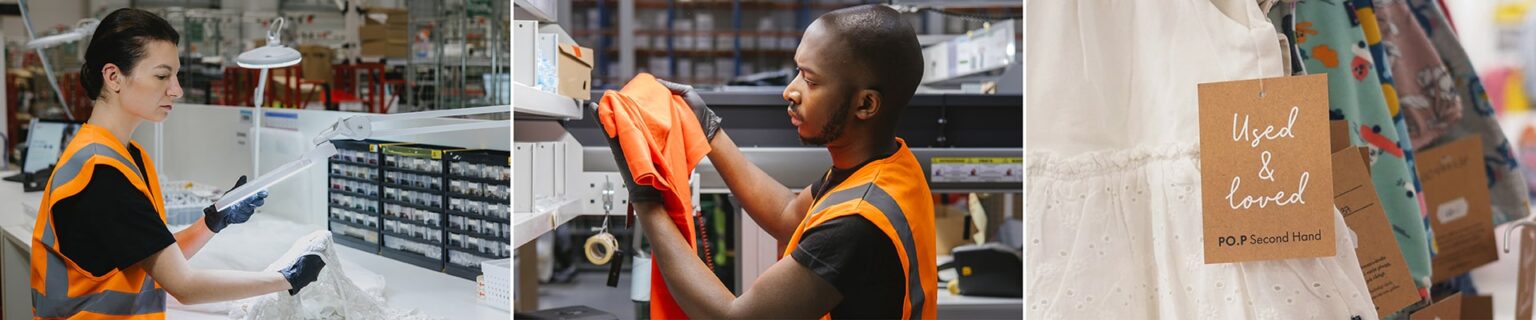
We are proud of our experience in reverse logistics, which ensures the efficient circulation of clothing for as long as possible. In Poland, we have established a 970,000-square-foot shared-user center dedicated to processing returns. In 2023, we processed 48 million returned items there, 96% of which were successfully returned to resale. Thanks to additional refreshing and repair activities, 7 million items were given a second life.
In the United States, we have a 1-million-square-foot warehouse to manage high volumes of returns for footwear and sportswear brands. We process 32 million returned pairs of footwear and apparel annually, 95% of which are refreshed and resold. Most returns are quickly classified and restored for sale in primary channels; in 2023, 600,000 products were identified as eligible for additional light cleaning and refreshing and then processed through the customer’s refurbishment channel. Furthermore, GXO identifies products that cannot be resold and recycles them for the customer, recovering raw materials for resale and reuse.
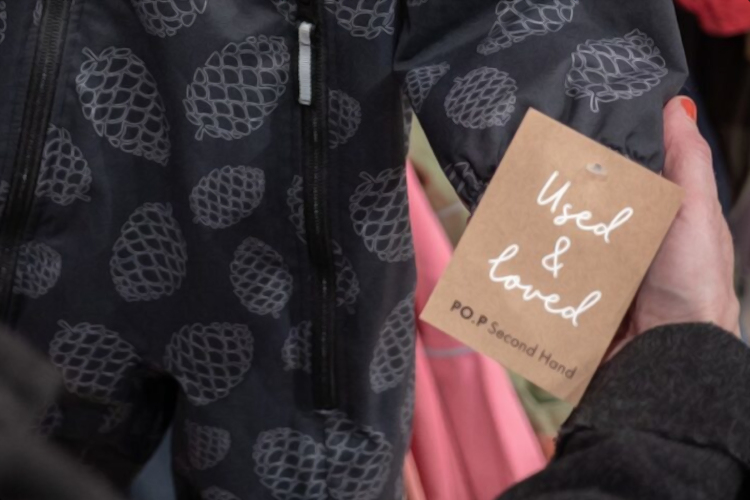
We have also begun collaborating with brands interested in developing an effective “pre-loved” product marketplace. Consumers are increasingly aware of the impact of their purchases on the planet, and buying used items is an increasingly popular way to reduce it. Brands are beginning to see the value in managing used products and thereby growing their customer base. In October 2022, GXO supported Swedish children’s clothing retailer Polarn O. Pyret, also known as PO.P, in launching “PO.P Second Hand,” their own scalable, profitable resale business. Within a year, GXO returned over 95% of returned used clothing to resale, generating value for the customer that would have gone to other online sellers. It turned out that 35% of shoppers at PO.P Second Hand were new customers.
GXO’s experience in returns, repairs, and product refreshing helps us fulfill one of our core values of making a positive impact. Waste disposal is one of our top priorities, and last year we achieved a global diversion rate of 81.9%. Throughout our operations, we strive to reduce our environmental impact and improve processes that support the circular economy, achieving our ESG goals and supporting our customers in doing so. For the benefit of our company, business partners, and the planet.
Source: GXO