cargo-partner, an international provider of transport and logistics services, is constantly expanding its portfolio of digital supply chain management solutions by leveraging the cloud-based SPOT (Visibility & Collaboration Platform SPOT) platform. In response to the growing demand for e-commerce and parcel solutions, cargo-partner launched a dedicated SPOT Parcel module back in 2018, which has been continuously expanded and improved over the years.
To offer its customers comprehensive service and full supply chain transparency, cargo-partner uses the SPOT platform, created in cooperation with its subsidiary SPOTworx, to manage transport. The platform includes a number of customer-facing modules that facilitate and streamline transport and order management processes through seamless shipment tracking, integrated communication and document management, and comprehensive reporting.
In response to the growing demand for e-commerce, last-mile, and parcel solutions, the SPOT platform has been enhanced with a dedicated module. SPOT Parcel has received several improvements to increase efficiency and ease of use. The SPOT Parcel module is fully integrated with other SPOT modules, allowing users to manage their parcel shipments across all transport modes (air, sea, road, and rail) and benefit from a clear and customizable user dashboard.
Price comparison and order placement
In the past, companies dealing with parcel shipments often had to maintain different user accounts with individual CEP (Courier, Express, and Parcel) providers, which meant logging into multiple websites to check current rates and potentially apply available discounts. The process of comparing rates was inefficient and time-consuming. SPOT Parcel provides a simple solution to this problem: once a user saves their account information for each parcel provider in the system, SPOT gains access to current rates, including discounts, directly from each courier service provider, combines them, and presents them in a convenient summary. Users can enter the loading and unloading locations to get an overview of all available CEP providers along with lead times and prices. Once the user selects their preferred carrier and enters the necessary data, SPOT generates information about the estimated pickup time and also automatically notifies the user of any changes. Pro-forma invoices, shipping labels, and return labels can be printed directly from the system.
Shipment tracking and integrated transport management
As soon as a parcel reaches the first point of dispatch, SPOT Parcel compares the weight and dimensions with those saved in the original order and immediately notifies the user in case of discrepancies. This way, errors can be reported immediately. For companies that prefer to ship specific consignments with the same provider every time, SPOT can be configured to allow automatic shipping directly from the warehouse via a designated CEP provider. Using a standard API, SPOT provides an efficient way to automatically transfer data with CEP service providers. Unlike working with multiple EDI connections, using a single API requires less maintenance and provides greater flexibility.
Integrated warehousing
Thanks to automated data exchange between the WMS system and SPOT Parcel, customers benefit from faster order processing, easy tracking, and a consolidated overview of all shipments. The new solution enables automated printing and shipping of labels from the warehouse, as well as streamlined data transfer between CEP service providers and cargo-partner’s 44 warehouse locations. Process automation avoids errors caused by manual data entry and significantly speeds up order processing time.
So far, the integration has been implemented in warehouses at 11 locations in Austria, Bulgaria, Croatia, Germany, Hong Kong, Poland, Romania, Serbia, Slovakia, Slovenia, and the USA. Based on the productivity growth achieved by the company and positive customer feedback, cargo-partner plans to introduce this solution in further warehouse locations in the future.
Automatic carrier selection
In 2021, another improvement was added for online retailers by introducing a fully automated form of carrier selection. This allows cargo-partner to precisely determine which shipments should be sent via a given parcel provider, based on customer requirements.
For example, users can define that parcels weighing 0.1-0.9 kg are sent via carrier A, parcels weighing 1-5 kg via carrier B, and the heaviest ones via carrier C. Similarly, automatic carrier selection can also be determined based on postal codes, type of goods (fragile, stackable, etc.), or other arbitrary criteria. cargo-partner can also support online retailers by connecting their store to SPOT Parcel, so that instructions are passed directly from the store to cargo-partner’s handling systems. For example, if the end customer wants the goods to be sent as an express service, SPOT will automatically forward the shipment to the appropriate carrier, according to the retailer’s preferences.
 Konrad Michalski: How have cargo-partner’s experiences with using the cloud translated into customer feedback?
Christian Polanyi, Chief Information Officer at cargo-partner: Our customers are satisfied when they see real process improvements, time savings, and cost reductions that they can achieve through our solutions. For example, at the beginning of the COVID-19 pandemic and the associated disruptions, we helped a sportswear distributor from Slovakia switch to e-commerce, practically overnight. All items from the physical store were moved to our warehouse in Bratislava. To ensure smooth order processing, we implemented our integrated parcel solutions, using the Parcel Module available on the SPOT Visibility & Collaboration platform. The distributor now uses a fully automated order placement and shipping process. Orders are transferred directly from the online store to cargo-partner’s WMS system, and SPOT Parcel ensures automatic label printing, fast order processing, and regular shipment status updates.
The client also approached us regarding changes in their internal processes, where it was necessary to manually enter a lot of shipment information when ordering CEP services from carriers. We therefore expanded the EDI system with the required information. Automated data transmission reduced administrative effort by 10 minutes per shipment, which translates into 346 hours of manual work per month.
K. M.: Based on the experience of using the cloud for supply chain management, is cargo-partner thinking about developing this form and increasing the automation of its processes?
Ch. P.: When we introduced the SPOT platform in 2000, it was a simple tool for tracking shipment statuses. It was the needs of our customers that prompted us to further develop the platform, first with more detailed reporting options, then with additional communication and document management features. We gradually added more modules.
In addition to the Transport Management module for booking and tracking shipments, we introduced the Purchase Order Management module to connect our customers with their suppliers and gain transparency and control over the entire ordering process. Thanks to the Time Slot Management module, we simplify the booking of loading and unloading times and reduce waiting times for drivers and warehouse operators for scheduled operations. In turn, the eWarehouse module allows customers to manage inventory and view warehouse movements in real time. And finally, the Parcel module, as one of the latest additions and certainly one that responds to the dynamics of the e-commerce market.
K. M.: Is cargo-partner developing in the cloud based on its own know-how and resources, or as part of a partnership with a specialized provider?
Ch. P.: We have built a large part of our cloud IT solutions ourselves, also with the help of various external cloud services. We use various cooperation models, from IaaS to SaaS, in order to quickly create and coordinate agile, customer-oriented IT solutions.
K. M.: Does the implementation of processes in the cloud provide opportunities to offer new logistics services that were not previously in the company’s portfolio, or to enter into partnerships with other market participants, e.g., couriers?
Ch. P.: Yes, definitely. The SPOT platform serves as a point of communication, integration, and a digital experience layer for our customers and other links in the supply chain: their suppliers (Purchase Order Management), their couriers (Parcel module), warehouse operators, and delivery drivers (Time Slot Management and Last Mile Tracking applications). Thanks to our subsidiary SPOTworx, the SPOT platform can serve as a neutral platform for connecting users with other freight forwarders or service providers, ensuring continuous and end-to-end supply chain visibility.
Furthermore, we can automate data transmission by implementing EDI and API connections. This can help customers streamline processes and save time and administrative effort associated with running operations, e.g., in the area of online sales, where the choice of CEP service provider is a critical aspect of the transaction. As soon as a shipment is sent, our customer receives a notification, and regular status updates inform the end customer when the shipment will arrive and by which carrier it will be delivered.
The article comes from the magazine LOGISTYKA 6/2021.
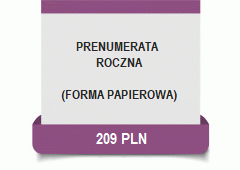
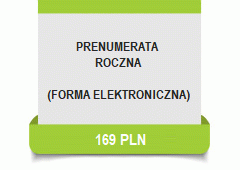
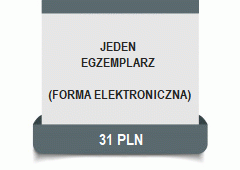
The e-edition of the magazine is available in our offer!

Stay up to date, subscribe to the LOGISTYKA magazine!