









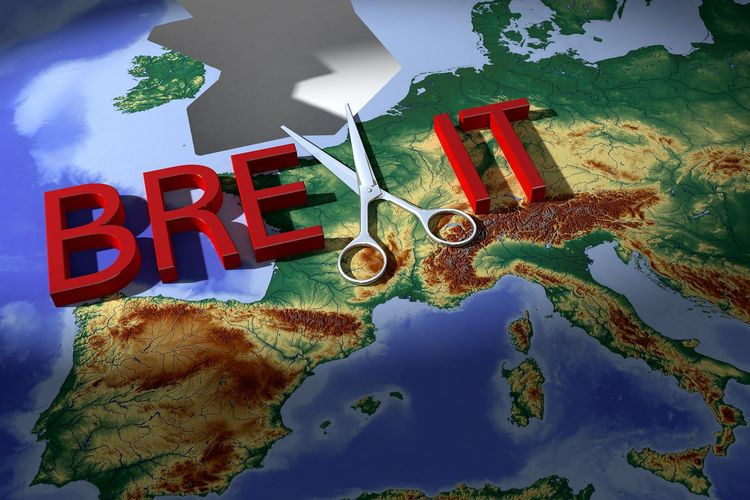
Brexit has caused a great deal of turbulence in trade between the European Union and the United Kingdom, as well as Ireland. Not all carriers, shippers, and consignees were aware of the customs formalities, nor did they have the knowledge of how to clear goods and what costs were involved. New obligations have heavily burdened carriers and affected the quality of work for drivers and those responsible for administrative tasks.
The transport industry reacts to difficulties
After Brexit, unloading and loading times have significantly increased, and forecasts suggest an increase of 400 million customs clearances in 2021. Proportionally to this growth, the workload will increase, as will the demand for qualified personnel in the customs and tax area. The situation is further complicated by the pandemic and the requirement to present a negative Covid-19 test result taken 72 hours before crossing the border on the UK side.
– Currently, the export of goods from the European Union to the United Kingdom is running more smoothly than in the opposite direction. In FTL transports, transit time is similar, but it is worth assuming at least a one-day buffer. In the case of groupage transports to the UK, we add at least two working days. Due to the consolidation of goods on one truck from many suppliers, we must be sure that all declarations on the British side have been filed and the vehicle will not be stopped at the port – says Robert Gwizdek from GEFCO Polska.
Exports from the European Union seem easier to control. Thanks to pre-lodge declarations, goods are cleared before entering the United Kingdom. In the case of exports to the EU, the sender must issue an export declaration and open a “T” transit document. There are few points in the UK that validate “T” documents, so delays must be expected. Time buffers in transport amount to one to two days for FTL and three to four days for groupage.
Methods for optimizing the flow of goods between the EU and the UK
As part of its exports to the UK, GEFCO decided to implement an additional notification system. The company then uses a tool that consolidates information and is shared by GEFCO teams in Belgium and the UK.
– We start loading and transport from the last hub in the European Union only when the team from the UK provides instructions in the system. In this way, at GEFCO, we limit the risk of transporting unauthorized shipments that could hold up the entire load, including many goods from other clients – explains Robert Gwizdek.
From a Polish perspective, after Brexit, the sender of goods must contract with a customs agency because previous intra-community deliveries are treated as exports. Secondly, they must review Incoterms with contractors in the UK, and for exports, there is the issue of DDP and EXW, which affects clearance obligations. The exporter must also have an identification number in the EU customs system (EORI number) and pay close attention to the clarity of the invoice for customs purposes.
The effects of Brexit on the TSL industry
After two months, it is difficult to assess all the effects of Brexit that will affect Polish companies in the TSL industry. Administrative work has increased, and vehicles over 7.5 tons must undergo registration (KAP) before arriving at the port of Dover, otherwise, they will not cross the UK border. Additionally, carriers can only pull up to designated places in the UK to validate the “T” transit document, which extends the driver’s working time and increases vehicle wear and tear.
Brexit requires carriers and importers to constantly track regulations. According to the latest decisions by the British side, the possibility of reporting imports in the UK under the EIDR procedure, which allows for the submission of a full import declaration within 6 months of crossing the EU-UK border, has been extended until the end of 2021. From 2022, which is later than originally announced, a phytosanitary certificate for plants and plant products and notification of their import on the UK side will be required for exports from the EU to the UK. Also, from January 1, 2022, there will be an obligation in the UK to submit Entry Summary Declarations (ENS) when importing goods from the European Union.
– New formalities have extended transit times, limited the number of international trips per month, and increased costs. The coming months will show whether we will be dealing with a carrier’s or a client’s market. For many clients, the increase in rates will prove difficult to accept from the point of view of their business profitability. If the transport of goods becomes unprofitable, some companies will consider changing markets and focus their attention on European Union markets – adds the GEFCO Polska expert.
What are the prospects for the TSL industry after Brexit?
The future is difficult to predict, but it will certainly bring an increase in export and import rates. After Brexit, carriers incur higher costs due to the need to engage additional stops and complete documents, which takes more time than before. Wanting to avoid the risk of formal errors, they may decide on less consolidation of loads on one truck. Perhaps shippers will increase the size of a single delivery, as the formalities are the same.
Regardless of whether the transport involves one pallet or a whole truck, the cost of clearance and customs operations is often the same. Transport costs are rising, and this may encourage recipients to look for alternative suppliers outside the United Kingdom. It is also worth remembering the impact of Brexit on trade with Ireland. In the future, we may witness the development of ferry connections between France and Ireland. In this case, the delivery time is 24 hours longer, but customs procedures can be avoided.
– As a large international logistics operator, GEFCO has approached the implementation of new procedures and meeting additional obligations related to customs clearance after Brexit with energy and foresight. We have our own network of GEFCO customs agents and an AEO certificate, which gives us priority at the customs office. We do not have to go to the customs office because, as an authorized entity, we perform clearances at the GEFCO warehouse. We also have the ability to prepare the Entry Summary Declaration (ENS). Additionally, we have recently launched groupage and LTL lines directly from France to Ireland, bypassing transit through the United Kingdom, which, by using a ferry connection, allows for avoiding customs procedures – concludes Robert Gwizdek.
Source: GEFCO