










The complexity of the port environment and the multitude of exchanged information and documents pose a particular challenge in the digitalization of this sector. Global GS1 standards come to the rescue, streamlining and increasing the efficiency of implemented processes.
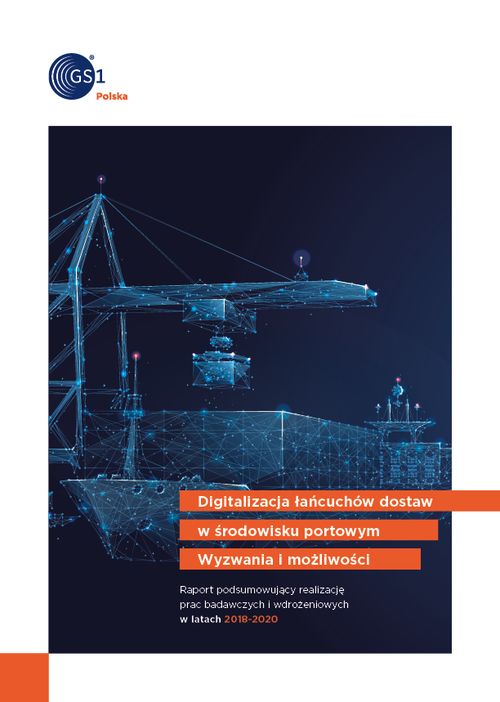
The report Digitalization of supply chains in the port environment. Challenges and opportunities is a summary of research and development work dedicated to the possibilities of using GS1 standards in the port environment, carried out by GS1 Poland in cooperation with the Łukasiewicz Research Network – Institute of Logistics and Warehousing (ILiM) in the years 2018-2020.
Hamburg and Rotterdam are smart
The report describes both the results of conceptual work and pilot implementations that respond to the challenges faced by the port environment. They include both international projects and optimization measures taken, confirming the benefits associated with implementing GS1 standards in the digitalization of port processes, as well as intermodal supply chains.
For example, in the Port of Hamburg, data from observation and reporting systems are interpreted on an interactive electronic map by the duty team. All information can be read on an interactive table and screens.
In turn, the Port of Rotterdam has implemented the Vessel Notification 2.0 system, through which all mandatory vessel notifications can be sent to harbor masters and customs services. The use of the EPCIS standard in this system has enabled the sharing of information about events related to the movement of goods and cargo, their groupings, quantities, or dates.
Setting sail thanks to digitalization
The report emphasizes that the digitalization of port processes is supported by the implementation of document and data flow between the carrier, intermodal operator, and container terminal, as well as the flow of container slot notifications. The introduction of GS1 identification standards enables rapid interoperability between IT systems throughout the supply chain.
– The application of identification and communication standards is of particular importance when exchanging data between port environments of different countries. The initiative to build an international platform processing data in this sector indicates how important easy and digital access to reliable logistics data in maritime and inland transport is – comments Agata Horzela, TSL Manager at GS1 Poland.
Research and implementation work carried out by Łukasiewicz – ILiM on behalf of GS1 Poland confirmed a number of benefits brought by the implementation of GS1 standards and allowed for the determination of the scope of further digitalization of supply chains in the port environment.
The full version of the report is available here: https://cutt.ly/sEjh7YX
Source: GS1 Poland