









According to the DHL Global Connectedness Index, the level of globalization has reached a peak higher than the pre-crisis high and was growing slowly in 2015.
DHL, the global leader in logistics services, released the fourth edition of the Global Connectedness Index (GCI) on November 15, 2016, a detailed analysis of the state of globalization in the world. The 2016 report indicates that the size of the global network of connections, measured by international flows of goods, capital, information, and people, exceeded the pre-crisis level of 2007 in 2014. In 2015, the pace of post-crisis globalization slowed down, but the data does not indicate a downward trend. Currently available data, which in some areas still require confirmation, suggest that in 2015 the global network of connections was about 8% larger than in 2005.
The largest growth in the studied period (2013-2015) was shown by the flow of information, measured by international internet traffic, the duration of phone calls in minutes, and the circulation of printed publications. The growth in capital and people flows showed more moderate trends, while the decline in international trade flows that began in 2012 accelerated in 2015.
– Over the last 50 years, globalization has been an engine of growth for the world – said Frank Appel, CEO of Deutsche Post DHL Group. – The GCI proves that globalization has ultimately emerged victorious from the financial crisis, but it faces an uncertain future. It is necessary for political decision-makers and business leaders to support the creation of an environment in which globalization can continue to flourish and improve the lives of people around the world.
The GCI research was conducted by world-renowned globalization expert Pankaj Ghemawat, who explained why the economies of developing countries still lag behind when it comes to the global network of connections.
– Developed economies are about four times more integrated in terms of international capital flows, five times in terms of people flows, and nine times in terms of information flows – explained Ghemawat.
The GCI further indicates that if the economies of developing countries become more like developed countries in terms of their level of connectivity, it will contribute to a massive increase in the total size of this network. The 2016 edition also documents the growing share of internet traffic crossing national borders, even if international trade and information flows are not maintaining expected levels.
– These data point to a huge space that can be utilized in the field of international e-commerce to revitalize economic activity and expand opportunities available to customers around the world – emphasized Jürgen Gerdes, CEO of Post – eCommerce – Parcel at Deutsche Post DHL Group.
National and regional results of the 2016 index
In addition to discussing the state of globalization in general, the 2016 report contains a detailed description of the connectivity networks of individual countries and regions. The index divides countries in terms of depth (intensity of international flows) and breadth (geographic distribution of flows), which together give a total score for the connectivity network on a scale from 0 to 100. The Netherlands maintains its position as the most connected country in the world, while Europe has once again become the most connected region in the world. All 10 countries with the highest level of globalization in the world, with the exception of Singapore and the United Arab Emirates, are located in Europe.
The second region with the largest global connectivity network is North America, which leads in terms of capital and information flows, with the United States as the most connected country in the Americas. Overall, the USA ranks 27th out of 140 countries surveyed by the GCI. North America achieved the largest growth in its total connectivity network over the last two years, surpassing Central and South America and the Caribbean. Countries in South and Central Asia and Sub-Saharan Africa recorded a decline in their average level of global connectivity.
In terms of changes in ranking positions between 2013 and 2015, the largest growth was recorded by Suriname, Jamaica, and Fiji, moving up by 23 (from 112th to 89th place), 22 (from 107th to 85th place), and 20 places (from 94th to 74th place) respectively. The growth in Suriname was caused by a significant expansion of international interactions, while Jamaica and Fiji saw an increase in both the depth and breadth of their global connectivity networks. Nigeria, Togo, and Nicaragua recorded the largest drops in position, falling by 28 (from 67th to 95th place), 21 (from 72nd to 93rd place), and 19 places (from 71st to 90th place) respectively.
New indices for cities – giants and hotspots of globalization
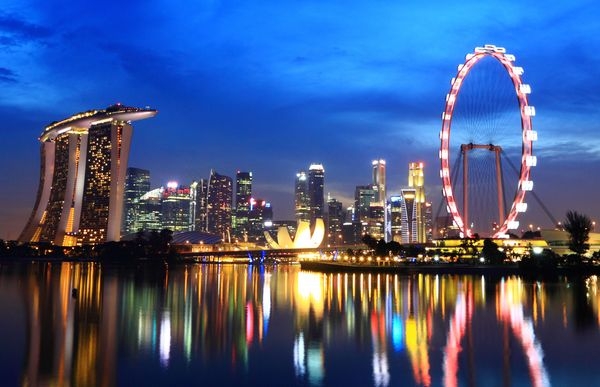
Combined trends toward globalization and urbanization have sparked growing interest in global metropolises. The 2016 edition of the DHL Global Connectedness Index introduces two new indices for cities. The “globalization giant” index compares the size of international interactions between cities. The “globalization hotspot” index compares the GCI at the country level in terms of depth and categorizes cities by the highest intensity of international flows of goods, capital, people, and information compared to their activity at the national level. Singapore holds the leading position based on both new globalization indices at the city level.
– Even after accounting for Singapore’s structural advantages, the Lion City still performs better in terms of the depth of international flows – said Ghemawat. – Singapore owes its success to a set policy line aimed at increasing its network of connections beyond its immediate neighborhood.
London and New York, long-time leaders in global metropolis rankings, occupy third and fourth place respectively according to the globalization giant index, but only 47th and 76th place according to the globalization hotspot index. According to the report, many smaller cities focus on international activity to a much greater extent than the two aforementioned megacities. Surprisingly good results in the hotspot index were achieved by Manama (second place), Tallinn (sixth place), and Mumbai (thirteenth place).