










International real estate services firm Cushman & Wakefield has published a report titled “2021 Global Logistics Outlook,” which, in addition to analyzing key factors influencing the development of the logistics industry and dynamics in global leasing markets, also presents forecasts for this sector.
– The unprecedented shock caused by the COVID-19 pandemic and changing consumer behaviors are influencing the future of the logistics industry by exposing weak links in the global supply chain and accelerating technological progress. This has led to the emergence of a number of global trends that are determining new directions for the development of the logistics sector – said Jason Tolliver, Head of Logistics & Industrial Research for the Americas at Cushman & Wakefield.
North America
The warehouse real estate market in North America continues to grow despite global turmoil caused by the COVID-19 pandemic and local disruptions such as hurricanes and wildfires. Warehouse facilities have once again been among the most resilient asset types. New supply of logistics space in North America exceeded 35 million sq m, surpassing demand for the second consecutive year, which amounted to nearly 27 million sq m and has remained above 18 million sq m for seven years.
– Lockdowns introduced in connection with COVID-19 did indeed cause a slight slowdown in demand dynamics in the first half of the year compared to previous years. Nevertheless, even this, combined with a high volume of supply, did not allow for the full satisfaction of tenant needs and did not translate into a significant increase in vacancy rates – says Jason Tolliver. – At the end of 2020, the vacancy rate for warehouse space in North America was 4.9%, just 30 bps higher than in 2019. The lowest vacancy rates were recorded in Canada and Mexico City, at 2.5% and 3.0% respectively.
EMEA Region
– The logistics sector in Europe is struggling with limited availability of space, which is caused by a lack of investment land and strict spatial planning regulations. Unlike the situation before the global financial crisis, when speculative investments accounted for about 80% of new supply, after its end, mainly BTS (build-to-suit) facilities were built, which led to a large supply gap in most of the largest logistics markets in Europe. With the resumption of speculative investments after the lifting of lockdown restrictions, more products appeared on the market, pent-up demand was released, and activity in leasing markets increased – said Lisa Graham, Head of Logistics & Industrial Research, EMEA, Cushman & Wakefield.
Data at the end of last year indicate a continuation of the downward trend in vacancies in most key logistics hubs in Europe. Vacancy rates of about 4% in the Netherlands and the UK and about 2% in Rotterdam, Lyon, Prague, and Budapest testify to a large supply gap, which has not yet been reduced by the increase in speculative investments. Furthermore, growing demand from e-commerce clients and 3PL logistics operators, who are expanding their logistics space, has offset the increase in vacancies caused by some tenants filing for bankruptcy in 2020.
Asia Pacific Region
The warehouse real estate market in the Asia Pacific region remains in good condition. Of the 34 largest markets analyzed, 15 are considered landlord markets and 6 are tenant markets – the remaining 13 are described as neutral. This situation largely persists today, and only in Singapore is it changing in favor of tenants, but this applies only to certain areas of the warehouse market. This is the complete opposite of the situation in the office sector, where tenants can count on much more favorable lease terms.
– Rental rates for warehouse space have been rising gradually since the beginning of the year in the largest markets in India and Southeast Asia – in Delhi, Ho Chi Minh City, Kolkata, Jakarta, and Hanoi, they have increased by more than 2.5%. Rents remain at current levels in Australia, while they have increased slightly by 2% in the logistics market in China due to increased demand from e-commerce sector representatives who are occupying the remaining available space – said Dr. Dominic Brown, Global Head of Demographic Research and Head of Asia Pacific Research, Cushman & Wakefield.
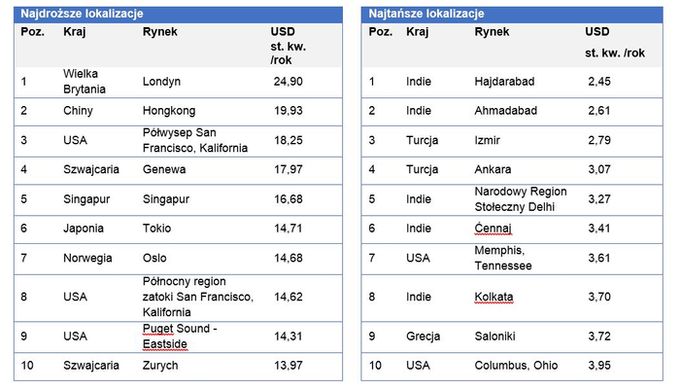
– The global logistics sector not only showed resilience during the radical restrictions introduced in the first half of the year but also benefited from the response of consumers and companies to the pandemic in the second half of the year. The development of the e-commerce industry – both in terms of geographic reach and the assortment offered – will be a key driver of demand for new space in the coming decade – says Joanna Sinkiewicz, Partner, Head of Industrial & Logistics Agency in CEE, Cushman & Wakefield – In the post-pandemic world, there will be increased interest in using real estate in a way that allows for cost reduction throughout the supply chain and improving the functioning of companies facing challenges such as the development of the B2C business model, reshoring, inventory management, labor issues, transport, and ESG. All these factors together will influence location strategies.
The report comes from the website: https://media.pl.cushmanwakefield.com.pl
Other reports on the logistics industry:
– 60% of logistics companies plan major investments this year
– The latest report on Polish logistics is now available!
– Occupier Insight – Warehouse market and economic situation in Poland – 2020 summary
– The New Silk Road as an opportunity for the Polish economy – Rohlig Suus Logistics report