








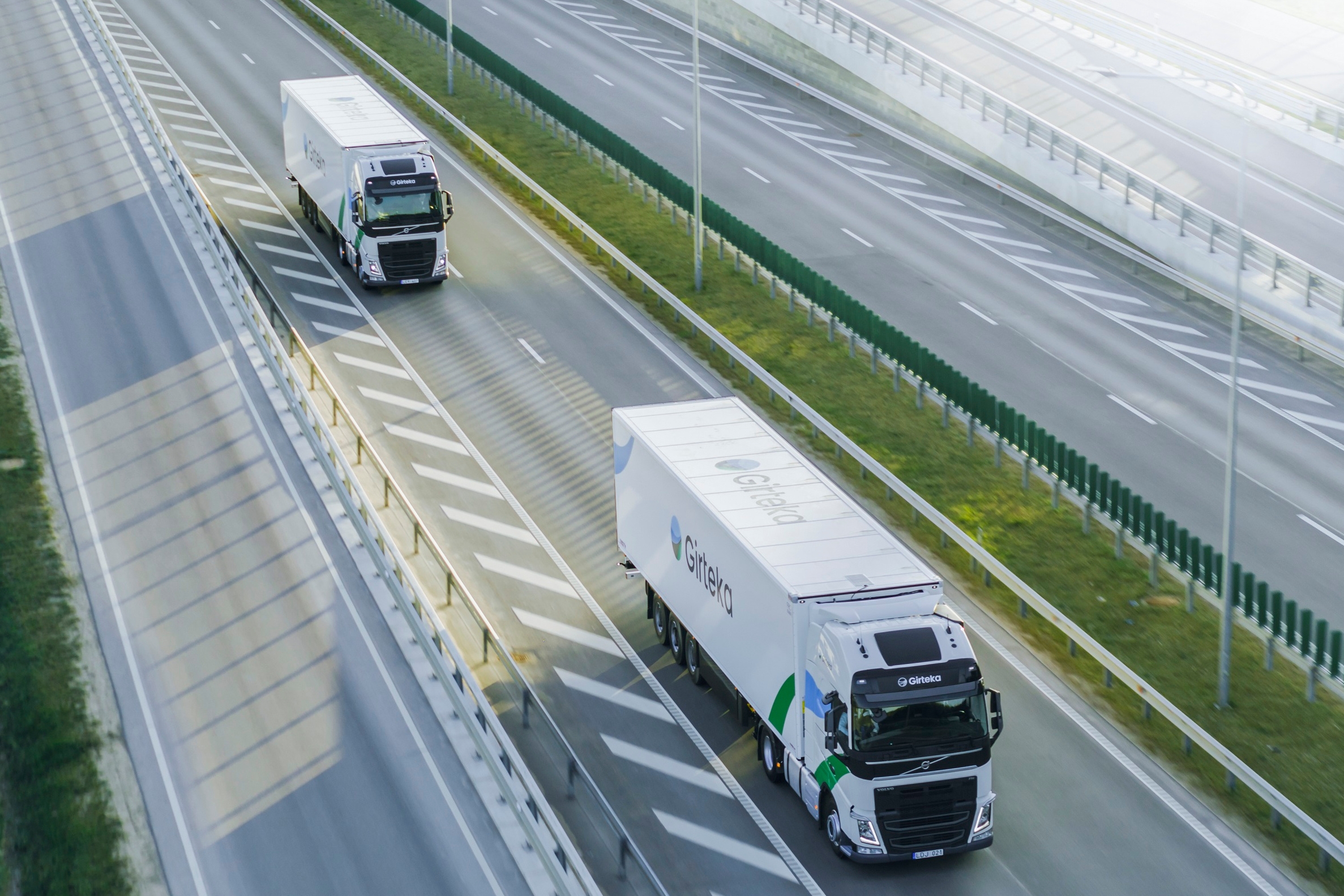
Girteka, a leading European transport company, has launched a new program – the Alternative Fuel Program (AFP) – as one of its initiatives to decarbonize logistics processes through the use of HVO fuel in daily operations. This solution is designed to help customers reduce Scope 3 greenhouse gas emissions from road transport by up to 90% compared to traditional diesel.
The principle of operation is simple
The Alternative Fuel Program is tailored to the needs of companies collaborating with Girteka under long-term contracts, which are committed to sustainability and aim to reduce emissions from transport.
The principle of its operation is simple – customers choose transport services based on HVO (Hydrotreated Vegetable Oil), while Girteka uses trucks powered by alternative fuel to carry out deliveries wherever appropriate refueling infrastructure is available. Customers then receive a detailed report indicating the level of emission reduction. This option is available to customers for whom deliveries are made on dedicated routes, excluding spot market services.
– Sustainability is currently becoming a key element of corporate strategies – says Viktorija Terekė, Chief Sustainability Officer at Girteka. – Through the Alternative Fuel Program, we offer our customers a reliable and transparent way to reduce emissions without the need to change existing supply chains.
Measurable benefits
Joining the Alternative Fuel Program provides customers with many benefits, such as:
- emission reduction: up to 90% compared to standard solutions like diesel, which helps customers meet EU climate goals.
- transparency: transport is monitored, and data on fuel quantity and emission reduction are presented in a report.
- certification: the fuel is certified by suppliers, ensuring full traceability and transparency.
- reputation: companies benefit from recognition of their commitment by consumers who are increasingly choosing products transported using low-emission solutions.
Girteka’s AFP is based on a common methodology for calculating emissions in accordance with the GLEC Framework (Global Logistics Emissions Council Framework). This guarantees accurate measurements, which increases data credibility and the possibility of use in audits.
– Our calculations are directly linked to each transported load, – explains Viktorija Terekė. – We can accurately show our customers which vehicle was used, when it was refueled, and with what fuel. Each refueling transaction is fully certified by our fuel suppliers so that there are no doubts.
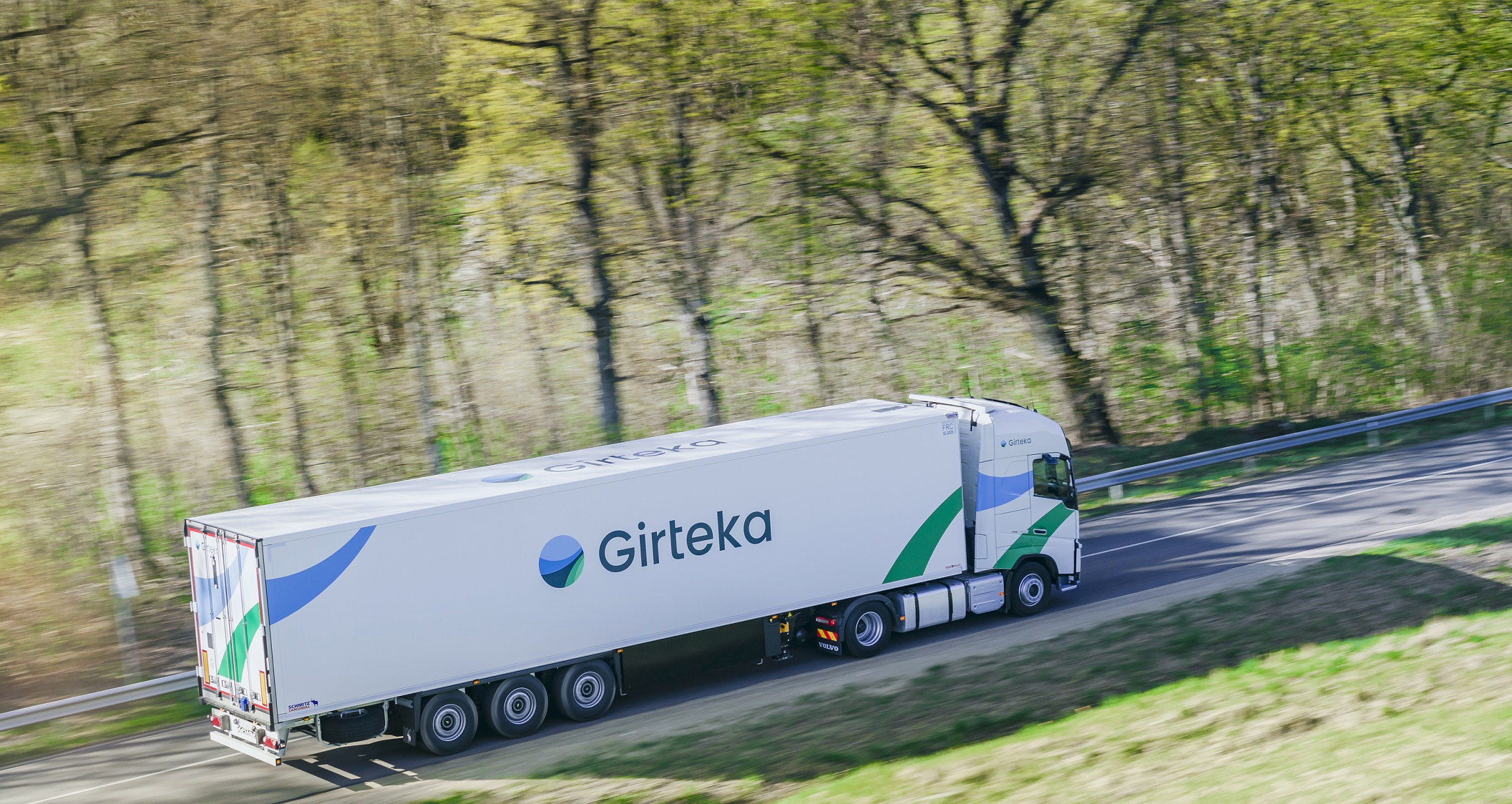
Girteka includes strategic partners in AFP
Strategic partners of Girteka are already incorporating AFP into their operations.
– We were looking for ways to reduce transport emissions without disrupting our supply chain, and the AFP program provided us with exactly what we expected. Transparency, tracking, and reporting within the program gave us confidence, and we were able to significantly improve our sustainability reporting – said a representative of one of the companies using this service.
Girteka’s Alternative Fuel Program has been designed to support companies in achieving their sustainability goals while reducing emissions on transparent terms. With the growing demand for low-emission transport options, it not only represents a real alternative to traditional fuels but, above all, helps companies make a real impact on the decarbonization of the logistics industry.
HVO – reduction of greenhouse gas emissions
HVO (Hydrotreated Vegetable Oil) is a second-generation biofuel produced from renewable raw materials such as vegetable oils (most commonly rapeseed, palm, and sunflower), waste products (e.g., used cooking oil – UCO), and animal fats (by-products of the meat industry, e.g., tallow). The main reason for the growing interest in HVO is its ability to significantly reduce CO₂ emissions and other harmful substances. As research indicates, HVO can lower life-cycle CO₂ emissions by up to 90% compared to fossil-based diesel, depending on the raw material used and production methods, particulate matter emissions by 80%, and nitrogen oxides by approx. 8%. This makes it a cleaner-burning fuel that contributes to improving air quality, especially in urban areas[1]. HVO is a “drop-in” fuel, which means it can be used as a direct replacement for conventional diesel without the need for modifications to modern engines.
[1] https://www.mtu-solutions.com/eu/en/pressreleases/2022/milestone-towards-net-zero–mtu-gensets-from-rolls-royce-approve.html
Source: Girteka Group