








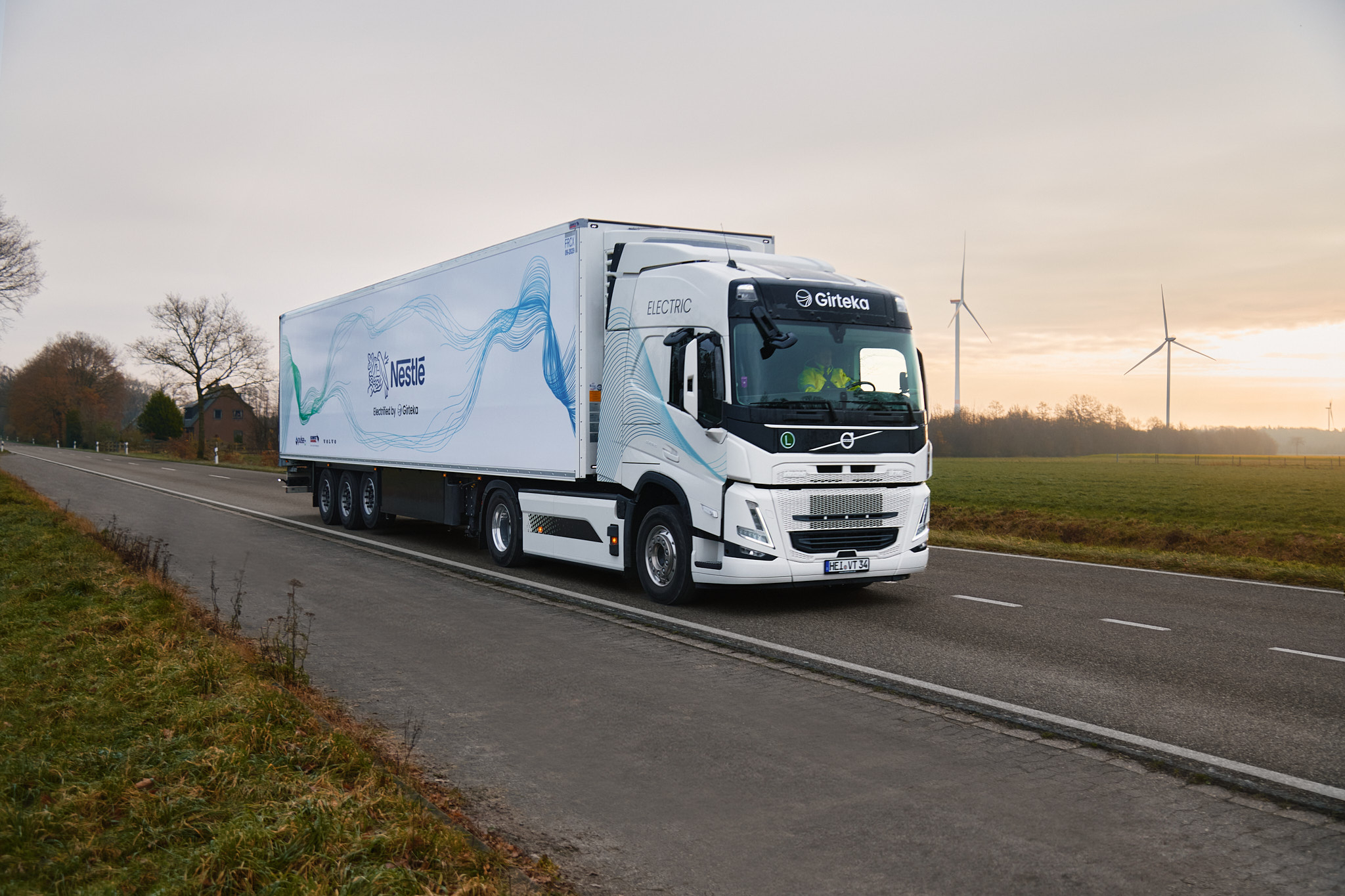
Girteka, Europe’s largest road carrier with its own fleet, in cooperation with Nestlé, Volvo, Schmitz Cargobull, and BP Pulse, has conducted a pilot test program of the first fully electric truck set with a refrigerated trailer. Now, the companies are presenting further test results, focusing on technical data and an assessment of the solution’s efficiency and performance.
A necessary response to industry challenges
Climate change is accelerating global sustainability efforts, and the logistics sector plays a key role in this transformation. Transport is responsible for approximately 25% of global greenhouse gas emissions, a significant portion of which is generated by road transport. In response, Girteka, the largest European road carrier, places special emphasis on implementing sustainable transport solutions, including BEVs, which are recognized as one of the solutions for reducing emissions and achieving sustainability goals.
It is also worth emphasizing that all initiatives in this area are in line with the aspirations of the European Union, which aims to achieve climate neutrality by 2050, and support the assumptions of the European Green Deal, particularly in the area of decarbonizing road transport. In the context of the growing number of European cities planning to introduce zero-emission and clean transport zones, fleet electrification is becoming an important step toward meeting these requirements.
Collaboration is key to integrating BEVs into supply chains
There is an ongoing discussion about the use of electric trucks in logistics operations. Many companies are conducting tests, trying to develop a common approach that combines customer requirements, manufacturer capabilities, infrastructure, and technology availability. Logistics companies like Girteka play a key role here, not only by testing new solutions but also by engaging stakeholders to ensure the integration of electric vehicles within supply chains.
Therefore, to explore the potential and challenges associated with integrating battery-electric vehicles (BEVs) into logistics operations, Girteka conducted pilot tests in cooperation with Volvo, Schmitz Cargobull, and BP Pulse. Over the course of several days, a fully electric set was tested, consisting of a Volvo FM Electric truck and a Schmitz Cargobull S.KOe COOL electric refrigerated trailer.
Technical parameters and specifications
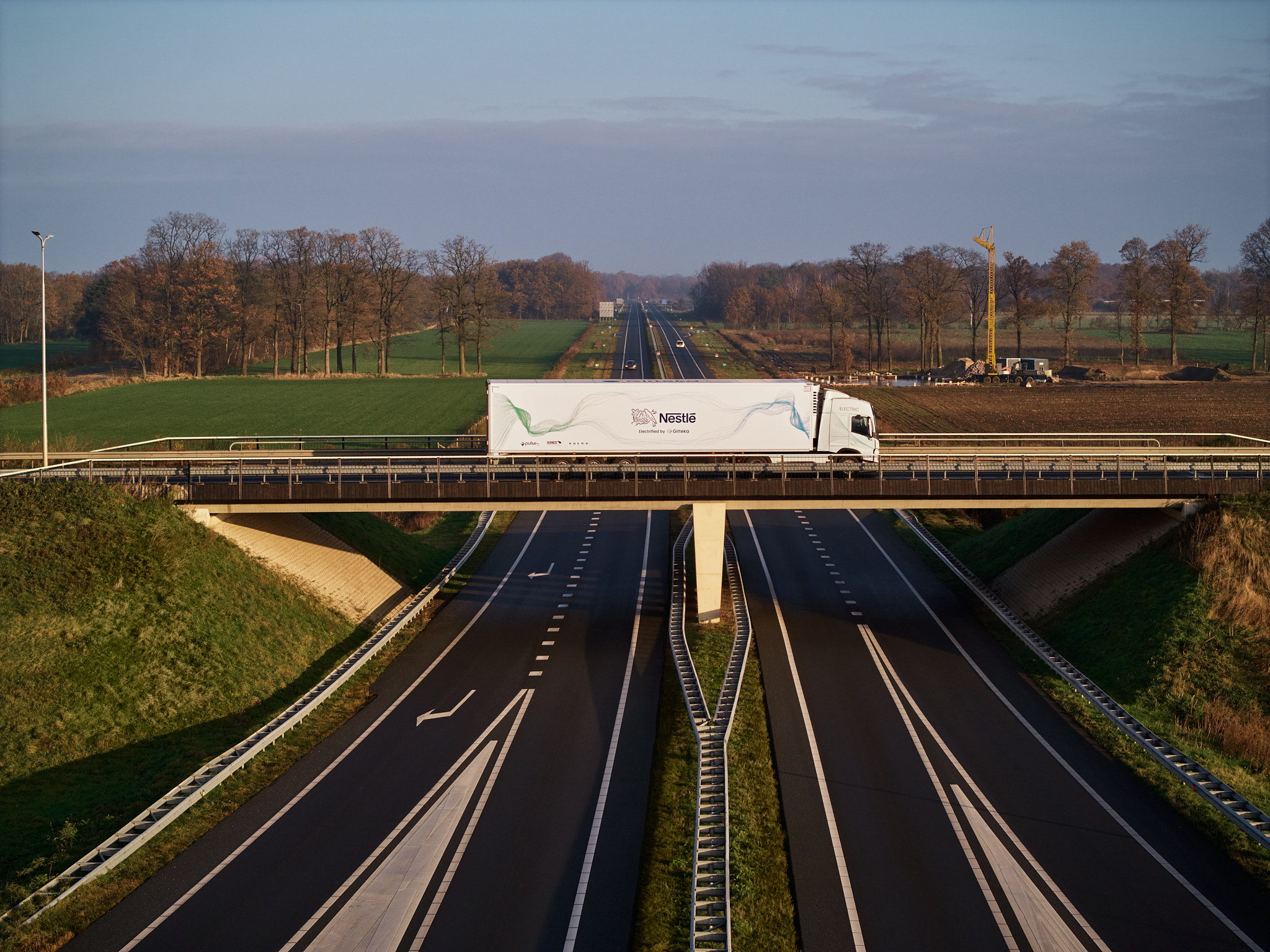
The tests evaluated parameters such as performance, energy efficiency, and vehicle reliability. The electric truck with the trailer completed round trips as part of deliveries for Girteka’s client, Nestlé, covering a total distance of approximately 1,500 kilometers. The tests included various load conditions, including the transport of refrigerated goods. Throughout the trial period, the vehicle maintained constant performance and reliability. The test results confirmed the high potential of electrification in logistics processes, even in demanding transport operations.
The tests utilized the fully electric S.CUe cooling unit, combined with a battery and a Schmitz Cargobull generator axle. The cooling unit used has optimized temperature control, specifically designed for the transport of sensitive goods. It can be charged while driving or braking using the ScB generator axle and a built-in 22 kW charger. The battery was charged in parallel with grid power.
Technical data for Volvo FM Electric
|
Engine |
2-3 electric motors with power up to 666 HP |
|
Output power |
490 kW in continuous mode |
|
Transmission |
I-Shift gearbox adapted for electromobility |
|
Battery capacity |
549 kWh |
|
Range |
up to 300 km |
|
Charging time |
from 0% to 100% in 2 hours |
Technical data for Schmitz CargoBull trailer
|
Cooling capacity |
15,800 watts |
|
Heating capacity |
10,500 watts |
|
Control unit power supply |
400 V AC, 32 A, 50 Hz |
|
HV battery capacity |
32 kWh |
|
Voltage |
530V – 660 V DC |
|
Autonomous operating time |
> 5h |
|
Generator axle power (E-axle) |
20 kW, recuperation |
|
Charging time |
2 hours at 400 V |
Evaluation of test results
The pilot project demonstrated not only the technical feasibility of using electric transport solutions but also their high operational efficiency under real-world conditions. According to the performance report, the tested electric vehicle configuration achieved very good energy efficiency, with an average energy consumption of 1.35 kWh per kilometer. The integration of BP Pulse’s high-power fast-charging infrastructure ensured minimal downtime, with each charging session lasting an average of 1.5 hours.
Efficient and convenient charging was provided by a CEE charging socket, one of the basic features designed for seamless integration of the trailer with existing infrastructure. Additionally, a PIEK-certified noise reduction kit enabled quiet deliveries both day and night, including in residential areas, minimizing disturbances and increasing operational flexibility.
Future projects
The pilot program and tests of the fully electric truck set with a refrigerated trailer, involving Nestlé, Volvo, Schmitz Cargobull, and BP Pulse, are part of a larger strategy of actions implementing and bringing closer the possibilities of decarbonizing customer supply chains. Currently, Girteka is preparing for further projects, also using the results in daily operations. Moreover, the project not only proved the potential of electric vehicles in the context of the logistics industry transformation but also the importance of cooperation in solving business, logistics, and technological challenges related to the need for transport decarbonization.
– Open dialogue is fundamental to this collaboration. It ensures that all parties – from goods manufacturers, through automotive and transport companies like Volvo, experts in trailer production like Schmitz Cargobull, to energy specialists like BP Pulse, and logistics service providers, have the same approach – emphasizes Viktorija Terekė, Head of Sustainability at Girteka.
Source: Girteka Group