








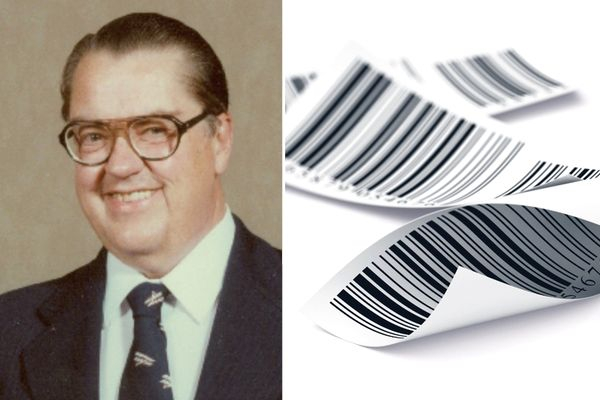
George Laurer, an American IBM engineer co-responsible for developing the barcode system widely used on consumer products, has died at the age of 94.
Most of the products we buy feature stickers with black bars of varying lengths and a twelve-digit identification number. This simple marking allows for the reading of a great deal of information regarding a given item. Today, it is difficult to imagine retail, both in large supermarkets and small local shops, without the use of barcodes.
The concept of the code, based on Morse code and originally intended to use circles in its design, was initiated by Norman Woodland back in the 1950s. However, George Laurer, also working at IBM as an electrical engineer, brought the project to completion and created the first scanner capable of digital code reading. He also proposed using bars in the code, which proved easier to print. This resulted in the final appearance of the Universal Product Code (UPC), which revolutionized the economy worldwide. A pack of Wrigley’s Juicy Fruit gum, which was scanned in Ohio in 1974, went down in UPC history. Today, this packaging is an exhibit at the Smithsonian National Museum of American History in Washington, D.C.
Barcodes, combined with modern laser technology and computer devices, have significantly accelerated customer service at checkout counters and automated payment processing. This has led to a reduction in pricing errors and facilitated accounting for retail establishments. Today, over 5 billion products with barcodes are scanned every day, and the identification system continues to evolve.
George Laurer was inducted into the Logistics Hall of Fame, which honors pioneers in logistics. He passed away on December 5, 2019, in Wendell, North Carolina.