









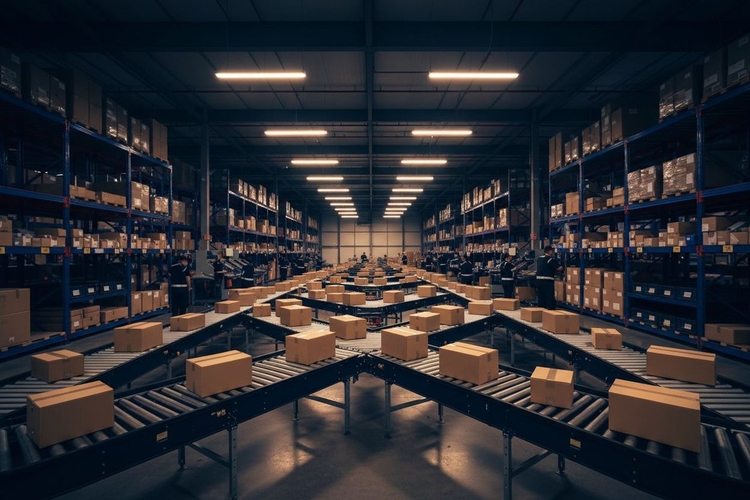
Fulfillment is a term that is appearing more and more frequently in the e-commerce industry. For many online store owners, however, it remains a mystery – what exactly is it, and why do so many companies decide to outsource their logistics? The word comes from English and literally means “fulfillment” or “completion.” In the context of online retail, however, it has taken on a very specific meaning – it is a comprehensive service covering all processes from the moment a customer places an order to the delivery of the package to their doorstep.
What is fulfillment – definition and scope of services
Fulfillment is a logistics outsourcing model in which an external operator takes responsibility for fulfilling online store orders. Instead of building their own warehouse, hiring employees, and negotiating contracts with couriers, the seller entrusts these tasks to a specialized company. This solution allows them to focus on what is most important – product development, marketing, and customer service.
The scope of fulfillment services is broad and includes much more than just packing packages. The standard offer includes receiving deliveries from suppliers, storing products in professional conditions, order picking, packing with appropriate product protection, and organizing shipping. In addition, there is return management, which is a significant element of the customer shopping experience in e-commerce.
Many fulfillment companies also offer additional services – product labeling, quality control, minor repairs, or garment steaming. This is particularly important for industries such as fashion or beauty, where product presentation is crucial. Modern logistics centers use WMS (Warehouse Management System) systems, which ensure full control over inventory levels in real time.
What the fulfillment process looks like step by step
The process begins with receiving goods into the warehouse. Deliveries from manufacturers or distributors are verified for quantity and quality. Each product receives a designation in the system, making it possible to track its location and availability. Storage takes place in conditions adapted to the specifics of the assortment – clothing has different requirements than dietary supplements or cosmetics.
When a customer places an order in an online store, the information is automatically sent to the fulfillment operator’s system. Data verification follows – delivery address, selected payment method, and product availability. After positive verification, the pick&pack stage begins. A warehouse employee retrieves the ordered products from the shelves and then packs them according to established standards. This may include branded packaging, protective materials, or the inclusion of promotional leaflets.
The finished shipment goes to the shipping zone, where it is handed over to the courier. Modern fulfillment centers work with many courier companies, which allows for optimizing costs and delivery time depending on the destination. The final element of the process is return management – receiving the package from the customer, verifying the product’s condition, and returning it to warehouse circulation or sending it for disposal.
Fulfillment as a solution for growing e-commerce
The dynamic development of online retail means that more and more companies are looking for scalable logistics solutions. A private warehouse means fixed costs – rent, hiring employees, investments in IT systems. In the fulfillment model, you pay for orders actually fulfilled, which translates into financial flexibility. According to market data, logistics outsourcing (https://omnipack.com/pl/fulfillment) can reduce costs by up to 30% compared to running your own warehouse.
An example of an operator active on the Polish market is Omnipack, which has been serving online stores from various industries since 2016. The company has two logistics centers – in Nadarzyn near Warsaw and in Gorzów Wielkopolski, just 130 km from Berlin. This location enables one-day deliveries to both Poland and Germany. In turn, integrations with popular e-commerce platforms – Shopify, PrestaShop, WooCommerce, or Shoper – allow for quick implementation, which usually takes from 2 to 4 weeks.
A key quality indicator in fulfillment is the Perfect Order Ratio, i.e., the percentage of orders fulfilled flawlessly. Omnipack declares a level of 99.96%, which, at a scale of 10 million packages sent to over 40 countries, testifies to the maturity of its operational processes. For a store owner, this means fewer complaints, higher customer ratings, and a better brand reputation.
When to consider logistics outsourcing
The decision to switch to a fulfillment model is rarely obvious. However, there are signals that indicate the right moment has arrived. The first is the time spent on logistics – if packing packages takes more hours than business development, it is worth changing. The second signal is problems with delivery timeliness or an increasing number of order errors. The third is plans for foreign expansion, which requires knowledge of local courier markets and customs regulations.
The profitability threshold depends on the specifics of the business, but usually, outsourcing starts to make sense at several dozen orders per day. At a smaller scale, in-house handling may be cheaper, although more time-consuming. However, it is worth remembering that fulfillment is not just direct costs – it is also access to professional infrastructure, flexibility during peak seasons, and the ability to serve customers from different countries without building your own logistics network.
Before choosing an operator, it is worth checking a few issues: the location of warehouses relative to main target markets, available integrations with the e-commerce platform, the scope of additional services, and price transparency. The availability of tools for monitoring operations is also important – a client panel with 24/7 access allows you to control inventory levels and track order fulfillment in real time.
Fulfillment is not just a logistics service – it is a strategic partnership that allows you to focus on business development. In the dynamically changing world of e-commerce, where customers expect fast deliveries and flawless service, professional logistics becomes a competitive advantage. Outsourcing this function frees up resources that can be allocated to what really builds company value – product, marketing, and customer relationships.