









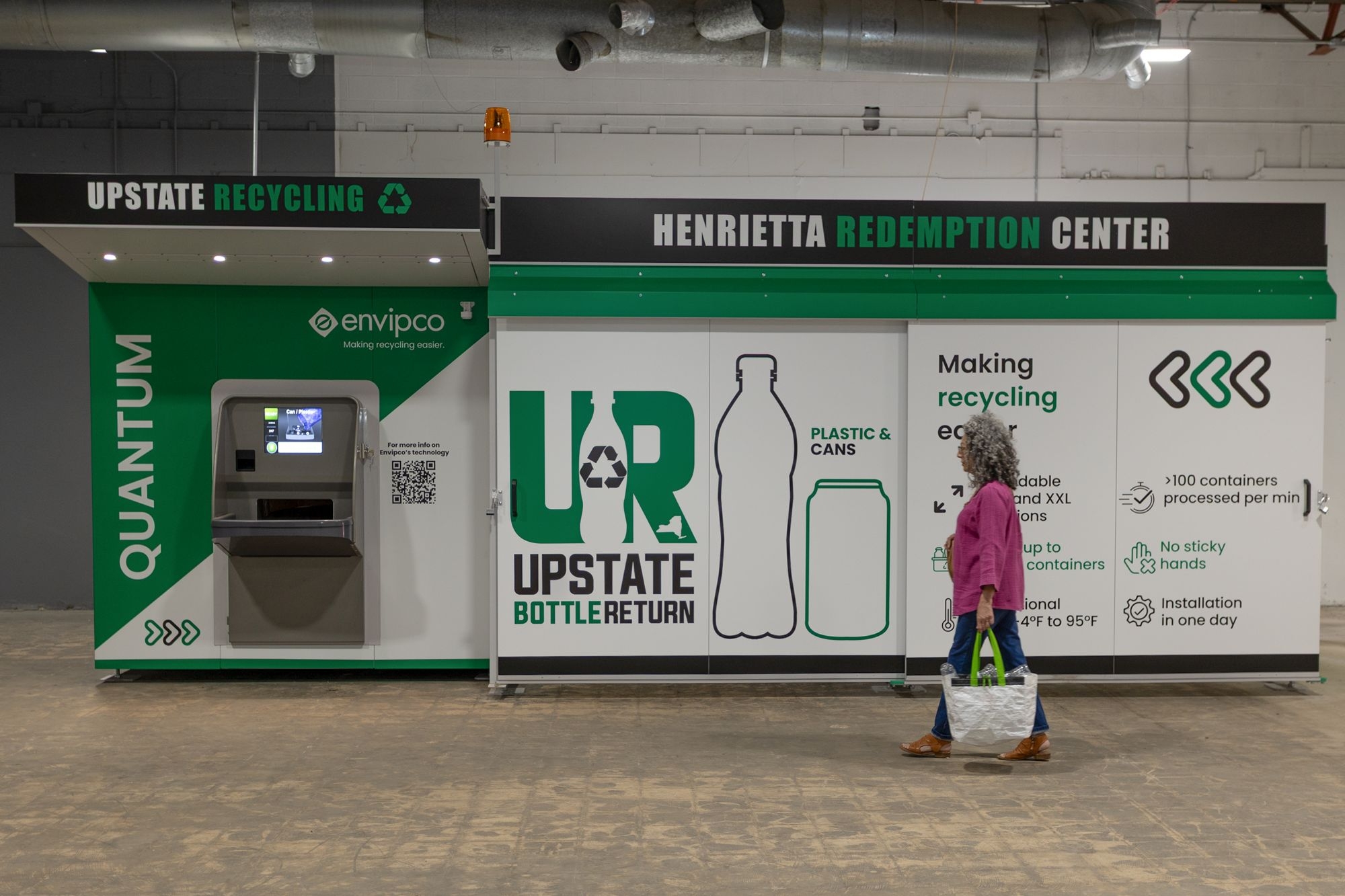
With the launch of the deposit-refund system in Poland, reverse logistics has ceased to be a niche issue and has become one of the key elements of the daily functioning of retail and waste management. It is at the intersection of the store, the consumer, and the logistics back-end that it is decided today whether the idea of a circular economy will remain a slogan or a real mechanism operating on a large scale.
The deposit-refund system naturally shifts the focus from the act of recycling itself to the entire process preceding its commencement. Returning packaging at a store is only the first stage of a journey that includes identification, sorting, preparation for transport, and efficient transfer of the raw material for further processing. Every link in this chain matters, because even the best-designed recycling facilities will not compensate for errors made at earlier stages.
Infrastructure at collection points plays a special role here. Stores, often operating in limited space and with high traffic, must reconcile customer service with a new logistics function. This forces solutions that organize the flow of packaging from the moment it is accepted. In practice, this means automation of processes, precise identification of packaging, and its preliminary preparation for the next stage of the journey. The less manual intervention and improvisation at this stage, the greater the predictability of the entire system – says Paweł Wróblewski, Managing Director of Envipco Poland.
However, the logistics of the deposit-refund system does not end in the store’s back room. Properly compacted, sorted, and secured packaging allows for reducing the number of transports, lowering their cost and environmental footprint, while simultaneously increasing the quality of the material reaching the recycler. It is quality, not just the quantity of collected raw material, that determines the efficiency of the circular economy. Clean, homogeneous material is easier to reintroduce into the production cycle without the need for energy-intensive cleaning processes.
In Polish realities, the scale is an additional challenge. The deposit-refund system involves millions of consumers and volumes of packaging that must be handled continuously and without disruption. Any delay in collection, identification error, or technical downtime quickly translates into operational problems visible to both retail and consumers. That is why the reliability of solutions and the ability to flexibly adapt them to local conditions, from small neighborhood stores to large-format facilities, is becoming increasingly important.
– concludes Paweł Wróblewski.
From the perspective of the circular economy, the deposit-refund system is more than just a collection tool. It is a mechanism that organizes the flow of materials, forces cooperation between many sectors, and shows that logistics can be not only an operational back-end but a real engine of environmental transformation. Today, not only the efficiency of the system but also public trust in the entire idea of a circular economy depends on how efficiently the path from the store to the recycler works.
Recyclers of all kinds
Envipco is a leading company in the field of Reverse Vending Machine (RVM) technology, with over 40 years of experience in providing systems for businesses of various sizes – from small to large – with individual recycling solutions. The company focuses on accelerating recycling to effectively support customers in achieving sustainable development and promoting the circular economy. It operates globally, working with retailers, municipalities, and the beverage production industry.
Envipco’s offer includes both compact devices designed for stores with limited space and technologically advanced machines with crushing and sorting functions, which work well in high-traffic points. All machines are characterized by intuitive operation, high reliability, and the possibility of remote management, which significantly facilitates daily operation and maintenance.
Thanks to its presence in many markets – from the United States, through Western and Central-Eastern Europe, to Asia – Envipco has gained experience in designing solutions adapted to various legislative models and consumer needs. The company engages in strategic partnerships and long-term relationships with stakeholders, which allows it to effectively support the implementation and development of deposit-refund systems in a durable and sustainable manner.
Source: Envipco