









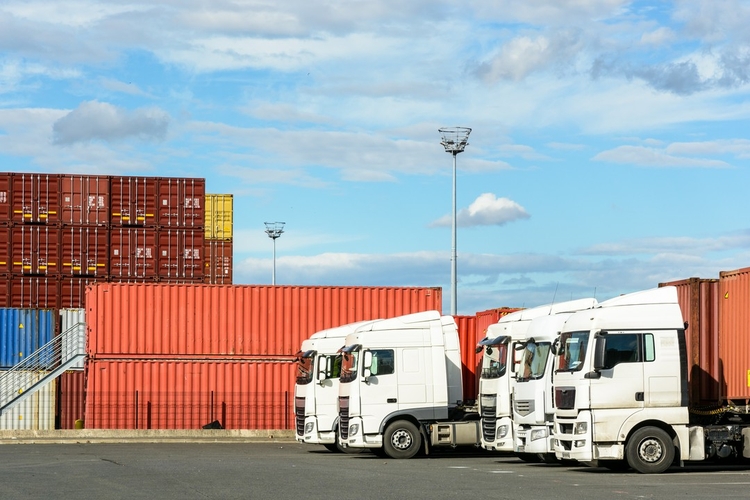
Trade between Poland and Germany has maintained a high level for years, and freight transport in the western direction exceeds hundreds of thousands of trips annually, as this country is the largest recipient of Polish exports and the second-largest trading partner of the European Union. Therefore, check what freight forwarding to Germany entails.
Types of transport to Germany – what are your options?
For transport to Germany, entrepreneurs can take advantage of full truckload (FTL) transport, which is a solution for clients shipping large batches of goods. In this variant, the truck completes the route without additional stops, which allows for shorter delivery times and reduces the risk of delays. The cargo reaches the recipient directly, and documentation is kept to a minimum, which facilitates warehouse planning and production scheduling.
Oversized transport is another variant intended for cargo whose dimensions exceed standard trailer parameters. Such shipments require permits, specially prepared vehicles, pilot cars, and route analyses. In practice, this means the necessity of determining the route to several towns and adjusting it to the height of viaducts, road restrictions, and traffic intensity.
For clients shipping smaller batches of goods, less-than-truckload (LTL) transport to Germany is available. In this case, cargo from different companies shares the loading space, which allows for lower transport costs. This model works well in e-commerce, retail, and the distribution of fast-moving consumer goods.
What are the customs formalities related to import and export?
Transport from Poland to Germany takes place within the single market, which means no standard customs clearance or border crossing fees for goods. However, companies conducting trade must have an active VAT-UE number and document transactions on invoices in the form of intra-Community acquisitions and supplies. These documents reflect the so-called reverse charge, where the responsibility for tax settlement lies with the recipient.
After exceeding established thresholds, Intrastat declarations must be filed, separately for imports and exports. This data goes to the European Union’s statistical system and allows for the analysis of trade directions and transport volumes. In the case of transporting excise goods, such as fuel, alcohol, or cigarettes, EU procedures supervised by the EMCS system apply, which enables the recording of goods flow in real-time.
Express services to every corner of Germany
Dedicated transport to Germany allows reaching Berlin in about 4–6 hours, and Hamburg or Frankfurt usually in less than 24 hours. In this case, the vehicle usually travels without transshipments, which shortens transit time and allows for urgent deliveries. These types of services are used for the transport of:
- production parts,
- documents,
- machine components,
- materials needed to maintain the continuity of technological processes.
Transport of non-standard goods
Carriers performing transport to Germany also handle cargo requiring special conditions, including:
- refrigerated products,
- pharmaceuticals,
- chemicals,
- ADR products,
- valuable cargo.
In such shipments, temperature-controlled trailers, GPS monitoring, and security systems are of key importance, as they enable the recording of the transport progress and transport conditions.
Check how to choose a professional carrier
When choosing a logistics partner, it is worth checking the experience of the driver staff, which translates into knowledge of routes and regulations in force in Germany. Another element is care for the cargo at every stage of the order execution. Companies with a fleet of specialized vehicles can adapt the transport to the nature of the cargo, even with non-standard dimensions. Such infrastructure allows for shortening the transport organization time and reducing the risk of downtime.
Get professional support in transporting your cargo across the western border!
If you need support in organizing transport to Germany, it is worth contacting Important Cargo Traffic. The company provides freight forwarding services for companies from various industries, offers access to an extensive fleet, and also organizes transport in many variants – from LTL to oversized cargo. Clients can count on fast delivery times, efficient communication, and assistance with preparing documentation.
What does transport to Germany involve?
- Freight forwarding to Germany takes place within the EU internal market, without standard customs clearance.
- Full truckload, less-than-truckload, and oversized transport are available.
- Companies must use a VAT-UE number and file Intrastat declarations if thresholds are exceeded.
- A professional carrier has the equipment and staff to handle various types of orders.