









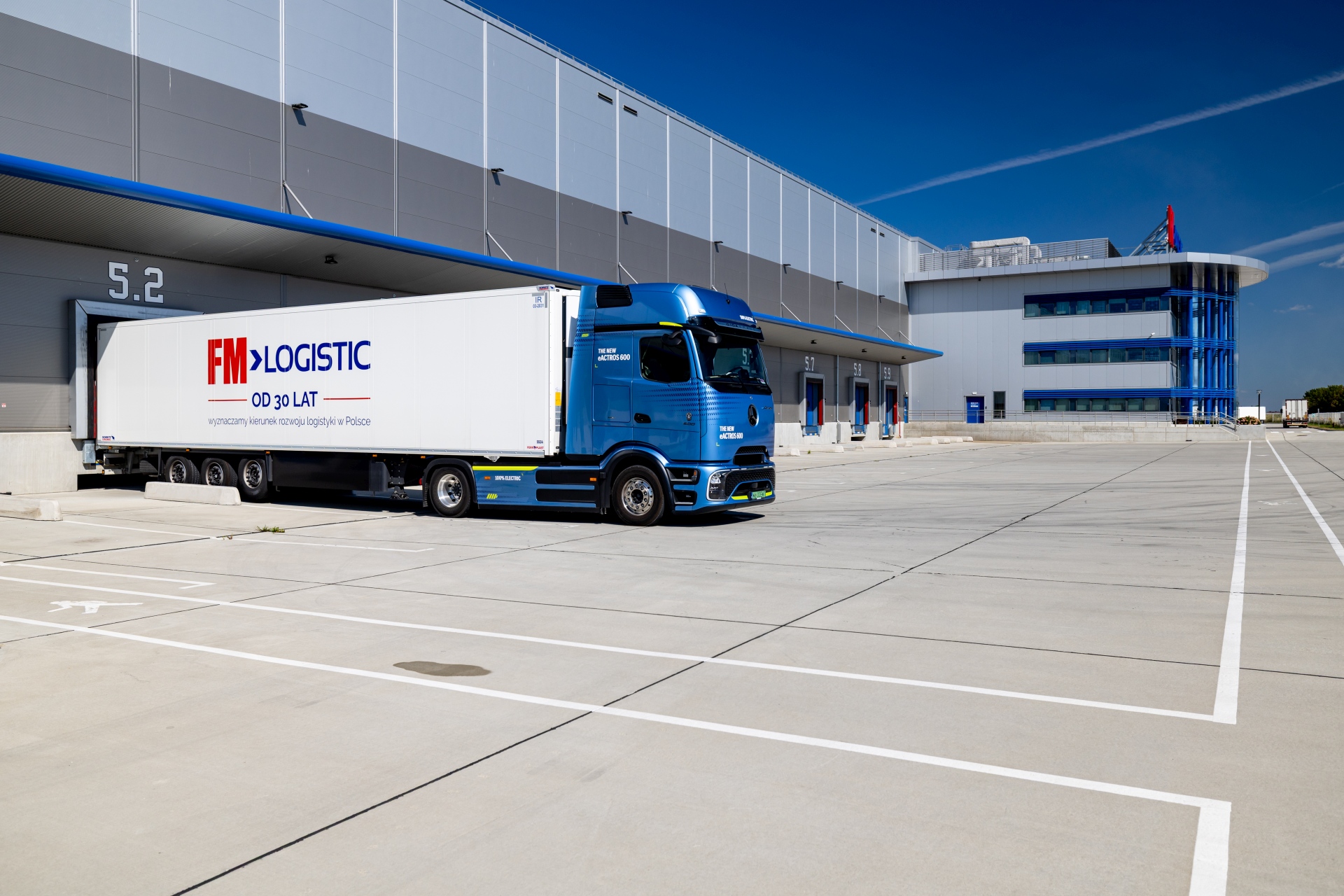
FM Logistic has launched a new groupage line connecting Poland with the Baltic states. The expansion of the network is in line with the growing importance of the Via Baltica transport corridor, which is becoming one of the most important logistics arteries connecting Central Europe with the Baltic Sea region.
The Baltic states are an important market for Polish producers and distributors. Lithuania, Latvia, and Estonia are natural economic partners for us due to their geographical proximity and the ties resulting from the European Union’s single market. Poland has particularly strong relations with Lithuania. Poland is one of its most important trading partners, accounting for over 10 percent of Lithuanian exports and 14 percent[1] of imports.
An essential element supporting the development of economic cooperation is the region’s transport infrastructure. The Via Baltica road corridor, which is part of the European TEN-T transport network, plays a key role here. The modernization of road infrastructure along this route has significantly improved the capacity and predictability of road transport, which fosters the development of logistics connections. For operators, this means the ability to build stable and fast transport services between Central European markets and the Baltic states. From the perspective of companies operating in the region, this is an opportunity for more efficient flow of goods and shorter delivery times.
Road transport plays a key role in trade relations with the Baltic states. Eurostat data shows that Poland is one of the most important countries in the European road transport market, accounting for nearly 20 percent of transport work in the EU measured in tonne-kilometers. At the same time, about 64 percent of transport carried out by Polish carriers consists of international routes, which shows how important the road infrastructure connecting the countries of the region is. – emphasizes Mariusz Bala, International Groupage Director at FM Logistic.
Groupage transport as an answer to market needs
The Baltic markets remain a stable destination for Polish companies and have been generating constant demand for goods exported from Poland for years. The growing scale of trade, as well as the state of infrastructure in the region, favor the development of groupage transport. More and more companies are opting for solutions that allow for more frequent shipments of smaller batches of goods, which allows for better adjustment of deliveries to current demand and increases supply chain flexibility.
As part of the new line, we provide daily departures, which increases delivery predictability and facilitates the planning of logistics processes. The transit time is 2 working days for Lithuania and Latvia and from 3 days for Estonia. Such solutions help companies manage inventory more efficiently and react faster to changes in demand. The new transport line therefore represents a balance between delivery speed and cost optimization and is an important support for companies expanding their operations in the Baltic Sea region. – adds Mariusz Bala.
FM Logistic customers can also use digital tools that support the management of the transport process. Orders can be placed online via the MySCM platform, and system integration is possible thanks to EDI or API solutions. Clients also have access to the Track & Trace system, which allows for real-time shipment monitoring. In the case of more complex logistics operations, support is provided by dedicated customer service specialists.
The introduction of the new line to the Baltic states by FM Logistic is a continuation of a consistently implemented strategy for developing an international groupage network. This is the third route launched this year; earlier, the operator started regular groupage deliveries to Austria and Germany.
[1] Statistics Poland (GUS) data
Source: FM Logistic Central Europe