








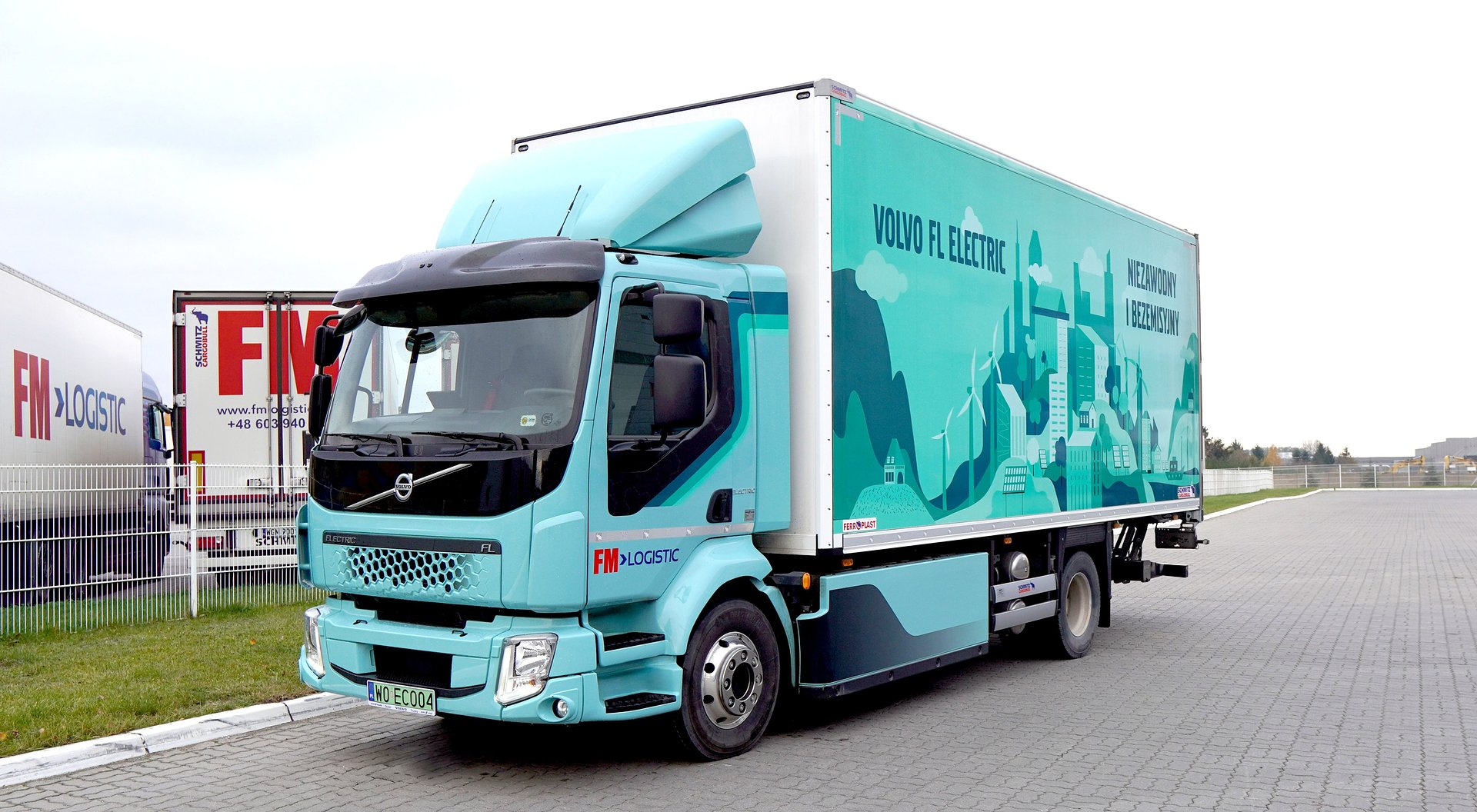
In mid-November, FM Logistic began testing electric vehicles. A Volvo FL Electric 42 delivery truck hit the road, carrying out local distribution orders. The second stage will involve testing electric tractor units. This is another milestone in the implementation of the company’s Transport 4.0 strategy, under which FM Logistic is committed to reducing the negative impact of transport by cutting greenhouse gas emissions in transport by 30% by 2030. From November 13, for one week, the delivery vehicle carried out routes from the FM Logistic warehouse in Mszczonów and the transshipment hub in Janki near Warsaw, covering approximately 200 kilometers daily.
The test vehicle handled orders that did not require temperature control for FM Logistic’s FMCG clients in Warsaw and the Masovian Voivodeship. For economic and ecological optimization, the vehicle transported empty pallets and packaging on return trips. During the tests, the vehicle’s range in real operating conditions, the impact of cargo weight on energy consumption, environmental benefits, and other functional features were checked. – Testing “electric vehicles” in real conditions allows for the verification of technical parameters, taking into account various loads and delivery conditions. This is intended to facilitate the selection of the final vehicle configuration. Local distribution is a service that we provide for many clients thanks to our cross-docks.
Considering the maximum range of electric vehicles, we decided that this would be the best variant to start the tests – explains Andrzej Wacyk, Transport Administration and Support Director, FM Logistic Central Europe, who is also responsible for the fleet and contracting subcontractors at FM Logistic. The VOLVO FL ELECTRIC 42 selected for the tests, with a maximum range of up to 300 kilometers, features a BOX-COOL V7 body with 16 pallet spaces and a number of features designed to increase safety for both the driver and other road users. – The implementation of Volvo Trucks’ strategy towards zero-emission transport aligns with the assumptions of FM Logistic’s operations, which is why I am even more pleased that we have the opportunity to cooperate. Thanks to a shared vision and the wide model range of Volvo Trucks, we were able to select the truck best suited to the client’s needs and start testing in real conditions. We have electric models dedicated to various types of transport, including urban deliveries, which allows for the full realization of FM Logistic’s transport goals. Through tests with proven partners, we prove that electric trucks are already finding applications in transport today – adds Marek Gawroński, E-Mobility & Sustainability Director, Volvo Trucks Poland.
FM Logistic has precisely defined the stages of its decarbonization strategy and is consistently implementing them. Fleet modernization began last year. The first step was the purchase of trailers with a solar system. – Our “Transport 4.0” development plan has strategic significance. Over the past year, we have purchased 100 refrigerated trailers with an eco-friendly solar system for charging the starter battery. Electrification is the next stage – adds Jacek Oraczewski, Transport Director, FM Logistic Central Europe.
The electrification of transport is a necessary response not only to global warming and increasingly visible climate change, but also to noise and problems in the fossil fuel market. Assuming the energy comes from the power grid, using an electric truck will reduce CO2 emissions during the operational phase by an average of 395 g for every kilometer traveled. In the case of power from renewable energy sources, the vehicle is 100% zero-emission. Given the growing importance of environmental issues, and consequently the increasingly strict restrictions introduced by successive EU countries and the entire community, electric vehicles will help solve some of the problems currently facing the transport industry. – Current increases in road tolls in Germany (related to the new EU law on heavy-duty vehicle emissions), as well as announcements of their introduction in other European Union countries, force the transport industry to adapt to the electrification of transport. Additionally, one should also keep in mind the strengthening of CO2 reduction targets for medium and heavy-duty trucks by up to 90% from 2040, which will also be of key importance for the future of transport – notes Magdalena Wójcik, Senior Business Development Manager at FM Logistic. Fleet electrification is a process that needs to be well planned. This and subsequent tests are intended to help develop the right business model and prepare FM Logistic for investment in electric-powered delivery vehicles on a larger scale.
Source: Good One PR. FM Logistic