









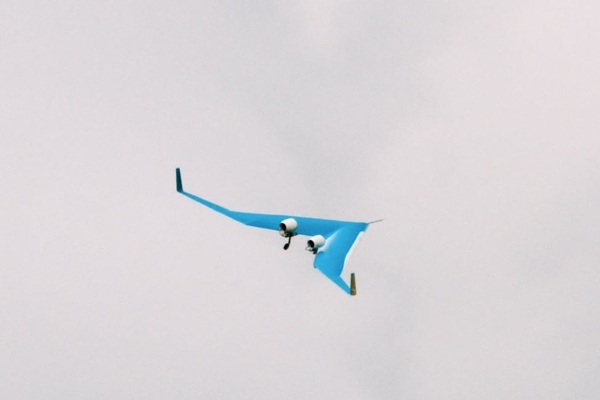
Dutch airline KLM and Delft University of Technology in the Netherlands are working together on the energy-efficient Flying-V aircraft of the future. The V-shaped aircraft model has completed its first test flight.
The Flying-V is the result of a completely different approach to designing passenger aircraft. The main idea of the designers is maximum fuel efficiency, and thus performance and the pursuit of a more planet-friendly, sustainable aviation of the future.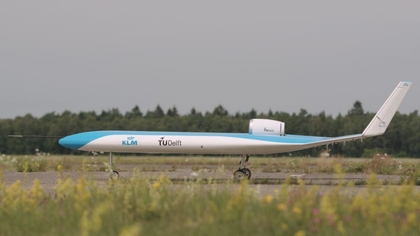 This summer, the Flying-V completed its first test flight at an airbase in Germany. The operation was overseen by a team of scientists, engineers, and a drone pilot from Delft University of Technology in the Netherlands. The model, with a length of 2.76 m, a wingspan of 3.06 m, and a weight of 22.5 kg, is remotely controlled, much like a drone. The test flight was preceded by two years of wind tunnel and ground testing. The first flight was successful, and the research team gathered valuable data necessary for further work on the new aircraft. The next step in the 70-page design plan is to provide the Flying-V with sustainable propulsion.
– This project fits perfectly with our Fly Responsible initiative, which encompasses all of KLM’s current and future efforts toward sustainable development. We want to create the sustainable aviation of the future, and innovation is an essential part of it – said Pieter Elbers, President and CEO of KLM.
The Flying-V is a project for a highly energy-efficient long-haul aircraft. Its concept is based on the currently used Airbus A350 model, which is considered the most technically advanced passenger aircraft in the world today. The full-scale Flying-V is intended to be shorter than the A350 but will have the same wingspan. Similar dimensions to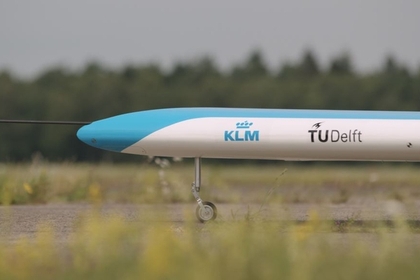 the standard A350 will allow the Flying-V to use existing airport infrastructure, such as terminal gates and runways. The aircraft will also easily fit into a hangar designed for the A350. Moreover, the Flying-V is expected to carry the same number of passengers – 314 people in a standard configuration, and its cargo holds will accommodate a comparable volume of cargo – 160 cubic meters. However, the Flying-V will be smaller than the A350, which will provide it with less aerodynamic drag.
The streamlined V-shaped fuselage design will integrate the passenger cabin and cargo hold. Fuel tanks will be located in the wings. Interestingly, the engines will be mounted not under, but above the wings. The improved aerodynamic shape of the vehicle and reduced weight will allow for a 20% reduction in fuel consumption compared to the Airbus A350.
Several partners are currently involved in the project, including aircraft manufacturer Airbus. KLM has been a partner in this project since 2019, implementing its strategy of creating sustainable aviation for the future. The Flying-V model was first presented during KLM’s centenary celebrations in October 2019.
{youtube}https://www.youtube.com/watch?v=MFoc8wbuasM{/youtube}
Source: KLM