








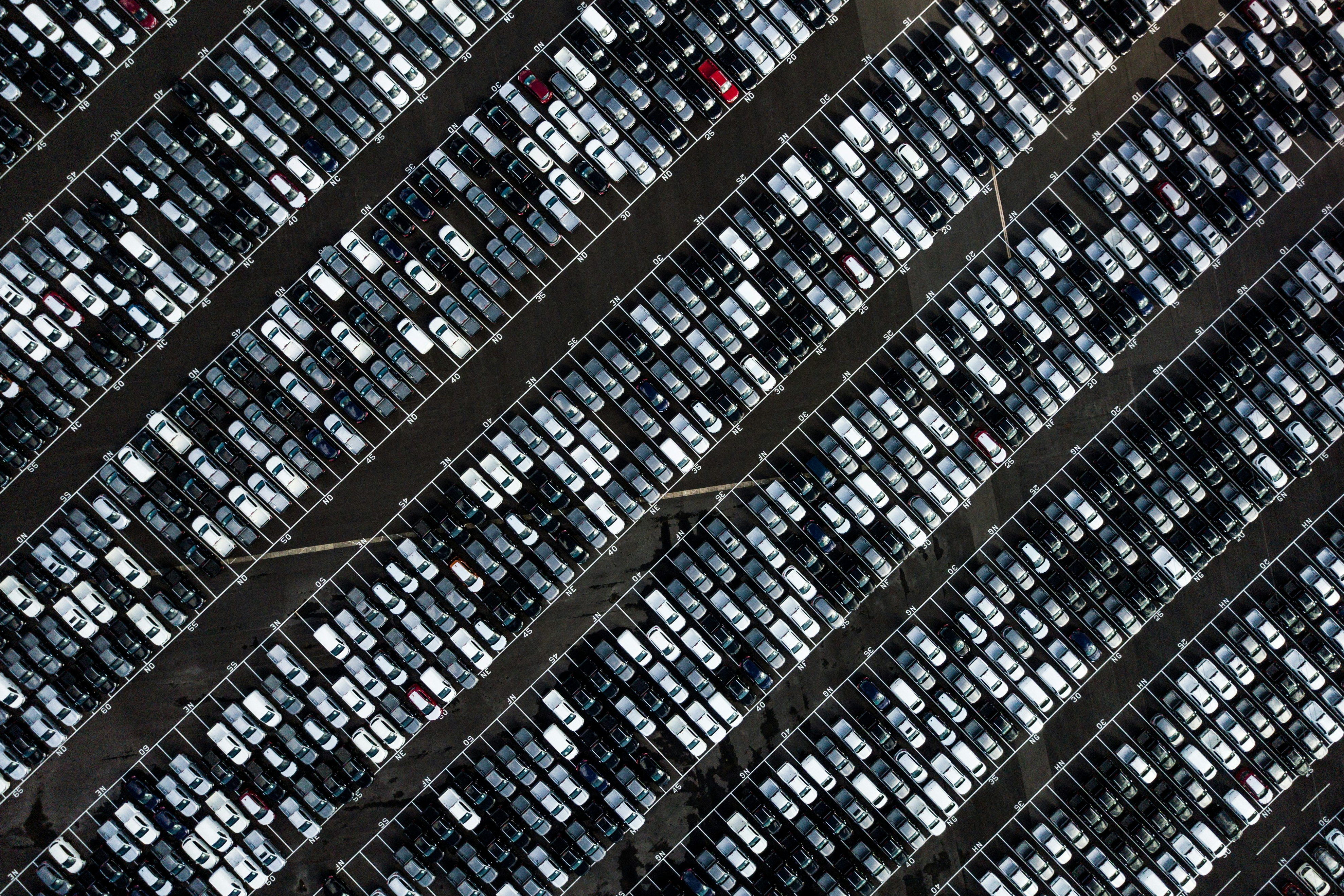
In recent years, the electrification of vehicle fleets has gained importance both in Poland and globally, becoming one of the key trends in the automotive industry. Global sales of electric vehicles (EVs) exceeded 13.7 million units in 2023, and in Poland, the dynamic development of the EV sector resulted in over 120,000 registered electric vehicles by the end of 2023. More and more Polish companies are also opting for electrification, but obtaining appropriate insurance for the fleet can prove to be a challenge.
Trends in fleet electrification in Poland and worldwide
In recent years, the electrification of vehicle fleets has become one of the key trends in the automotive industry worldwide, and Poland is not lagging behind. On a global scale, sales of electric vehicles (EVs) are growing at a rapid pace. According to the International Energy Agency (IEA), in 2023, EV sales exceeded 13.7 million units, accounting for 15% of global passenger car sales.[1] This is a significant increase compared to 2020, when EVs accounted for only 4.1% of sales. In Europe, the market leaders are Norway, Germany, and France, where the EV market share exceeds 20%. In China, the largest EV market in the world, sales grew by 93% in 2022, reaching over 5 million vehicles.[2]
Poland is also recording dynamic growth in the electric vehicle sector. Data from the Polish Automotive Industry Association shows that at the end of June 2024, over 69,000 fully electric vehicles (passenger and commercial) were registered in Poland, which is a 53% year-on-year increase. Together with PHEV cars, there were almost 120,000. It is also worth noting that the Polish government is actively supporting the development of electromobility, offering, among other things, subsidies for the purchase of EVs and investing in the development of charging infrastructure. According to the government plan, one million electric vehicles are to be on Polish roads by 2030.
“For years, we have been observing a clear stir in the electric car market. Of course, most companies do not decide on a sudden electrification of their fleet. Usually, it starts with one vehicle, then another. Employee reactions, performance, efficiency, etc., are checked, and then such vehicles are gradually added,” says Piotr Pilarski, Director of the Motor Insurance Office at PIB Broker. “Of course, there is no shortage of entities on the market that declare that within the next few years, the share of electric vehicles will reach up to 50% of the entire fleet. All this indicates that electrification will continue and at the same time may pose quite a challenge for companies and insurers themselves.”
Consumers are increasingly choosing EVs due to lower operating costs, zero exhaust emissions, and increasing battery ranges. Car manufacturers are investing billions of dollars in the development of new electric models, and many of them have announced a complete transition to EV production within the next few decades. As a result, fleet electrification is becoming not only a trend but also an inevitable direction for the development of the automotive industry worldwide.
Main risks associated with the use of electric vehicles
Despite the numerous advantages of electric vehicles, such as lower operating costs and zero exhaust emissions, there are certain risks associated with their use. One of the most frequently discussed threats is the risk of battery fire. Lithium-ion batteries, which are commonly used in EVs, can overheat and ignite as a result of mechanical damage, overloading, or manufacturing defects.
Although such incidents are relatively rare, their consequences can be serious. It is worth remembering that insurers are often quite cautious about technological innovations that appear on the market. Although electric motors themselves are not entirely new, the amount of data available to analytical teams is significantly smaller than in the case of cars powered by oil or gas.
Media reports about electric car fires do not help here either. For obvious reasons, insurers do not want to take on the risk of insuring such a vehicle, because in practice they would then have to pay the full amount of compensation, and electric vehicles are usually more expensive than vehicles powered by conventional fuels.
“I think everyone has seen recordings of burning electric vehicles, whether in parking lots or somewhere in an open space. This is followed, of course, by media reports and comments that indicate that this is a very common phenomenon. Meanwhile, as reported by the State Fire Service, in 2020 and 2021 there were 2 such fires, in the following year 7, and in 2023 there were 21. Statistics show that so far, the percentage risk of a car fire is higher in combustion engine counterparts,” adds Piotr Pilarski, Director of the Motor Insurance Office at PIB Broker.
Challenges in insuring electric vehicle fleets
This is why companies face various difficulties in insuring their fleets that include electric vehicles. One of the main challenges is higher insurance costs. Electric vehicles are usually more expensive than their combustion engine counterparts, which directly affects higher insurance premiums. Additionally, EV repairs can be more expensive due to the high costs of spare parts and the specialized knowledge needed to service them. For example, replacing a damaged battery can cost tens of thousands of zlotys, which significantly increases the costs of insurance claims.
Another challenge is the limited amount of data needed to assess the risk associated with electric vehicles. Traditional models, developed based on data regarding combustion engine vehicles, may be inadequate for EVs. This means that insurance companies must also invest in research and development of new actuarial models that take into account the specific risks and characteristics of electric vehicles. Furthermore, the lack of sufficient historical data on breakdowns and accidents involving EVs poses an additional difficulty in accurately assessing the risk.
Managing a fleet of electric vehicles also involves challenges related to charging infrastructure. Fleet owners must ensure an adequate number of charging stations and manage the charging process to minimize vehicle downtime. Problems with the availability and reliability of charging stations can lead to delays and additional operating costs, which affect the overall efficiency of the fleet.
“When we submit an inquiry about insuring an entire fleet, and it includes individual electric-powered units, there are situations where insurers offer a policy for the entire fleet excluding the electric vehicle. Another example could be a situation where, having several offers, clients decide on more expensive solutions, because only such solutions allow them to insure the entire fleet in one place, which is usually the best practice in the industry. Although in brokerage practice we will always find an optimal solution, experience shows that these types of challenges are very current,” comments Piotr Pilarski.
[1] https://www.iea.org/energy-system/transport/electric-vehicles
[2] https://www.iea.org/energy-system/transport/electric-vehicles
Source: Lensomai Communication