









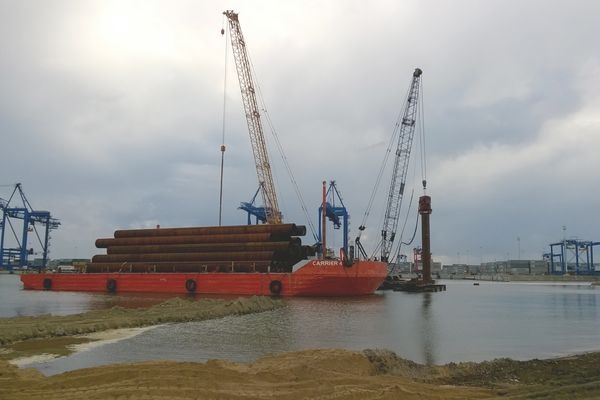
The first of the construction piles for the second deep-water quay (T2) at DCT Gdańsk has been driven. At the end of July, N.V. BESIX began construction of the new quay’s load-bearing structure. The work will continue until the autumn of this year.
– The new DCT quay will be founded on a structure consisting of, among other things, 211 steel piles, each with a diameter of 1.67 meters, a length of 35 meters, and weighing over 24 tons. For the first 15 meters, the piles are driven using a vibratory hammer, and then they are driven further with a hydraulic impact hammer. The energy with which the impact hammer strikes is 100,000 times greater than the energy of a high-end hammer drill. The contractor estimates that it will be able to drive 4 piles per day – says Michał Biernacki, T2 project manager at DCT Gdańsk.
DCT Gdańsk, Poland’s largest container terminal, began construction of its second deep-water quay in the Northern Port at the beginning of 2015. For this investment and the repayment of existing liabilities, DCT secured funds in the amount of 290 million euros. The general contractor and designer is the Belgian company N.V. BESIX. Completion of construction work is planned for the second half of 2016.
DCT is the largest and fastest-growing Polish container terminal and the only deep-water terminal in the Baltic Sea region to which ships from the Far East call directly. The DCT terminal, located in the very heart of the Baltic Sea – in the Port of Gdańsk, is the easternmost terminal in the group of deep-water North European ports between Gdańsk and Le Havre.
The terminal handles Polish imports, exports, transit, and maritime transit. Thanks to good access from the sea provided by an approach channel with a depth of 17 m and up to 16.5 m along the quay, lack of icing, and excellent operational capabilities, DCT is a natural hub for containerized cargo trade in Central and Eastern Europe. Thanks to infrastructure investments carried out by the Polish government and the city of Gdańsk, the DCT terminal is very well connected to locations inland and is a true gateway to Central and Eastern Europe.